Search Results
Search this site
1757 results found with an empty search
- George Karlaftis
The 2022 NFL Draft will have no shortage of edge rushers. George Karlaftis is another powerful edge rusher who is a projected first-round talent. Karloftis was born in Athens, Greece, and spent a good portion of his youth in Greece before coming to the United States. He didn't play organized football until middle school and would eventually become a track and field star, where he won a state title in the shot put at West Lafayette High School as a sophomore. Karlaftis boasts a high motor, with an explosive get-off allowing him to get on top of his blockers in pass sets. He has a wide array of pass rush moves involving his hands, and he uses his leverage to win one-on-one battles with a good combo of power and speed. He can win with a bull rush or use a spin move to gain leverage. Not a particularly flexible athlete, Karlaftis is a technician who can use various pass rush moves and power to win. He can shoot a gap and squeeze through unlikely creases or bull rush a blocker into the pocket before spinning off and making a play on the QB. His hand power is one of his key strengths. He has a powerful punch that allows him to gain leverage against his blocker. Karlaftis plays with good awareness; he has a solid pre snap pass rush plan and can improvise on the fly using an array of hand moves. He can sometimes rely too much on his power allowing his blockers to gain leverage before he decides to counter. As a run defender, Karlaftis is solid but needs to improve. His play recognition and lateral quickness are an area he needs to improve to be a more effective run defender. Karlaftis is an every-down player that can be effective in the NFL standing up or with his hand in the dirt. He does lack the size to be an effective interior defender in the NFL. He can flourish in a gap control scheme that uses multiple fronts. ← Back to NFL Draft Big Board George Karlaftis Purdue HT: 6040 WT: 275 YR: JR POS: ED OVR RK 22 POS RK CEILING POTENTIAL 5 KEY STRENGTHS KEY CONCERNS PLAYSTYLE & SCHEME FIT The 2022 NFL Draft will have no shortage of edge rushers. George Karlaftis is another powerful edge rusher who is a projected first-round talent. Karloftis was born in Athens, Greece, and spent a good portion of his youth in Greece before coming to the United States. He didn't play organized football until middle school and would eventually become a track and field star, where he won a state title in the shot put at West Lafayette High School as a sophomore. Karlaftis boasts a high motor, with an explosive get-off allowing him to get on top of his blockers in pass sets. He has a wide array of pass rush moves involving his hands, and he uses his leverage to win one-on-one battles with a good combo of power and speed. He can win with a bull rush or use a spin move to gain leverage. Not a particularly flexible athlete, Karlaftis is a technician who can use various pass rush moves and power to win. He can shoot a gap and squeeze through unlikely creases or bull rush a blocker into the pocket before spinning off and making a play on the QB. His hand power is one of his key strengths. He has a powerful punch that allows him to gain leverage against his blocker. Karlaftis plays with good awareness; he has a solid pre snap pass rush plan and can improvise on the fly using an array of hand moves. He can sometimes rely too much on his power allowing his blockers to gain leverage before he decides to counter. As a run defender, Karlaftis is solid but needs to improve. His play recognition and lateral quickness are an area he needs to improve to be a more effective run defender. Karlaftis is an every-down player that can be effective in the NFL standing up or with his hand in the dirt. He does lack the size to be an effective interior defender in the NFL. He can flourish in a gap control scheme that uses multiple fronts. PLAYER COMPARISON: CEILING GRADE ANALYSIS Near Elite (70-74) A high-caliber prospect who is expected to become a significant contributor by Year 2. These players have outstanding physical tools and strong football IQ, with only minor flaws in their game. They demonstrate consistency at a high level and project as future Pro Bowl-caliber players if properly developed. Primary scout: Brandon Lundberg Football Scout 365 NFL Draft Grade Scale Football Scout 365 grades reflect a prospect’s projected long-term NFL value and role. Draft ranges are general value projections, not predictions of an exact selection. Positional value, team needs, scheme fit, medical information and athletic testing can influence where a player is ultimately selected. How Football Scout 365 Grades NFL Draft Prospects Elite (75+): A rare, high-impact prospect with elite physical tools, advanced football intelligence and the ability to make an immediate NFL impact. Elite prospects carry franchise-altering potential and typically project as top 5–10 selections in the first round. Near Elite (70–74): A high-caliber prospect with outstanding physical tools, strong football intelligence and only minor developmental limitations. Near Elite prospects project as significant early-career contributors with Pro Bowl upside and first-round draft value. High-End Starter Potential (65–69): A starting-caliber prospect with strong physical tools, quality technical skills and a defined NFL role. These players may require development before reaching their ceiling but generally carry second- or third-round draft value. Mid-Level Starter Potential (60–64): A solid prospect with NFL-level tools and a pathway to becoming a dependable starter if key limitations are addressed. These players generally carry third- to fifth-round draft value. Low-Level Starter Potential (55–59): A developmental prospect who could become a low-end starter, high-end backup or valuable specialist in the right role. These players generally carry fifth- to seventh-round draft value. Backup Level (50–54): A depth or rotational prospect with enough functional ability to compete for an NFL roster spot but limited long-term starting potential. These players generally project as late Day 3 selections or priority undrafted free agents. Not NFL Level (Below 50): A developmental or camp prospect who does not currently demonstrate enough consistency, technical refinement or functional NFL traits to project as a regular contributor. These players generally project as undrafted free agents, practice-squad candidates or camp invitations. Draft position can vary based on positional value, team needs, scheme fit, medical evaluation and athletic testing.
- Bryce Lance
← Back to NFL Draft Big Board Bryce Lance North Dakota State HT: 6030 WT: 209 YR: SR POS: WR OVR RK 87 POS RK CEILING POTENTIAL KEY STRENGTHS Large frame/catch radius Reliable hands & ball skills Sells stems/routes KEY CONCERNS Lacks elite burst Improve physicality Needs polish for NFL PLAYSTYLE & SCHEME FIT Bryce Lance is a long-striding perimeter receiver who wins with size, ball tracking, and vertical body control rather than sudden separation. He presses routes vertically to stress coverage and consistently tracks and finishes deep throws with strong hands and concentration. Lance uses his frame well to shield defenders and secure contested targets, particularly downfield. However, he is a high-cut athlete with limited short-area quickness, and he labors getting in and out of sharp breaks. His long speed is functional but not explosive, and the jump in competition will test his ability to separate consistently. He projects as a developmental outside receiver best suited for a vertical system that maximizes stride speed and catch-point wins. PLAYER COMPARISON: CEILING GRADE ANALYSIS Mid-Level Starter Potential (60-64) A solid, dependable starter with the potential to exceed expectations. They have good athleticism and tools but may lack elite traits. While they show flashes of high-level play, they also have some notable weaknesses that must be developed. These players often need 2-3 years to establish themselves. Primary scout: Brandon Lundberg Football Scout 365 NFL Draft Grade Scale Football Scout 365 grades reflect a prospect’s projected long-term NFL value and role. Draft ranges are general value projections, not predictions of an exact selection. Positional value, team needs, scheme fit, medical information and athletic testing can influence where a player is ultimately selected. How Football Scout 365 Grades NFL Draft Prospects Elite (75+): A rare, high-impact prospect with elite physical tools, advanced football intelligence and the ability to make an immediate NFL impact. Elite prospects carry franchise-altering potential and typically project as top 5–10 selections in the first round. Near Elite (70–74): A high-caliber prospect with outstanding physical tools, strong football intelligence and only minor developmental limitations. Near Elite prospects project as significant early-career contributors with Pro Bowl upside and first-round draft value. High-End Starter Potential (65–69): A starting-caliber prospect with strong physical tools, quality technical skills and a defined NFL role. These players may require development before reaching their ceiling but generally carry second- or third-round draft value. Mid-Level Starter Potential (60–64): A solid prospect with NFL-level tools and a pathway to becoming a dependable starter if key limitations are addressed. These players generally carry third- to fifth-round draft value. Low-Level Starter Potential (55–59): A developmental prospect who could become a low-end starter, high-end backup or valuable specialist in the right role. These players generally carry fifth- to seventh-round draft value. Backup Level (50–54): A depth or rotational prospect with enough functional ability to compete for an NFL roster spot but limited long-term starting potential. These players generally project as late Day 3 selections or priority undrafted free agents. Not NFL Level (Below 50): A developmental or camp prospect who does not currently demonstrate enough consistency, technical refinement or functional NFL traits to project as a regular contributor. These players generally project as undrafted free agents, practice-squad candidates or camp invitations. Draft position can vary based on positional value, team needs, scheme fit, medical evaluation and athletic testing.
- Zachariah Branch
← Back to NFL Draft Big Board Zachariah Branch Georgia HT: 5110 WT: 175 YR: JR POS: WR OVR RK 73 POS RK CEILING POTENTIAL KEY STRENGTHS World-Class Speed Electric Returner Suddenness & Burst KEY CONCERNS Undersized Frame Limited Route Tree Drop Concerns PLAYSTYLE & SCHEME FIT Zachariah Branch is an explosive slot weapon and return specialist whose game is built on rare acceleration, sudden change of direction, and open-field creativity. He threatens defenses horizontally and vertically with instant speed, consistently forcing missed tackles and flipping field position with limited touches. Branch shows toughness through contact and competitive play strength for his size, but his route running lacks refinement and is overly dependent on athleticism rather than tempo and leverage manipulation. A large portion of his usage has come on manufactured touches, and he must expand his route tree and improve technical consistency to become a full-time volume receiver. He projects as a dynamic offensive chess piece with immediate special teams value and WR3 upside in motion-heavy, space-oriented systems. PLAYER COMPARISON: CEILING GRADE ANALYSIS High-End Starter Potential (65-69) A player expected to become a top-tier starter within their first few years. They possess strong physical tools and good technical skills but may have some limitations in their game. With development, they can reach near-elite levels and provide consistent impact at their position. Primary scout: Brandon Lundberg Football Scout 365 NFL Draft Grade Scale Football Scout 365 grades reflect a prospect’s projected long-term NFL value and role. Draft ranges are general value projections, not predictions of an exact selection. Positional value, team needs, scheme fit, medical information and athletic testing can influence where a player is ultimately selected. How Football Scout 365 Grades NFL Draft Prospects Elite (75+): A rare, high-impact prospect with elite physical tools, advanced football intelligence and the ability to make an immediate NFL impact. Elite prospects carry franchise-altering potential and typically project as top 5–10 selections in the first round. Near Elite (70–74): A high-caliber prospect with outstanding physical tools, strong football intelligence and only minor developmental limitations. Near Elite prospects project as significant early-career contributors with Pro Bowl upside and first-round draft value. High-End Starter Potential (65–69): A starting-caliber prospect with strong physical tools, quality technical skills and a defined NFL role. These players may require development before reaching their ceiling but generally carry second- or third-round draft value. Mid-Level Starter Potential (60–64): A solid prospect with NFL-level tools and a pathway to becoming a dependable starter if key limitations are addressed. These players generally carry third- to fifth-round draft value. Low-Level Starter Potential (55–59): A developmental prospect who could become a low-end starter, high-end backup or valuable specialist in the right role. These players generally carry fifth- to seventh-round draft value. Backup Level (50–54): A depth or rotational prospect with enough functional ability to compete for an NFL roster spot but limited long-term starting potential. These players generally project as late Day 3 selections or priority undrafted free agents. Not NFL Level (Below 50): A developmental or camp prospect who does not currently demonstrate enough consistency, technical refinement or functional NFL traits to project as a regular contributor. These players generally project as undrafted free agents, practice-squad candidates or camp invitations. Draft position can vary based on positional value, team needs, scheme fit, medical evaluation and athletic testing.
- Keon Coleman
Keon Coleman's unique combination of physical stature, innate strength, and exceptional ability to secure contested catches positions him as an intriguing prospect for the NFL. His potential to be selected in the mid to late first round underscores his perceived value, with the opportunity to ascend to a high-caliber NFL player and potentially reach Pro Bowl status. This trajectory hinges on his ability to refine his route-running skills and enhance his consistency in achieving consistent route-running separation. ← Back to NFL Draft Big Board Keon Coleman Florida State HT: 6040 WT: 215 YR: JR POS: WR OVR RK 47 POS RK CEILING POTENTIAL 12 KEY STRENGTHS Physical Attributes Contested Catches Versatility KEY CONCERNS Deep Speed Route Consistency Concentration PLAYSTYLE & SCHEME FIT Coleman is a physical and aggressive receiver at the catch point, with strong hands that maintain catches through contact. He is effective in crowded spaces, tracks the ball well on downfield routes, and is comfortable using his body to shield defenders, making him a formidable target for contested catches. Coleman's ability to decelerate quickly and use efficient footwork makes him a threat on comeback routes. His physicality also extends to blocking, where he is effective in the run game. Coleman fits best as an X receiver in a scheme that values physicality and the ability to win contested catches. PLAYER COMPARISON: CEILING GRADE ANALYSIS High-End Starter Potential (65-69) A player expected to become a top-tier starter within their first few years. They possess strong physical tools and good technical skills but may have some limitations in their game. With development, they can reach near-elite levels and provide consistent impact at their position. Primary scout: Brandon Lundberg Football Scout 365 NFL Draft Grade Scale Football Scout 365 grades reflect a prospect’s projected long-term NFL value and role. Draft ranges are general value projections, not predictions of an exact selection. Positional value, team needs, scheme fit, medical information and athletic testing can influence where a player is ultimately selected. How Football Scout 365 Grades NFL Draft Prospects Elite (75+): A rare, high-impact prospect with elite physical tools, advanced football intelligence and the ability to make an immediate NFL impact. Elite prospects carry franchise-altering potential and typically project as top 5–10 selections in the first round. Near Elite (70–74): A high-caliber prospect with outstanding physical tools, strong football intelligence and only minor developmental limitations. Near Elite prospects project as significant early-career contributors with Pro Bowl upside and first-round draft value. High-End Starter Potential (65–69): A starting-caliber prospect with strong physical tools, quality technical skills and a defined NFL role. These players may require development before reaching their ceiling but generally carry second- or third-round draft value. Mid-Level Starter Potential (60–64): A solid prospect with NFL-level tools and a pathway to becoming a dependable starter if key limitations are addressed. These players generally carry third- to fifth-round draft value. Low-Level Starter Potential (55–59): A developmental prospect who could become a low-end starter, high-end backup or valuable specialist in the right role. These players generally carry fifth- to seventh-round draft value. Backup Level (50–54): A depth or rotational prospect with enough functional ability to compete for an NFL roster spot but limited long-term starting potential. These players generally project as late Day 3 selections or priority undrafted free agents. Not NFL Level (Below 50): A developmental or camp prospect who does not currently demonstrate enough consistency, technical refinement or functional NFL traits to project as a regular contributor. These players generally project as undrafted free agents, practice-squad candidates or camp invitations. Draft position can vary based on positional value, team needs, scheme fit, medical evaluation and athletic testing.
- Brandon Dorlus
Overall, Brandon Dorlus from Oregon is a solid defensive prospect with significant potential for growth and development in the NFL. His physicality and versatility make him an intriguing option for teams needing a strong, adaptable player on the defensive line. He is projected as a day-two pick in the NFL Draft, indicating his potential to become an adequate starter at the professional level. ← Back to NFL Draft Big Board Brandon Dorlus Oregon HT: 6030 WT: 290 YR: SR POS: IDL OVR RK 80 POS RK CEILING POTENTIAL 9 KEY STRENGTHS Versatility Physicality Blue Collar Work Ethic KEY CONCERNS Lacks Pass Rush Speed More Powerful Than Agile Tweener PLAYSTYLE & SCHEME FIT Dorlus is known for his versatility, able to play both on the edge and inside as a defensive lineman (3-tech). While not the fastest at his position, his technique and power make him formidable against the run. PLAYER COMPARISON: CEILING GRADE ANALYSIS Mid-Level Starter Potential (60-64) A solid, dependable starter with the potential to exceed expectations. They have good athleticism and tools but may lack elite traits. While they show flashes of high-level play, they also have some notable weaknesses that must be developed. These players often need 2-3 years to establish themselves. Primary scout: Brandon Lundberg Football Scout 365 NFL Draft Grade Scale Football Scout 365 grades reflect a prospect’s projected long-term NFL value and role. Draft ranges are general value projections, not predictions of an exact selection. Positional value, team needs, scheme fit, medical information and athletic testing can influence where a player is ultimately selected. How Football Scout 365 Grades NFL Draft Prospects Elite (75+): A rare, high-impact prospect with elite physical tools, advanced football intelligence and the ability to make an immediate NFL impact. Elite prospects carry franchise-altering potential and typically project as top 5–10 selections in the first round. Near Elite (70–74): A high-caliber prospect with outstanding physical tools, strong football intelligence and only minor developmental limitations. Near Elite prospects project as significant early-career contributors with Pro Bowl upside and first-round draft value. High-End Starter Potential (65–69): A starting-caliber prospect with strong physical tools, quality technical skills and a defined NFL role. These players may require development before reaching their ceiling but generally carry second- or third-round draft value. Mid-Level Starter Potential (60–64): A solid prospect with NFL-level tools and a pathway to becoming a dependable starter if key limitations are addressed. These players generally carry third- to fifth-round draft value. Low-Level Starter Potential (55–59): A developmental prospect who could become a low-end starter, high-end backup or valuable specialist in the right role. These players generally carry fifth- to seventh-round draft value. Backup Level (50–54): A depth or rotational prospect with enough functional ability to compete for an NFL roster spot but limited long-term starting potential. These players generally project as late Day 3 selections or priority undrafted free agents. Not NFL Level (Below 50): A developmental or camp prospect who does not currently demonstrate enough consistency, technical refinement or functional NFL traits to project as a regular contributor. These players generally project as undrafted free agents, practice-squad candidates or camp invitations. Draft position can vary based on positional value, team needs, scheme fit, medical evaluation and athletic testing.
- Jonah Elliss
Elliss is a promising EDGE prospect with a notable pedigree and a productive college career. His pass rush ability and physicality make him a valuable asset, particularly in schemes that can utilize his strengths while mitigating his weaknesses. With further development, particularly in run defense, he could exceed his current projection as a high-level backup or potential starter. His draft stock as a 3rd-round pick reflects both his current skill set and potential for growth in the NFL. ← Back to NFL Draft Big Board Jonah Elliss Utah HT: 6020 WT: 246 YR: JR POS: ED OVR RK 94 POS RK CEILING POTENTIAL 11 KEY STRENGTHS Pass Rush Moves 1st Step Quickness Pocket Collapse Power KEY CONCERNS Lateral Agility Bend/Flexibility Run Stop PLAYSTYLE & SCHEME FIT Elliss showcases a nuanced approach to pass rushing, utilizing a mix of power and finesse to beat offensive tackles. His ability to set up pass-rush moves effectively makes him a threat on the edge. Despite some limitations in agility and bend, his technique and physicality allow him to be disruptive. Best suited as a standup outside linebacker in odd front schemes, Elliss can immediately contribute as a pass-rusher while potentially developing into a more complete run defender. PLAYER COMPARISON: CEILING GRADE ANALYSIS Low-Level Starter Potential (55-59) A player with the upside to be a low-end starter or high-level backup within a couple of seasons. While they have solid physical tools, inconsistencies in technique, processing, or durability limit their ceiling. They are developmental prospects who may carve out a role as specialists or system fits. Primary scout: Brandon Lundberg Football Scout 365 NFL Draft Grade Scale Football Scout 365 grades reflect a prospect’s projected long-term NFL value and role. Draft ranges are general value projections, not predictions of an exact selection. Positional value, team needs, scheme fit, medical information and athletic testing can influence where a player is ultimately selected. How Football Scout 365 Grades NFL Draft Prospects Elite (75+): A rare, high-impact prospect with elite physical tools, advanced football intelligence and the ability to make an immediate NFL impact. Elite prospects carry franchise-altering potential and typically project as top 5–10 selections in the first round. Near Elite (70–74): A high-caliber prospect with outstanding physical tools, strong football intelligence and only minor developmental limitations. Near Elite prospects project as significant early-career contributors with Pro Bowl upside and first-round draft value. High-End Starter Potential (65–69): A starting-caliber prospect with strong physical tools, quality technical skills and a defined NFL role. These players may require development before reaching their ceiling but generally carry second- or third-round draft value. Mid-Level Starter Potential (60–64): A solid prospect with NFL-level tools and a pathway to becoming a dependable starter if key limitations are addressed. These players generally carry third- to fifth-round draft value. Low-Level Starter Potential (55–59): A developmental prospect who could become a low-end starter, high-end backup or valuable specialist in the right role. These players generally carry fifth- to seventh-round draft value. Backup Level (50–54): A depth or rotational prospect with enough functional ability to compete for an NFL roster spot but limited long-term starting potential. These players generally project as late Day 3 selections or priority undrafted free agents. Not NFL Level (Below 50): A developmental or camp prospect who does not currently demonstrate enough consistency, technical refinement or functional NFL traits to project as a regular contributor. These players generally project as undrafted free agents, practice-squad candidates or camp invitations. Draft position can vary based on positional value, team needs, scheme fit, medical evaluation and athletic testing.
- Keeanu Benton
Benton is a former wrestler who understands how to use leverage to win at the point of attack, which is essential for a lengthy 6-4 315lb interior defender. His ability to control a blocker and hold his gap in the run game will be a tremendous asset in the NFL. Benton Projects as a 0/1 technique (NT) at the next level. ← Back to NFL Draft Big Board Keeanu Benton Wisconsin HT: 6035 WT: 309 YR: SR POS: IDL OVR RK 54 POS RK CEILING POTENTIAL 5 KEY STRENGTHS Raw Strength Gap Filler Fast Hands KEY CONCERNS Pass Rush Versatility Long Speed PLAYSTYLE & SCHEME FIT In terms of scheme fit at the NFL level, Benton would likely be best suited for a defense that runs a 3-4 or 4-3 base alignment, as he has experience playing both nose tackle and defensive end. He has the strength and size to be an effective run-stopper in a two-gap system, while also possessing enough athleticism to provide some pass rush from the interior. PLAYER COMPARISON: CEILING GRADE ANALYSIS High-End Starter Potential (65-69) A player expected to become a top-tier starter within their first few years. They possess strong physical tools and good technical skills but may have some limitations in their game. With development, they can reach near-elite levels and provide consistent impact at their position. Primary scout: Brandon Lundberg Football Scout 365 NFL Draft Grade Scale Football Scout 365 grades reflect a prospect’s projected long-term NFL value and role. Draft ranges are general value projections, not predictions of an exact selection. Positional value, team needs, scheme fit, medical information and athletic testing can influence where a player is ultimately selected. How Football Scout 365 Grades NFL Draft Prospects Elite (75+): A rare, high-impact prospect with elite physical tools, advanced football intelligence and the ability to make an immediate NFL impact. Elite prospects carry franchise-altering potential and typically project as top 5–10 selections in the first round. Near Elite (70–74): A high-caliber prospect with outstanding physical tools, strong football intelligence and only minor developmental limitations. Near Elite prospects project as significant early-career contributors with Pro Bowl upside and first-round draft value. High-End Starter Potential (65–69): A starting-caliber prospect with strong physical tools, quality technical skills and a defined NFL role. These players may require development before reaching their ceiling but generally carry second- or third-round draft value. Mid-Level Starter Potential (60–64): A solid prospect with NFL-level tools and a pathway to becoming a dependable starter if key limitations are addressed. These players generally carry third- to fifth-round draft value. Low-Level Starter Potential (55–59): A developmental prospect who could become a low-end starter, high-end backup or valuable specialist in the right role. These players generally carry fifth- to seventh-round draft value. Backup Level (50–54): A depth or rotational prospect with enough functional ability to compete for an NFL roster spot but limited long-term starting potential. These players generally project as late Day 3 selections or priority undrafted free agents. Not NFL Level (Below 50): A developmental or camp prospect who does not currently demonstrate enough consistency, technical refinement or functional NFL traits to project as a regular contributor. These players generally project as undrafted free agents, practice-squad candidates or camp invitations. Draft position can vary based on positional value, team needs, scheme fit, medical evaluation and athletic testing.
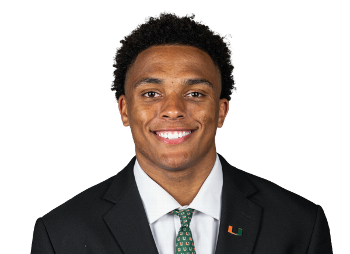
- Jakobe Thomas
← Back to NFL Draft Big Board Jakobe Thomas Miami HT: 6020 WT: 200 YR: SR POS: S OVR RK 99 POS RK CEILING POTENTIAL KEY STRENGTHS Downhill Aggression Playmaking / Ball Skills Versatility KEY CONCERNS Tackling Consistency Eye Discipline Processing Speed PLAYSTYLE & SCHEME FIT Thomas is a tone-setting, downhill safety whose game is built on aggression, physicality, and disruption. He is at his best playing near the line of scrimmage as a robber, box safety, or pressure piece, where his click-and-close burst, blitz value, and ball skills can be maximized. While his aggressiveness can pull him out of structure at times, his versatility and playmaking ability project well to NFL defenses that value attacking safeties. PLAYER COMPARISON: CEILING GRADE ANALYSIS Mid-Level Starter Potential (60-64) A solid, dependable starter with the potential to exceed expectations. They have good athleticism and tools but may lack elite traits. While they show flashes of high-level play, they also have some notable weaknesses that must be developed. These players often need 2-3 years to establish themselves. Primary scout: Brandon Lundberg Football Scout 365 NFL Draft Grade Scale Football Scout 365 grades reflect a prospect’s projected long-term NFL value and role. Draft ranges are general value projections, not predictions of an exact selection. Positional value, team needs, scheme fit, medical information and athletic testing can influence where a player is ultimately selected. How Football Scout 365 Grades NFL Draft Prospects Elite (75+): A rare, high-impact prospect with elite physical tools, advanced football intelligence and the ability to make an immediate NFL impact. Elite prospects carry franchise-altering potential and typically project as top 5–10 selections in the first round. Near Elite (70–74): A high-caliber prospect with outstanding physical tools, strong football intelligence and only minor developmental limitations. Near Elite prospects project as significant early-career contributors with Pro Bowl upside and first-round draft value. High-End Starter Potential (65–69): A starting-caliber prospect with strong physical tools, quality technical skills and a defined NFL role. These players may require development before reaching their ceiling but generally carry second- or third-round draft value. Mid-Level Starter Potential (60–64): A solid prospect with NFL-level tools and a pathway to becoming a dependable starter if key limitations are addressed. These players generally carry third- to fifth-round draft value. Low-Level Starter Potential (55–59): A developmental prospect who could become a low-end starter, high-end backup or valuable specialist in the right role. These players generally carry fifth- to seventh-round draft value. Backup Level (50–54): A depth or rotational prospect with enough functional ability to compete for an NFL roster spot but limited long-term starting potential. These players generally project as late Day 3 selections or priority undrafted free agents. Not NFL Level (Below 50): A developmental or camp prospect who does not currently demonstrate enough consistency, technical refinement or functional NFL traits to project as a regular contributor. These players generally project as undrafted free agents, practice-squad candidates or camp invitations. Draft position can vary based on positional value, team needs, scheme fit, medical evaluation and athletic testing.
- RJ Harvey
← Back to NFL Draft Big Board RJ Harvey UCF HT: 5090 WT: 210 YR: RSR POS: RB OVR RK 91 POS RK CEILING POTENTIAL 7 KEY STRENGTHS Lateral Agility & Footwork Vision & Patience Acceleration & Burst KEY CONCERNS Ball Security Issues Pass Protection Decision-Making Behind LOS PLAYSTYLE & SCHEME FIT Harvey is an elusive, agile, and versatile running back with high-level vision, jump-cuts, and open-field speed that allow him to create explosive plays. His contact balance, acceleration, and footwork make him a difficult runner to bring down, but his smaller frame, occasional indecisiveness behind the line, and ball security concerns limit his ceiling as a full-time starter. Best utilized in an inside-zone or gap-heavy rushing scheme, Harvey projects as a rotational RB with home-run ability and third-down upside in the right system. PLAYER COMPARISON: CEILING GRADE ANALYSIS Mid-Level Starter Potential (60-64) A solid, dependable starter with the potential to exceed expectations. They have good athleticism and tools but may lack elite traits. While they show flashes of high-level play, they also have some notable weaknesses that must be developed. These players often need 2-3 years to establish themselves. Primary scout: Brandon Lundberg Football Scout 365 NFL Draft Grade Scale Football Scout 365 grades reflect a prospect’s projected long-term NFL value and role. Draft ranges are general value projections, not predictions of an exact selection. Positional value, team needs, scheme fit, medical information and athletic testing can influence where a player is ultimately selected. How Football Scout 365 Grades NFL Draft Prospects Elite (75+): A rare, high-impact prospect with elite physical tools, advanced football intelligence and the ability to make an immediate NFL impact. Elite prospects carry franchise-altering potential and typically project as top 5–10 selections in the first round. Near Elite (70–74): A high-caliber prospect with outstanding physical tools, strong football intelligence and only minor developmental limitations. Near Elite prospects project as significant early-career contributors with Pro Bowl upside and first-round draft value. High-End Starter Potential (65–69): A starting-caliber prospect with strong physical tools, quality technical skills and a defined NFL role. These players may require development before reaching their ceiling but generally carry second- or third-round draft value. Mid-Level Starter Potential (60–64): A solid prospect with NFL-level tools and a pathway to becoming a dependable starter if key limitations are addressed. These players generally carry third- to fifth-round draft value. Low-Level Starter Potential (55–59): A developmental prospect who could become a low-end starter, high-end backup or valuable specialist in the right role. These players generally carry fifth- to seventh-round draft value. Backup Level (50–54): A depth or rotational prospect with enough functional ability to compete for an NFL roster spot but limited long-term starting potential. These players generally project as late Day 3 selections or priority undrafted free agents. Not NFL Level (Below 50): A developmental or camp prospect who does not currently demonstrate enough consistency, technical refinement or functional NFL traits to project as a regular contributor. These players generally project as undrafted free agents, practice-squad candidates or camp invitations. Draft position can vary based on positional value, team needs, scheme fit, medical evaluation and athletic testing.
- KC Concepcion
← Back to NFL Draft Big Board KC Concepcion Texas A&M HT: 5110 WT: 187 YR: JR POS: WR OVR RK 35 POS RK CEILING POTENTIAL KEY STRENGTHS Elite Route Tempo YAC Upside Slot/Boundary Flexibility KEY CONCERNS Small Frame Blocking Limitations Functional Play Speed PLAYSTYLE & SCHEME FIT KC Concepcion is a sudden, quick-twitch slot weapon who wins with burst, short-area separation, and run-after-catch creativity. He creates immediate throwing windows with acceleration and sharp break mechanics, consistently stressing defenders at leverage points. Concepcion thrives on option routes, quick game concepts, and space touches, where his agility and vision allow him to generate explosive plays underneath. While he can uncover quickly, his routes rely more on speed than pacing, and he does not consistently vary tempo to manipulate coverage. His catch consistency and ability to adjust to off-speed or contested throws remain developmental areas, and his frame limits his catch radius against physical defenders. He projects as a high-volume slot playmaker with strong YAC value in spacing-based systems. PLAYER COMPARISON: CEILING GRADE ANALYSIS High-End Starter Potential (65-69) A player expected to become a top-tier starter within their first few years. They possess strong physical tools and good technical skills but may have some limitations in their game. With development, they can reach near-elite levels and provide consistent impact at their position. Primary scout: Brandon Lundberg Football Scout 365 NFL Draft Grade Scale Football Scout 365 grades reflect a prospect’s projected long-term NFL value and role. Draft ranges are general value projections, not predictions of an exact selection. Positional value, team needs, scheme fit, medical information and athletic testing can influence where a player is ultimately selected. How Football Scout 365 Grades NFL Draft Prospects Elite (75+): A rare, high-impact prospect with elite physical tools, advanced football intelligence and the ability to make an immediate NFL impact. Elite prospects carry franchise-altering potential and typically project as top 5–10 selections in the first round. Near Elite (70–74): A high-caliber prospect with outstanding physical tools, strong football intelligence and only minor developmental limitations. Near Elite prospects project as significant early-career contributors with Pro Bowl upside and first-round draft value. High-End Starter Potential (65–69): A starting-caliber prospect with strong physical tools, quality technical skills and a defined NFL role. These players may require development before reaching their ceiling but generally carry second- or third-round draft value. Mid-Level Starter Potential (60–64): A solid prospect with NFL-level tools and a pathway to becoming a dependable starter if key limitations are addressed. These players generally carry third- to fifth-round draft value. Low-Level Starter Potential (55–59): A developmental prospect who could become a low-end starter, high-end backup or valuable specialist in the right role. These players generally carry fifth- to seventh-round draft value. Backup Level (50–54): A depth or rotational prospect with enough functional ability to compete for an NFL roster spot but limited long-term starting potential. These players generally project as late Day 3 selections or priority undrafted free agents. Not NFL Level (Below 50): A developmental or camp prospect who does not currently demonstrate enough consistency, technical refinement or functional NFL traits to project as a regular contributor. These players generally project as undrafted free agents, practice-squad candidates or camp invitations. Draft position can vary based on positional value, team needs, scheme fit, medical evaluation and athletic testing.
- Mason Taylor
← Back to NFL Draft Big Board Mason Taylor LSU HT: 6050 WT: 255 YR: JR POS: TE OVR RK 64 POS RK CEILING POTENTIAL 3 KEY STRENGTHS Natural Hands-Catcher Contested Catch Ability Football IQ & Pedigree KEY CONCERNS Creating Separation Limited Vertical Speed One-Speed Route Runner PLAYSTYLE & SCHEME FIT Mason Taylor is an athletic, fluid-moving tight end with natural hands, good route awareness, and the ability to thrive as a versatile receiving option. He has experience lining up in-line, in the slot, and as an H-back, giving him added value to offensive schemes. His blocking needs refinement, especially against stronger edge defenders, but his technique and effort suggest he can improve. Best suited for an offense that utilizes two-tight-end sets or an "F" role where he can operate as a mismatch weapon in the passing game. PLAYER COMPARISON: CEILING GRADE ANALYSIS Mid-Level Starter Potential (60-64) A solid, dependable starter with the potential to exceed expectations. They have good athleticism and tools but may lack elite traits. While they show flashes of high-level play, they also have some notable weaknesses that must be developed. These players often need 2-3 years to establish themselves. Primary scout: Brandon Lundberg Football Scout 365 NFL Draft Grade Scale Football Scout 365 grades reflect a prospect’s projected long-term NFL value and role. Draft ranges are general value projections, not predictions of an exact selection. Positional value, team needs, scheme fit, medical information and athletic testing can influence where a player is ultimately selected. How Football Scout 365 Grades NFL Draft Prospects Elite (75+): A rare, high-impact prospect with elite physical tools, advanced football intelligence and the ability to make an immediate NFL impact. Elite prospects carry franchise-altering potential and typically project as top 5–10 selections in the first round. Near Elite (70–74): A high-caliber prospect with outstanding physical tools, strong football intelligence and only minor developmental limitations. Near Elite prospects project as significant early-career contributors with Pro Bowl upside and first-round draft value. High-End Starter Potential (65–69): A starting-caliber prospect with strong physical tools, quality technical skills and a defined NFL role. These players may require development before reaching their ceiling but generally carry second- or third-round draft value. Mid-Level Starter Potential (60–64): A solid prospect with NFL-level tools and a pathway to becoming a dependable starter if key limitations are addressed. These players generally carry third- to fifth-round draft value. Low-Level Starter Potential (55–59): A developmental prospect who could become a low-end starter, high-end backup or valuable specialist in the right role. These players generally carry fifth- to seventh-round draft value. Backup Level (50–54): A depth or rotational prospect with enough functional ability to compete for an NFL roster spot but limited long-term starting potential. These players generally project as late Day 3 selections or priority undrafted free agents. Not NFL Level (Below 50): A developmental or camp prospect who does not currently demonstrate enough consistency, technical refinement or functional NFL traits to project as a regular contributor. These players generally project as undrafted free agents, practice-squad candidates or camp invitations. Draft position can vary based on positional value, team needs, scheme fit, medical evaluation and athletic testing.
- Andru Phillips
Andru Phillips has shown strong testing numbers at the NFL Scouting Combine with an impressive 4.48-second 40-yard dash and notable jumps. These metrics suggest a very good level of athletic ability, particularly in terms of speed and explosiveness, which are critical for a cornerback. Despite not completing agility testing at the combine, his overall performance has continued the positive buzz from a good Senior Bowl showing. ← Back to NFL Draft Big Board Andru Phillips Kentucky HT: 6000 WT: 187 YR: JR POS: CB OVR RK 96 POS RK CEILING POTENTIAL 17 KEY STRENGTHS Quick Feet Fluid Hips Physical vs. Run KEY CONCERNS Be More Instinctual Double Moves Low Ball Production PLAYSTYLE & SCHEME FIT Phillips is suited for a slot cornerback role in the NFL, fitting the size profile for most nickels. His explosive athleticism and solid speed make him an asset in both man and zone coverages. Ideal for teams looking for versatility and depth in their secondary. PLAYER COMPARISON: CEILING GRADE ANALYSIS Mid-Level Starter Potential (60-64) A solid, dependable starter with the potential to exceed expectations. They have good athleticism and tools but may lack elite traits. While they show flashes of high-level play, they also have some notable weaknesses that must be developed. These players often need 2-3 years to establish themselves. Primary scout: Brandon Lundberg Football Scout 365 NFL Draft Grade Scale Football Scout 365 grades reflect a prospect’s projected long-term NFL value and role. Draft ranges are general value projections, not predictions of an exact selection. Positional value, team needs, scheme fit, medical information and athletic testing can influence where a player is ultimately selected. How Football Scout 365 Grades NFL Draft Prospects Elite (75+): A rare, high-impact prospect with elite physical tools, advanced football intelligence and the ability to make an immediate NFL impact. Elite prospects carry franchise-altering potential and typically project as top 5–10 selections in the first round. Near Elite (70–74): A high-caliber prospect with outstanding physical tools, strong football intelligence and only minor developmental limitations. Near Elite prospects project as significant early-career contributors with Pro Bowl upside and first-round draft value. High-End Starter Potential (65–69): A starting-caliber prospect with strong physical tools, quality technical skills and a defined NFL role. These players may require development before reaching their ceiling but generally carry second- or third-round draft value. Mid-Level Starter Potential (60–64): A solid prospect with NFL-level tools and a pathway to becoming a dependable starter if key limitations are addressed. These players generally carry third- to fifth-round draft value. Low-Level Starter Potential (55–59): A developmental prospect who could become a low-end starter, high-end backup or valuable specialist in the right role. These players generally carry fifth- to seventh-round draft value. Backup Level (50–54): A depth or rotational prospect with enough functional ability to compete for an NFL roster spot but limited long-term starting potential. These players generally project as late Day 3 selections or priority undrafted free agents. Not NFL Level (Below 50): A developmental or camp prospect who does not currently demonstrate enough consistency, technical refinement or functional NFL traits to project as a regular contributor. These players generally project as undrafted free agents, practice-squad candidates or camp invitations. Draft position can vary based on positional value, team needs, scheme fit, medical evaluation and athletic testing.