Search Results
Search this site
1757 results found with an empty search
- Omarion Hampton 2025 Dynasty Superflex Fantasy Outlook and League-Winning Potential
Omarion Hampton 2025 Dynasty Superflex Fantasy Outlook and League-Winning Potential If you’re building for a fantasy football championship in 2025, you need more than just reliable starters—you need league winners. That’s the focus of this weekly series: identifying top rookies and ascending Year 2 and Year 3 players in Superflex dynasty formats with the traits, talent, and team situation to deliver elite fantasy production. Whether it’s a rookie RB ready to explode behind a run-heavy scheme or a second-year WR set to leap forward—we’re spotlighting players who could win you your league in 2025. Omarion Hampton Scouting Snapshot Team: Los Angeles Chargers Position: RB Age: 22 Year: Rookie Format: Dynasty Superflex & Superflex Redraft 0.5 PPR Current ADP: 41st overall (RB16 in Superflex formats – FantasyPros) Omarion Hampton enters the NFL with a powerful frame (6'0", 220 lbs), elite college production, and underrated receiving ability. At North Carolina, he rushed for over 3,100 yards and 30 touchdowns across his final two seasons and added 67 receptions for nearly 600 yards. He blends tackle-breaking strength with fluid vision and acceleration, showing the ability to glide through tight lanes and punish defenders at the second level. Hampton isn’t just a bruiser—he’s a complete back with every-down upside and real PPR value. Why Omarion Hampton Could Be a League Winner in 2025 Najee Harris was supposed to block the rookie’s path to early fantasy relevance—until a freak Fourth of July fireworks injury changed everything. Harris’s uncertain recovery timeline opens the door for Hampton to seize the early-down workload in a Greg Roman offense that prioritizes physical, downhill running backs. Even if Harris returns, the Chargers invested first-round draft capital in Hampton, and the split could tilt 55-45 or more in his favor by midseason. This backfield is built for volume, and Roman’s history with bell cow RBs (e.g., Frank Gore, Mark Ingram, J.K. Dobbins) is well-documented. Hampton’s traits fit perfectly: vision, burst, contact balance, and soft hands. If Harris falters or the offense finds rhythm with the rookie in the lead, fantasy managers who took the plunge in Round 4 could be holding a league-winner by November. Omarion Hampton 2025 Dynasty Superflex Fantasy Outlook Omarion Hampton currently ranks 41st overall and RB16 in Superflex formats, putting him in the mid-3rd to early-4th round range. That’s incredible value for a player with clear three-down upside and red zone opportunity. Early projections point to 240+ touches, 1,400 scrimmage yards, 30 receptions, and double-digit touchdowns—numbers that would place him in RB1 territory. Whether you're drafting him as an RB2 in dynasty startups or targeting him as a breakout stash in redraft, Hampton is the type of rookie runner who rises throughout the season. Don’t wait. Secure him early, and by the fantasy playoffs, he could be the player that swings your championship.
- Adonai Mitchell
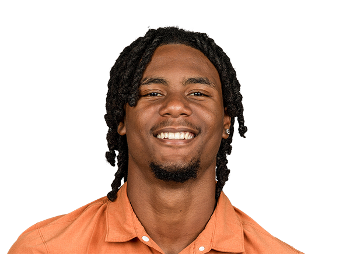
Mitchell's High-End Starter Potential category indicates his ability to maximize his strengths as a receiver. His route running and athleticism will be why he is considered a day-one NFL Draft prospect. ← Back to NFL Draft Big Board Adonai Mitchell Texas HT: 6020 WT: 205 YR: JR POS: WR OVR RK 20 POS RK CEILING POTENTIAL 5 KEY STRENGTHS Route Running Hands Can And Run KEY CONCERNS Physicality Deep Ball Tracking Size PLAYSTYLE & SCHEME FIT Adonai Mitchell is a versatile and athletic wide receiver, proficient in deep routes and tracking the ball effectively. His long arms and frame enable him to play bigger than his size, making him a threat in various passing situations. Mitchell's strengths lie in his ability to make big plays, his strong hands, and route-running skills. He fits well in schemes that utilize vertical threats and require receivers to create separation and make big plays downfield. PLAYER COMPARISON: CEILING GRADE ANALYSIS Near Elite (70-74) A high-caliber prospect who is expected to become a significant contributor by Year 2. These players have outstanding physical tools and strong football IQ, with only minor flaws in their game. They demonstrate consistency at a high level and project as future Pro Bowl-caliber players if properly developed. Primary scout: Brandon Lundberg Football Scout 365 NFL Draft Grade Scale Football Scout 365 grades reflect a prospect’s projected long-term NFL value and role. Draft ranges are general value projections, not predictions of an exact selection. Positional value, team needs, scheme fit, medical information and athletic testing can influence where a player is ultimately selected. How Football Scout 365 Grades NFL Draft Prospects Elite (75+): A rare, high-impact prospect with elite physical tools, advanced football intelligence and the ability to make an immediate NFL impact. Elite prospects carry franchise-altering potential and typically project as top 5–10 selections in the first round. Near Elite (70–74): A high-caliber prospect with outstanding physical tools, strong football intelligence and only minor developmental limitations. Near Elite prospects project as significant early-career contributors with Pro Bowl upside and first-round draft value. High-End Starter Potential (65–69): A starting-caliber prospect with strong physical tools, quality technical skills and a defined NFL role. These players may require development before reaching their ceiling but generally carry second- or third-round draft value. Mid-Level Starter Potential (60–64): A solid prospect with NFL-level tools and a pathway to becoming a dependable starter if key limitations are addressed. These players generally carry third- to fifth-round draft value. Low-Level Starter Potential (55–59): A developmental prospect who could become a low-end starter, high-end backup or valuable specialist in the right role. These players generally carry fifth- to seventh-round draft value. Backup Level (50–54): A depth or rotational prospect with enough functional ability to compete for an NFL roster spot but limited long-term starting potential. These players generally project as late Day 3 selections or priority undrafted free agents. Not NFL Level (Below 50): A developmental or camp prospect who does not currently demonstrate enough consistency, technical refinement or functional NFL traits to project as a regular contributor. These players generally project as undrafted free agents, practice-squad candidates or camp invitations. Draft position can vary based on positional value, team needs, scheme fit, medical evaluation and athletic testing.
- 404 | Football Scout 365
There’s Nothing Here... We can’t find the page you’re looking for. Check the URL, or head back home. Go Home
- Antitrust Implications of Enforcing NCAA Bylaw 11.6.1: Yale Journal On Regulation
Antitrust Implications of Enforcing NCAA Bylaw 11.6.1: Yale Journal On Regulation Daniel A. Crane's Analysis of NCAA Bylaw 11.6.1 and Its Antitrust Implications: In his Yale Journal on Regulation article "More on Sign Stealing and Antitrust," dated November 14, 2023, Daniel A. Crane examines the antitrust implications of NCAA Bylaw 11.6.1 in light of Michigan Football's sign-stealing allegations. Crane argues that while the rule is not inherently illegal under antitrust laws, its enforcement could face legal scrutiny. He asserts the rule, viewed more as financial than game-related, might restrain competition, leading to antitrust risks. Click To Read About: Michigan Football Sign Stealing - Potential Loophole In NCAA Bylaws? Key Points from Crane's Article: Rule of Reason: Bylaw 11.6.1 is subject to antitrust's rule of reason, adding complexity and unpredictability to its enforcement. Financial Focus: The rule, while not directly mentioning money, impacts financial aspects like scouting. Competition Restraint: Agreements to stop scouting could be illegal under antitrust laws, but Bylaw 11.6.1 avoids this due to its integration into NCAA regulations. Effects Argument: The rule's adherence or violation might affect on-field performance, but its financial motivation remains unchanged. Salary Cap Analogy: Similar to professional sports salary caps, a total ban on scouts is akin to a $0 salary cap and could be anticompetitive. Legal Risks: Enforcing the rule carries antitrust risk; a well-crafted legal complaint could lead to significant proceedings under the Sherman Act. Relevance to Michigan Football's Sign-Stealing Allegations: Crane's analysis indicates that enforcing Bylaw 11.6.1 in cases like Michigan's sign-stealing allegations might encounter antitrust law challenges, raising questions about the rule's legitimacy and NCAA's enforcement approach. In-Depth Breakdown of The Daniel Crane Article On Sign Stealing and Antitrust Daniel A. Crane's article in the Yale Journal on Regulation discusses the antitrust implications of enforcing NCAA Bylaw 11.6.1 in the context of sign-stealing allegations, like those associated with Michigan Football. Crane points out that while some business practices are outright illegal under antitrust laws, a rule prohibiting scouting would be judged under antitrust's rule of reason, which is more nuanced and unpredictable. He elaborates that the no-scouting rule is seen more as a financial rule than a game rule. The rule doesn’t directly mention money but aims to prohibit conduct (scouting) that inherently involves financial considerations. For instance, an agreement between schools to discontinue scouting would typically be illegal under antitrust laws as it restrains competition. However, Bylaw 11.6.1 escapes per se illegality because it's part of NCAA’s regulation of college athletics, though it still carries antitrust risks. Crane also touches on the effects argument, where adherence or violation of the rule by schools could impact on-field performance. He argues that this doesn’t change the underlying financial motivation of such rules, likening it to rules on player compensation or NIL (Name, Image, Likeness), which were struck down in previous cases. He further illustrates his point using the example of salary caps in professional sports, which are legal only due to a statutory labor exemption for collective bargaining. Absent this exemption, such salary caps would violate antitrust laws. This analogy is used to show how a total prohibition on scouts, as in Bylaw 11.6.1, could be seen as a $0 salary cap and thus anti-competitive. In conclusion, Crane emphasizes that while there are arguments that the no-scouting rule doesn't violate antitrust laws, enforcing Bylaw 11.6.1 still creates antitrust risk. He suggests that a well-crafted complaint against this rule under the Sherman Act could likely survive a motion to dismiss, leading to discovery and potential legal complications. In the context of Michigan Football's sign-stealing allegations, this analysis suggests that the enforcement of Bylaw 11.6.1 could potentially face legal challenges under antitrust law, raising questions about the rule's validity and the NCAA's enforcement actions.
- 2024 NFL Draft: Drake Maye By The Numbers Analysis
2024 NFL Draft: Drake Maye By The Numbers Analysis As we move into the 2024 NFL Draft player analysis before the 2023 college football season, we will provide in-depth scouting reports, film reviews, and more, covering the top players expected to declare for the 2024 NFL Draft. Each year the evaluation process starts with preliminary evaluations. Some are based on limited film reviews in the early stages; for others, we already have a full four games evaluated or more, and the final grade depends on the prospect's final season of film in college. Today, we look closer at the story the data can tell us for UNC QB Drake Maye, who is a projected 1st-round pick in the 2024 NFL Draft. Football Scout 365 NFL Draft Player Rankings and Analysis Don't forget to check out the Football Scout 365 NFL Draft Big Board. We have improved our analysis in recent years, adding player comparisons, NFL scheme fits, and more. Find Us On YouTube Our YouTube channel has become a central hub for our top NFL Draft player evaluations, fantasy football, and NFL analysis. Scouting Drake Maye By The Numbers When Under Pressure In 2022, Drake Maye was under pressure on 37% of his dropbacks. There were only two QB's in FBS with 200+ dropbacks under pressure. The other is Washington State QB Cameron Ward. Vs. a Blitz (5 or more) Drake Maye was one of only 5 QB's who faced a blitz (5 or more man pressure) on 200+ dropbacks. Maye faced a blitz on 36% of his throws. Keeping A Play Alive Drake Maye is an underrated athlete. He excelled at buying time to keep plays alive or pick up a first down with his legs in 2022. Among all QB's with 100+ pressured dropbacks, Maye extended plays out to 2.78 sec on average (28th). He led the nation in total scrambles; he ranked 6th nationally with 79 total 1st downs vs. pressure. On Target Throws In A Clean Or Dirty Pocket An area he can improve when under pressure is his on-target throws while under pressure. His adjusted completion rate while under pressure (62%) vs. not pressured (80%) drops by 18%. Big Time Throws Drake Maye led FBS with 45 big-time throws in 2022 when pressured or not pressured. These throws are considered tight window throws. He did have 14 big-time throws vs. pressure, which is one better than Caleb Williams (13). Both are top 5 in this category while under pressure. Bad Decisions Drake Maye does need to clean up the decision-making. He was late or threw the football into traffic 16 times in 2022. By comparison, Caleb Williams had 11 such throws, while QB's from the 2022 NFL like Jake Haener, Bryce Young, Jaren Hall, Stetson Bennett, Anthony Richardson, Will Levis, and Max Duggan put the ball in harm's way at a lower rate. Caleb Williams finished 2022 with 11 such throws. Three Level Accuracy We discuss the three-level accuracy all the time and how it translates to the NFL, Short, intermediate, and deep throws. Short (0-9yds depth) Drake Maye has some work to do on the short throws, but his higher ADOT (10.4 yds) indicates he pushes the ball downfield more consistently than he checks it down, or the play calling could dictate these numbers in some way. Intermediate Throws (10-19yds depth) Maye is good in this category; he also needs some work here. He can make any throw, and the intermediate throws are the throws that translate best to the NFL level. His adjusted completion rate from this range is 66%. He ranked 24th nationally among QB's with at least 200 dropbacks in 2022. Deep (20+ yds depth) The deep accuracy improved a lot throughout 2022 for Drake Maye. He finished 2022 with an adjusted completion rate of 53% in 2022. He ranked 9th nationally among QB's with 20+ dropbacks. As a Runner Drake Maye is an underrated runner. He has 184 total runs, 76 of which are notated as scrambles. He rushed for 899 sack-adjusted total yards and 7 TD's. *North Carolina ranked near the bottom of college football in 2022 in sacks allowed (40). As a Passer In 2022, Drake Maye ranked 4th nationally in total pass yards with 4293; Caleb Williams, by comparison, finished 3rd with 4539 yards. Maye had the 6th most TD passes with 37, while Caleb Williams led the nation with 42. Drake Maye also did an excellent job of taking care of the football from a turnover perspective. Even though he needs to clean up the decision-making, he only had 7 total INT's. Caleb Williams, by comparison, had 5. Reliance on RPO's and Zone Read Game RPO's There was a little concern before watching Drake Maye's tape about the reliance on RPO's similar to Sam Howell when I initially evaluated him, but that is not the case for Maye. The good news is that the RPO element is there when needed. He attempted an RPO on 28 of his total dropbacks in 2022. He completed 19 for 202 yards. He averaged 7.2 yards per attempt. By comparison, Caleb Williams attempted 77 such throws for 502 yards and averaged 6.5 yards per RPO attempt. Zone Read If we subtract the zone read attempts, Drake Maye led the nation in QB runs among all QB's. The Zone Read is in his game, and he effectively used the zone read on 8 total attempts scoring 3 TD's and picking up 5 1st downs. By comparison, Caleb Williams executed a zone read 31 times for 147 yards, 4 TD's, and 17 first downs. Other Run Types, Designed, Scrambles Without Zone Read We noted above that Drake Maye had 77 rush attempts when pressured. We also noted that he amassed 899 rush yards total in 2022. He led the nation in QB runs that were designed, sneaks, draws, or scrambles (not zone read) with 131 such attempts. He was also 2nd in yards after contact, with 387 yards in this category. He was also elusive in space, forcing 19 missed tackles. Maye led the nation with 51 1st downs in the run game, and again this is non-zone read run types. *Some data is comprised using three different resources and combined within the analysis. We use PFF, SIS, and our internal data.
- Kyngstonn Viliamu-Asa
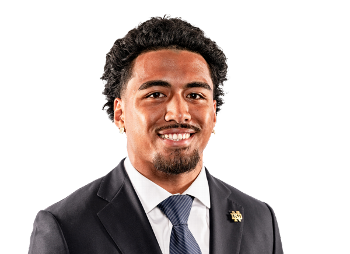
← Back to NFL Draft Big Board Kyngstonn Viliamu-Asa Notre Dame HT: 6010 WT: 220 YR: SR POS: LB OVR RK 44 POS RK CEILING POTENTIAL LB2 High-End Starter Potential KEY STRENGTHS Run Defense / Block Deconstruction Range / Pursuit Speed Alignment Versatility KEY CONCERNS Durability / Medical Risk Functional Strength Coverage Ceiling PLAYSTYLE & SCHEME FIT Kyngstonn Viliamu-Asa is a versatile Three-Down MIKE with high-end run-defense instincts, sideline-to-sideline range, and the length/twitch to contribute as a pressure piece. He diagnoses quickly, stacks blockers with violent hands, fills downhill with leverage, and has shown enough coverage growth to stay on the field in zone-heavy and tight-end matching situations. His best NFL fit is in a multiple front that lets him play inside while also mugging gaps or rushing off the edge. The concern is durability and functional strength after multiple ACL injuries, but a healthy 2026 season could push him into Round 1 territory. PLAYER COMPARISON: Chad Muma Viliamu-Asa fits the Chad Muma archetype as a long, instinctive three-down linebacker with range, run-fit discipline, zone coverage utility, and enough blitz value to stay active in sub-packages. KVA has more edge-rush and hybrid usage in his profile, but Muma is the cleanest NFL comparison for the processing, pursuit, tackling temperament, and every-down linebacker pathway. CEILING GRADE ANALYSIS High-End Starter Potential (65-69) A player expected to become a top-tier starter within their first few years. They possess strong physical tools and good technical skills but may have some limitations in their game. With development, they can reach near-elite levels and provide consistent impact at their position. Primary scout: Brandon Lundberg Football Scout 365 NFL Draft Grade Scale Football Scout 365 grades reflect a prospect’s projected long-term NFL value and role. Draft ranges are general value projections, not predictions of an exact selection. Positional value, team needs, scheme fit, medical information and athletic testing can influence where a player is ultimately selected. How Football Scout 365 Grades NFL Draft Prospects Elite (75+): A rare, high-impact prospect with elite physical tools, advanced football intelligence and the ability to make an immediate NFL impact. Elite prospects carry franchise-altering potential and typically project as top 5–10 selections in the first round. Near Elite (70–74): A high-caliber prospect with outstanding physical tools, strong football intelligence and only minor developmental limitations. Near Elite prospects project as significant early-career contributors with Pro Bowl upside and first-round draft value. High-End Starter Potential (65–69): A starting-caliber prospect with strong physical tools, quality technical skills and a defined NFL role. These players may require development before reaching their ceiling but generally carry second- or third-round draft value. Mid-Level Starter Potential (60–64): A solid prospect with NFL-level tools and a pathway to becoming a dependable starter if key limitations are addressed. These players generally carry third- to fifth-round draft value. Low-Level Starter Potential (55–59): A developmental prospect who could become a low-end starter, high-end backup or valuable specialist in the right role. These players generally carry fifth- to seventh-round draft value. Backup Level (50–54): A depth or rotational prospect with enough functional ability to compete for an NFL roster spot but limited long-term starting potential. These players generally project as late Day 3 selections or priority undrafted free agents. Not NFL Level (Below 50): A developmental or camp prospect who does not currently demonstrate enough consistency, technical refinement or functional NFL traits to project as a regular contributor. These players generally project as undrafted free agents, practice-squad candidates or camp invitations. Draft position can vary based on positional value, team needs, scheme fit, medical evaluation and athletic testing.
- 2025 NFL Draft: Top Interior Defensive Line Rankings – Mason Graham, Kenneth Grant Headline Elite Class
2025 NFL Draft: Top Interior Defensive Line Rankings – Mason Graham, Kenneth Grant Headline Elite Class The 2025 NFL Draft features one of the deepest interior defensive line classes in recent memory, headlined by Michigan’s Mason Graham, a projected top-five pick. The value of dominant IDL talent has never been higher, with teams like the Philadelphia Eagles proving that success starts in the trenches. In today’s NFL, the ability to generate pressure with just four rushers is critical for defending high-powered passing offenses, and this class is loaded with players who can collapse the pocket and control the run game. The rankings below present a tiered breakdown of the top interior defensive linemen using our Football Scout 365 grade scale. Each tier provides insight into where these prospects stand ahead of the 2025 NFL Draft, based on a combination of film evaluation and analytics. Our grading process mirrors that of NFL front offices, ensuring a comprehensive assessment of each prospect’s strengths, weaknesses, and overall impact potential at the next level. 2025 NFL Draft: Interior Defensive Line Rankings Elite - Top 5-10 Picks (1st Round) A rare, high-impact prospect with the potential to be an instant NFL star. 1) Mason Graham | Michigan | Ht: 6'3" | Wt: 318 lbs Player Comparison: Quinnen Williams Analysis: Graham is a dominant interior force with elite leverage, violent hands, and explosive first-step quickness. His ability to penetrate gaps and shed blocks makes him a disruptive presence in both the run and pass game. While his arm length isn’t elite, his technique, power, and motor make him an ideal fit in multiple defensive schemes. Mason Graham is Elite! High-End Starter Potential - 2nd/3rd Round Projection Players in this tier have the tools to become high-level starters early in their NFL careers. 2) Kenneth Grant | Michigan | Ht: 6'3" | Wt: 340 lbs Player Comparison: Jordan Davis Analysis: Grant is a massive, athletic defensive tackle with impressive quickness for his size and dominant run-stopping ability. His power and first-step quickness allow him to collapse the pocket, but he must refine his pass-rush plan and pad level. He fits best as a nose tackle in a 3-4 or a 1-tech in a 4-3, where he can clog lanes and disrupt the interior. 3) Walter Nolen | Ole Miss | Ht: 6'3" | Wt: 304 lbs Player Comparison: Leonard Williams Analysis: Nolen is a powerful and explosive interior defender with quick hands and violent upper-body strength, allowing him to dominate blockers. His speed-to-power conversion makes him a disruptive bull rusher, but he must improve his leverage and hand placement. Best suited as a 3-tech in a 4-3, with the versatility to play 4i or 5-tech in odd fronts. 4) Darius Alexander | Toledo | Ht: 6'4" | Wt: 310 lbs Player Comparison: Not Available Analysis: Alexander is a powerful and athletic defensive lineman with elite run-stopping ability, violent hands, and strong leverage control. His quick get-off makes him disruptive, but his inconsistent motor and lack of pass-rush production are concerns. He fits best as a 3-tech in a 4-3 or a rotational DT in a 3-4 scheme. 5) Derrick Harmon | Oregon | Ht: 6'5" | Wt: 310 lbs Player Comparison: DaQuan Jones Analysis: Harmon is a versatile defensive lineman with size, strength, and technique to be a force against the run. He can anchor against double teams, shed blocks, and generate interior push, though he lacks elite pass-rush ability. Best suited as a 2i-tech in an even front but capable of playing multiple positions along the defensive line. 6) T.J. Sanders | South Carolina | Ht: 6'4" | Wt: 290 lbs Player Comparison: Not Available Analysis: Sanders is a long, athletic interior lineman with an explosive first step and fluid movement skills that allow him to generate consistent pass-rush pressure. He thrives as a penetrating 3-tech but struggles against double-teams and must improve his run defense. If he refines his technique and adds strength, he has high-end starting potential. Mid-Level Starter Potential - 4th/5th Round Projection These players project as solid rotational contributors with the potential to develop into quality starters. 7) Omarr Norman-Lott | Tennessee | Ht: 6'3" | Wt: 315 lbs Player Comparison: Maurice Hurst Analysis: Norman-Lott is an explosive interior pass rusher with a quick first step and violent hands. He has the ability to pressure the pocket but struggles with block recognition and consistency in the run game. Best suited as a penetrating 3-tech or a sub-package pass rusher. 8) Alfred Collins | Texas | Ht: 6'5" | Wt: 320 lbs Player Comparison: Dalvin Tomlinson Analysis: Collins is a dominant run-stopper with elite size, violent hands, and tremendous power. His ability to anchor against double-teams makes him an early-down asset, though his pass-rush upside is limited. Best suited for a gap-control scheme as a 3-4 DE or run-stuffing DT in a 4-3. 9) Joshua Farmer | Florida State | Ht: 6'3" | Wt: 318 lbs Player Comparison: Not Available Analysis: Farmer is a strong, versatile lineman with quick hands and lateral mobility. He fits best as a rotational 3-tech or 4i-tech but needs to refine his first-step quickness and ability to handle double teams. Has the raw power to develop into a quality starter. 10) Tyleik Williams | Ohio State | Ht: 6'3" | Wt: 315 lbs Player Comparison: Not Available Analysis: Williams is a powerful, thickly-built nose tackle who excels in a two-gap system as a run defender. His strong anchor and heavy hands allow him to control the interior, but his pass-rushing impact is limited. Best suited as a one-tech in a 4-3 or a zero-tech in an odd front.
- Penn State vs. Ohio State: Top 2025 NFL Draft Prospects & Matchup Analysis
Penn State vs. Ohio State: Top 2025 NFL Draft Prospects & Matchup Analysis No. 3 Penn State faces No. 4 Ohio State in a Week 10 showdown. Both teams have NFL talent and elite defenses, making this a must-watch matchup. Penn State vs. Ohio State: Key Matchup Analysis Penn State’s defense is one of the stingiest in the nation, allowing only 30 second-half points over seven games and excelling in both total yards and points allowed. Under offensive coordinator Andy Kotelnicki, Penn State’s offense has seen significant improvement, combining innovative play-calling with high red-zone efficiency. Ohio State’s offense, led by quarterback Will Howard, tops the Big Ten with 40.3 points per game and 471.9 total yards per game, showcasing a balanced attack that will put Penn State’s defense to the test. This top-10 clash also features numerous NFL Draft prospects, making it a must-watch game for scouts evaluating future stars on both sides of the ball. Top NFL Draft Prospects: Penn State vs. Ohio State Matchup This top-10 clash also features numerous NFL Draft prospects, making it a must-watch game for scouts evaluating future stars on both sides of the ball. Ohio State Buckeyes Offensive Overview: Ohio State’s offense ranks among the nation’s best, boasting 472.0 yards per game (7th) and a 0.621 points-per-play efficiency (3rd). Led by QB Will Howard, who excels in deep passing with 1,795 yards, 17 TDs, and a 183.9 QBR, the Buckeyes’ passing game helps set up their formidable rushing attack. With standout WR Jeremiah Smith, who has tallied 623 receiving yards and 8 TDs. WR Emeka Egbuka’s precise route-running and run-after-catch ability further pressures Penn State’s secondary, creating opportunities for Ohio State’s rushing duo of Quinshon Judkins and TreVeyon Henderson. With Henderson averaging 7.2 yards per carry and Judkins delivering power between the tackles, the Buckeyes can maintain offensive balance and sustain drives. Their elite red-zone efficiency (100%, 1st) underscores Ohio State’s multifaceted scoring potential. Will Howard, QB Status: Active Season Stats: 74.0% completion rate, 1,795 yards, 17 TDs, 4 INTs, 183.9 QBR Impact in This Game: Howard’s accuracy and decision-making are pivotal, especially against Penn State’s defensive pressure. His connection with Egbuka will be essential for sustaining drives and moving the ball downfield. Quinshon Judkins, RB Status: Active Season Stats: 520 rushing yards, 6.4 yards per carry, 6 TDs Impact in This Game: Judkins’ powerful running complements Ohio State’s ground game, helping to control the clock and wear down Penn State’s defense with his yards-after-contact ability. TreVeyon Henderson, RB Status: Active Season Stats: 449 rushing yards, 7.2 yards per carry, 4 TDs Impact in This Game: Henderson’s speed adds explosiveness to the Buckeyes’ run game, enabling him to create big plays that will stretch Penn State’s defense. Emeka Egbuka, WR Status: Active Season Stats: 43 receptions, 546 yards, 6 TDs, 12.7 yards per catch Impact in This Game: Egbuka’s route-running precision and run-after-catch ability make him a reliable option in the passing game, helping sustain Ohio State’s drives and creating scoring opportunities. Defensive Overview: Ohio State’s defense is a major force, allowing only 11.9 points per game (2nd) and stifling opponents’ rushing attempts to 92.0 yards per game (4th). DE JT Tuimoloau and Jack Sawyer form a formidable edge-rushing duo, ranking among the best in sacks, with a team sack rate of 9.71% (11th). CB Denzel Burke leads the secondary with lockdown coverage, crucial in neutralizing Penn State’s deep threats. The Buckeyes’ ability to pressure Penn State’s quarterback and force turnovers will be a game-defining factor. JT Tuimoloau, DE Status: Active Season Stats: 18 tackles, 4 sacks, 7 tackles for loss Impact in This Game: Tuimoloau’s edge presence will be crucial in containing Penn State’s backfield and pressuring the quarterback, potentially forcing Penn State into quick, low-yardage plays. Jack Sawyer, DE Status: Active Season Stats: 18 tackles, 2.5 sacks, 5 tackles for loss Impact in This Game: Sawyer’s strength and pursuit on the opposite edge enhance Ohio State’s pass-rushing capabilities, limiting Penn State’s downfield options and tightening the Buckeyes’ defensive coverage. Denzel Burke, CB Status: Active Season Stats: 20 tackles, 2 INTs, 31 return yards Impact in This Game: Burke’s coverage skills will be vital in neutralizing Penn State’s receivers, as his physicality and ball skills can help force turnovers or incomplete passes. Penn State Nittany Lions Offensive Overview: Penn State’s balanced attack ranks 11th in total yards (463.7 per game) and 5th in third-down conversion rate (50%). The Nittany Lions combine a strong run game, led by RB Nick Singleton, who averages 6.4 yards per carry, with an explosive downfield passing game behind QB Drew Allar. With a 71.3% completion rate and 1,640 yards, Allar’s play will be crucial—should he play—especially in keeping Ohio State’s pass rush in check. TE Tyler Warren is a versatile contributor in both blocking and short-yardage situations, adding reliable red-zone capabilities. Penn State’s play-calling under Andy Kotelnicki emphasizes balance and creativity, vital in challenging Ohio State’s defense. Drew Allar, QB Status: Game-time decision (knee) Season Stats: 71.3% completion rate, 1,640 yards, 12 TDs, 4 INTs, 174.6 QBR Impact in This Game: Allar’s poise and downfield accuracy will be pivotal if he plays, helping keep Ohio State’s pass rush in check. If Allar is unavailable, backup Beau Pribula’s inexperience may prompt a more conservative game plan focused on rushing. Nick Singleton, RB Status: Active Season Stats: 483 rushing yards, 6.4 yards per carry, 3 TDs Impact in This Game: Singleton’s explosiveness and ability to gain yards after contact will be key in establishing the run, maintaining offensive balance, and controlling the clock. Tyler Warren, TE Status: Active Season Stats: 47 receptions, 559 yards, 4 TDs, 11.9 yards per catch Impact in This Game: Warren’s role as a blocker and red-zone target is critical against Ohio State’s edge rushers. His ability to convert short-yardage opportunities can help sustain Penn State’s drives. Defensive Overview: Penn State’s defense ranks among the most dominant, allowing only 14.3 points per game (7th) and 93.1 rushing yards (6th). EDGE Abdul Carter, with 4 sacks and 9.5 tackles for loss, leads a strong front seven that excels in both pass rush and coverage support. Dani Dennis-Sutton and S Jaylen Reed further bolster a defense that thrives on limiting big plays and enforcing a low opponent completion rate (57.28%, 28th). Penn State’s defensive pressure on Ohio State’s QB Will Howard and coverage against Egbuka will be key to containing the Buckeyes’ explosive plays. Abdul Carter, EDGE Status: Active Season Stats: 22 tackles, 4 sacks, 9.5 tackles for loss Impact in This Game: Carter’s speed and explosiveness off the edge will be essential in pressuring Ohio State’s quarterback and limiting their passing efficiency. Dani Dennis-Sutton, EDGE Status: Active Season Stats: 12 tackles, 2 sacks, 5 tackles for loss Impact in This Game: Dennis-Sutton’s complementary pass rush adds depth to Penn State’s defense, challenging Ohio State’s offensive line and disrupting their passing rhythm. Jaylen Reed, S Status: Active Season Stats: 36 tackles, 2 sacks, 2 INTs, 41 return yards Impact in This Game: Reed’s instincts and playmaking ability will be essential in containing Ohio State’s deep threats and supporting run defense. Game Outlook Ohio State’s explosive offense, which averages 472.0 yards per game (7th) and scores at an elite rate of 0.621 points per play (3rd), faces its toughest defensive challenge yet against Penn State. To control the pace, Ohio State will look to establish its run game, led by Quinshon Judkins (520 yards, 6.4 yards per carry) and TreVeyon Henderson (449 yards, 7.2 yards per carry). Success on the ground will allow QB Will Howard, who averages 9.6 yards per pass (6th) and holds a 74.0% completion rate, to find gaps in Penn State’s secondary. However, Penn State’s defense ranks 4th nationally in opponent yards per game (267.7) and is holding offenses to just 93.1 rushing yards (7th) – making it critical for Ohio State to stay balanced and capitalize on early down opportunities to avoid third-and-long situations. Meanwhile, Penn State’s balanced offense, ranking 11th nationally in total yards (463.7 per game) with a 50% third-down conversion rate (5th), will need a strong ground game to keep Ohio State’s aggressive defense at bay. Running back Nick Singleton, averaging 6.4 yards per carry, will be a key figure in Penn State’s effort to sustain drives and open up play-action opportunities for QB Drew Allar, who boasts a 71.3% completion rate and ranks 4th in yards per pass (9.9). For Ohio State defensive coordinator Jim Knowles, preparing for the complex schemes of Penn State’s OC Andy Kotelnicki will require a disciplined approach. Kotelnicki’s red-zone efficiency (93.3%, 18th) and creativity in balancing the pass and run will challenge Ohio State’s top-10 defensive metrics, including a 9.71% sack rate (11th). Knowles will need to anticipate Kotelnicki’s moves, particularly in Penn State’s red-zone schemes, where TE Tyler Warren’s versatility (559 yards, 4 TDs) could present matchup issues for Ohio State’s linebackers. Ultimately, this showdown could be decided by which team can establish the run and force their opponent into a one-dimensional game. With Big Ten standings and playoff stakes on the line, each coordinator’s adjustments and the ability to pressure the quarterback at key moments will likely shape the outcome.
- 2026 NFL Draft Tight End Rankings: Kenyon Sadiq, Eli Stowers Lead a Versatile, Projection-Heavy Class
2026 NFL Draft Tight End Rankings: Kenyon Sadiq, Eli Stowers Lead a Versatile, Projection-Heavy Class The 2026 NFL Draft tight end rankings deliver at least one true Day 1 prospect in Oregon’s Kenyon Sadiq. Beyond Sadiq, this is a deep class filled with complementary TE2 types and quality depth pieces — but it lacks multiple high-end, blue-chip talents at the top. This group is more projection-based, featuring a mix of strong in-line blockers and movement “F” tight ends who aren’t dominant at the point of attack. Our TE2 is Vanderbilt’s Eli Stowers. While he’s a willing blocker, he profiles more as a complementary number two or move “F” tight end with strong receiving chops. The good news? The NFL is leaning into heavier 12 personnel, and a player like Stowers could thrive paired with a true in-line option — think a team like Seattle alongside a blocker-receiver hybrid like AJ Barner. As you move down the board, there’s a cluster of Day Two and Day Three names who bring in-line blocking value with functional pass-catching ability. Georgia’s Oscar Delp fits that mold — a balanced tight end with TE1 upside. Michigan’s Marlin Klein also flashes a very high ceiling, but injuries and offensive limitations in 2025 leave some projection still on the table. Overall, this class brings strong depth and defined role diversity, even if it lacks multiple generational prospects at the top. League evaluators view this group as reliable — especially on Day Two — with meaningful starter and rotational value inside the top 100 picks. If you need depth or a high-quality TE2, this is the year to find one on Day Two or Day Three. Go to other positional grades: QB | RB | WR | TE | OL | IDL | Edge | LB | CB | SAF 2026 NFL Draft Tight End Rankings 1). Kenyon Sadiq, 6’3”, 250 lbs, Oregon Grade Tier: High-End Starter Potential NFL Projection: Late 1st – Early 2nd Round Analysis: A rare two-phase tight end with legitimate three-down value. Sadiq blends burst, acceleration, and YAC ability with competitive in-line blocking temperament. He stresses defenses vertically up the seam and can align in-line, slot, or detached. Continued refinement in route detail will determine how quickly he reaches his Pro Bowl ceiling, but the traits profile as an instant-impact starter in a multiple offense. 2). Eli Stowers, 6’4”, 225 lbs, Vanderbilt Grade Tier: Mid-Level Starter Potential NFL Projection: 2nd–3rd Round Analysis: A movement-based “F” tight end with explosive seam speed and run-after-catch ability. Stowers wins with fluid hips, acceleration, and natural hands. His lean frame limits in-line blocking projection early, but his vertical stress ability and mismatch upside make him a valuable TE2 with starter potential in spread or 12-personnel offenses. 3). Oscar Delp, 6’5”, 245 lbs, Georgia Grade Tier: Low-Level Starter Potential NFL Projection: 3rd–4th Round Analysis: A polished, balanced tight end who wins with route discipline, spatial awareness, and dependable hands. Delp provides reliable underneath separation and competitive in-line effort. While not a dynamic mismatch athlete, he offers a high floor as a TE2 with rotational value and eventual starter upside in a pro-style system. 4). Max Klare, 6’4”, 240 lbs, Ohio State Grade Tier: Low-Level Starter Potential NFL Projection: 3rd–4th Round Analysis: A smooth, route-savvy receiving tight end who creates separation with nuance rather than power. Klare operates well in space and offers dependable hands over the middle. Limited in-line strength caps his Y projection, but he profiles as a high-floor flex tight end in pass-heavy offenses. 5). Michael Trigg, 6’4”, 240 lbs, Baylor Grade Tier: Low-Level Starter Potential NFL Projection: 3rd–4th Round Analysis: A long, rangy flex tight end with red-zone upside and vertical seam value. Trigg wins with catch radius and body control but remains developmental as a route technician and blocker. Early career role projects as a move/F tight end with mismatch packages. 6). Justin Joly, 6’3”, 250 lbs, NC State Grade Tier: Low-Level Starter Potential NFL Projection: 4th Round Analysis: A sturdy, chain-moving flex tight end with strong hands and leverage awareness. Joly wins through body control and contested-catch reliability rather than burst. Blocking consistency limits full-time Y projection, but he offers reliable TE2 value. 7). Marlin Klein, 6’6”, 250 lbs, Michigan Grade Tier: Low-Level Starter Potential NFL Projection: 4th–5th Round Analysis: A traditional in-line Y tight end with early-down blocking utility. Klein brings size, leverage, and toughness at the point of attack. Limited vertical explosiveness caps mismatch upside, but he projects as a dependable TE2/3 in heavy personnel. 8). Jack Endries, 6’4”, 240 lbs, Texas Grade Tier: Low-Level Starter Potential NFL Projection: 4th–5th Round Analysis: A high-floor receiving tight end who wins with awareness and reliable hands. Endries consistently finds soft spots in coverage but lacks high-end speed. Best suited as a flex TE2 in spacing-based passing systems. 9). Sam Roush, 6’5”, 260 lbs, Stanford Grade Tier: Low-Level Starter Potential NFL Projection: 5th Round Analysis: One of the more traditional in-line Y tight ends in the class. Roush shows functional blocking ability and dependable hands underneath. Limited twitch and separation ability project him as a steady TE2 with three-down utility in balanced offenses. 10). Tanner Koziol, 6’7”, 240 lbs, Houston Grade Tier: Backup Level NFL Projection: 6th–7th Round Analysis: A towering possession tight end with red-zone value and a strong catch radius. Koziol wins at the catch point but lacks separation, burst, and consistent in-line power. Projects as a situational TE3 with specialized scoring-area usage. How We Grade the Tight End Position Tight ends are evaluated primarily on role versatility, receiving impact, and in-line functional strength. Grades are driven by how consistently a player can create mismatches in the passing game while maintaining assignment integrity as a blocker. In today’s NFL, tight ends must threaten all three levels as receivers while holding up against defensive ends and linebackers in both zone and gap schemes. Key factors include route tree diversity, separation ability versus man and zone, catch radius, ball tracking, and yards-after-catch creation. We also weigh in-line blocking technique, anchor strength, hand placement, and willingness to sustain through contact. Alignment versatility — whether a player can function as a true Y, move F, H-back, or detached slot option — is critical. In a league built on matchup stress and personnel disguise, tight ends who can impact both the passing game and the run structure without tipping tendencies carry the highest value in our evaluation. Football Scout 365 Grade Scale Elite NFL Projection: Top 5–10 Picks (1st Round) Franchise-altering talent with elite physical tools, advanced processing, and minimal weaknesses. Immediate high-impact starter with difference-making ability. Near Elite NFL Projection: Mid-to-Late 1st Round High-level prospect with strong traits and football intelligence. Expected to become a major contributor early in their career with Pro Bowl upside. High-End Starter Potential NFL Projection: 2nd–3rd Round Projects as a quality NFL starter with strong tools and functional traits. May require refinement, but offers consistent impact with development. Mid-Level Starter Potential NFL Projection: 4th–5th Round Dependable starter or high-end rotational player. Solid athletic profile with some limitations that cap ceiling or require scheme fit. Low-Level Starter Potential NFL Projection: 6th–7th Round Developmental prospect with starter upside in defined roles. Inconsistencies in technique, processing, or durability limit long-term ceiling. Backup Level NFL Projection: Undrafted Free Agent (UDFA) Depth player or rotational piece. Functional traits but limited upside for a long-term starting role. Not NFL Level NFL Projection: Unlikely to Make NFL Roster Significant developmental needs across athleticism, technique, or processing. Long-shot to stick at the NFL level.
- 2026 NFL Mock Draft 1.1: Garrett Nussmeier to the Saints, Arch Manning Slides, and Early First-Round Projections
2026 NFL Mock Draft 1.1: Garrett Nussmeier to the Saints, Arch Manning Slides, and Early First-Round Projections The 2026 NFL Draft is still months away, but the conversation has already shifted after just one week of college football and the start of the NFL season. Back in our summer scouting edition of Mock Draft 1.0, we highlighted the quarterback demand at the top of the board, with QB-needy teams shaping the early part of Round 1. Now, with updated film and fresh performances to evaluate, it’s time to revisit those projections in Mock Draft 1.1. Week 1 of the college football season delivered plenty of movement, most notably with Arch Manning’s highly anticipated debut against Ohio State. Manning struggled, and that showing forces a re-think on where he belongs in the draft conversation. For now, he slides back (not out) of this version of the mock until he proves otherwise. But even without Manning, this class is still quarterback-heavy — Garrett Nussmeier, Cade Klubnik, Drew Allar, and LaNorris Sellers all bring the kind of ceiling that could push them into the top 10–15 picks if they take the next step in 2025. As we sit in the middle of Week 1 of the NFL season, team needs are still developing, but the early framework is clear: QB-needy franchises will dictate the flow of this draft, while elite defenders like Caleb Downs and Peter Woods remain top-10 locks. With that context in mind, here’s the updated projection of how the first eight picks of the 2026 NFL Draft could shake out in Mock Draft 1.1. 1. New Orleans Saints – Garrett Nussmeier, QB, LSU The Saints bypass the Arch Manning storyline for now and instead land Garrett Nussmeier, who looks every bit the part of a franchise quarterback. After waiting his turn behind Jayden Daniels, Nussmeier broke out in 2024 with over 4,000 passing yards and now enters 2025 as LSU’s unquestioned leader. 2. Cleveland Browns – Spencer Fano, OT, Utah Cleveland continues its search for stability along the offensive line, landing one of the premier tackle prospects in the country. Spencer Fano has started nearly every game since arriving at Utah and enters 2025 as PFF’s highest-graded returning run blocker among FBS tackles. 3. Tennessee Titans – Caleb Downs, S, Ohio State The Titans are in the thick of a rebuild, and Caleb Downs is the type of blue-chip prospect you build a defense around. After starring at Alabama as a freshman and transferring to Ohio State, Downs has emerged as the consensus top defensive player in college football. 4. New York Giants – Francis Mauigoa, OT, Miami With questions still surrounding Jaxson Dart’s development, the Giants choose to solidify their offensive line by drafting Francis Mauigoa. The former five-star has started every game at right tackle since arriving at Miami, improving each year and allowing just two hits/sacks in 2024. 5. New York Jets – Rueben Bain Jr., EDGE, Miami The Jets double down on defense by pairing Quinnen Williams with one of the most disruptive edge defenders in college football. Rueben Bain Jr. burst onto the scene as a freshman at Miami and enters 2025 as one of the most polished pass rushers in the class. 6. Carolina Panthers – T.J. Parker, EDGE, Clemson Carolina’s defense takes center stage here as they add T.J. Parker, who might be the best returning edge defender in the country. The 6’3”, 265-pound pass rusher posted 12 sacks and forced six fumbles in 2024, earning national recognition for his disruptive play. 7. Las Vegas Raiders – Peter Woods, IDL, Clemson The Raiders add a difference-maker in the trenches with Peter Woods, one of the most complete defensive linemen in the draft. At 6’3”, 315 pounds, Woods brings a rare blend of power, explosiveness, and versatility—having thrived at both defensive tackle and defensive end for Clemson. 8. Indianapolis Colts – Drew Allar, QB, Penn State The Colts appear ready to move on from Anthony Richardson, turning to Daniel Jones as their starter in 2025. Jones profiles more as a bridge option, giving Drew Allar time to develop if needed. At 6’5”, 243 pounds, Allar has the prototypical NFL frame and elite arm strength to attack vertically. 9. Cleveland Browns – LaNorris Sellers, QB, South Carolina Cleveland has invested recent draft capital at quarterback, but the long-term answer remains unsettled. Enter LaNorris Sellers, a high-upside prospect with rare physical tools at 6’3”, 242 pounds. 10. Miami Dolphins – Avieon Terrell, CB, Clemson Miami continues to retool its secondary with Avieon Terrell, one of the most polished and competitive corners in the country. The younger brother of Falcons CB A.J. Terrell, he’s quickly established himself as a reliable playmaker at Clemson. 11. New England Patriots – Jordyn Tyson, WR, Arizona State Tyson exploded in 2024 with 1,101 yards and 10 TDs, showing elite separation and fluid route-running. At 6’1”, 195, he’s a versatile inside-outside weapon with WR1 upside. If he cleans up drops and stays healthy, he gives Drake Maye a much-needed top target. 12. Los Angeles Rams – Arch Manning, QB, Texas Manning brings prototypical size, arm talent, and creativity outside of structure, but inconsistency remains. His natural release and touch fit well in Sean McVay’s QB-friendly system. If he bounces back from his shaky opener, his ceiling keeps him in Round 1. 13. Seattle Seahawks – Kadyn Proctor, OT, Alabama Proctor is a 6’7”, 360-pound mauler with rare athleticism for his size. He allowed only two sacks in 2024 and flashes dominance in pass pro and the run game. With conditioning and leverage refinement, he projects as a franchise left tackle. 14. Arizona Cardinals – A.J. Harris, CB, Penn State Harris stepped into a starting role in 2024 and immediately elevated Penn State’s secondary. At 6’2”, he combines length, twitch, and instincts to thrive in man or zone. Still developing ball production, but his traits suggest plug-and-play starter upside. 15. Dallas Cowboys – Dani Dennis-Sutton, EDGE, Penn State Dennis-Sutton is one of the most experienced edge defenders in this class, with 15 career sacks and strong run defense. At 6’5”, 260, he wins with power, leverage, and effort. While he lacks elite bend, his floor as a run-stuffing, power end is high. 16. Pittsburgh Steelers – Cade Klubnik, QB, Clemson Klubnik offers mobility and arm strength to attack all levels but still battles decision-making and post-snap reads. He fits best in a layered play-action system where his movement skills can shine. With refinement, he has mid-tier starter potential. 17. Chicago Bears – Jeremiyah Love, RB, Notre Dame Love is one of the most explosive RBs in the country, with speed, balance, and creativity in open space. At 6’0”, 210, he profiles as a modern three-down weapon. His pass protection needs work, but his home-run ability makes him a first-round fit. 18. Minnesota Vikings – Malik Muhammad, CB, Texas Muhammad is a polished, versatile cover man with 30 games of experience at Texas. He held QBs to a 62.0 rating in 2024, flashing strong instincts and technique. Not an elite size-speed specimen, but his floor and versatility make him a safe CB2/CB1 upside. 19. Houston Texans – Caleb Banks, IDL, Florida At 6’6”, 325, Banks is a rare size-speed defensive tackle with alignment versatility. He led returning Power Four DTs in pressures (53) last year, thriving as a disruptor. Still raw against doubles, but his upside as a penetrating 3-tech is enormous. 20. Denver Broncos – Anthony Hill Jr., LB, Texas Hill is an athletic, sideline-to-sideline linebacker with rare blitz ability. In two years he’s logged 10 sacks, five forced fumbles, and 30+ coverage stops. Still refining block deconstruction, but his hybrid skill set screams three-down starter. 21. Tampa Bay Buccaneers – C.J. Allen, LB, Georgia Allen is one of the fastest-rising linebackers in the class with sideline-to-sideline range and burst. A reliable playmaker since his freshman year, he finished 2024 with 76 tackles and elite efficiency. His instincts and versatility give him three-down starter potential in modern defenses. 22. Los Angeles Chargers – Derrick Moore, EDGE, Michigan Moore enters 2025 as Michigan’s top returning pass rusher, posting a 23.1% win rate last season. At 6’3”, 258, he brings power, explosion, and strong edge-setting ability against the run. Still raw with limited counters, but his upside fits a 4-3 or hybrid front. 23. Green Bay Packers – Jermod McCoy, CB, Tennessee McCoy led the SEC in interceptions and breakups in 2024 before a torn ACL in January. At 6’1”, he’s a ball-hawking zone corner with length, anticipation, and press utility. If healthy, he has CB1 upside and scheme versatility for Green Bay’s secondary. 24. Washington Commanders – Denzel Boston, WR, Washington Boston emerged post-Odunze as a 6’4”, 209-pound red-zone weapon with 9 TDs in 2024. While not sudden, he wins with body control, strong hands, and vertical timing. He projects as a size-mismatch WR2 who thrives in play-action or vertical systems. 25. Cincinnati Bengals – Dillon Thieneman, S, Oregon Thieneman is a proven playmaker with 210 career tackles and six INTs. A transfer from Purdue, he thrives as a rangy single-high safety but also offers box versatility. His instincts, ball skills, and leadership give him a high floor as an NFL starter. 26. San Francisco 49ers – Carnell Tate, WR, Ohio State Tate is a polished route runner with excellent body control and reliability in big spots. He may lack elite burst, but his timing, precision, and toughness stand out. A potential WR2 who thrives in rhythm-based passing offenses, he’s a natural fit in San Francisco. 27. Los Angeles Rams – Eric Singleton Jr., WR, Auburn Singleton is one of the nation’s most dangerous vertical threats, flashing 4.34 speed and sudden route pacing. He led returning Power Four WRs in deep yards since 2023. Though undersized, his burst and tracking ability make him a dynamic WR2 in motion-heavy schemes. 28. Kansas City Chiefs – LT Overton, EDGE, Alabama Overton finally broke out at Alabama in 2024, showing inside-out versatility across the defensive line. At 6’4”, 275, he logged an 18% win rate and stout run defense. His athletic profile fits perfectly in Kansas City’s hybrid fronts as a disruptive chess piece. 29. Detroit Lions – Tyreak Sapp, EDGE, Florida Sapp is a high-floor edge defender with positional flexibility as a 5-tech or power end. He racked up 7 sacks and 13 TFLs in 2024 while earning a 90.4 PFF grade. Not explosive, but his power, technique, and bloodlines make him NFL-ready. 30. Buffalo Bills – Jyaire Hill, CB, Michigan Hill emerged as Michigan’s top corner in 2024 with 46 tackles, 7 PBUs, and 2 INTs. At 6’2”, he thrives in press with length and physicality, while also excelling against the run. His developing ball skills and physical playstyle give him CB1 upside. 31. Baltimore Ravens – Jaishawn Barham, EDGE, Michigan Barham is a hybrid defender shifting from linebacker to full-time EDGE. At 6’3”, 248, he combines explosiveness, power, and versatility to rush or play off-ball. His ceiling is high in pressure-heavy schemes, offering the Ravens a disruptive front-seven weapon. 32. Philadelphia Eagles – Antonio Williams, WR, Clemson Williams rebounded in 2024 with 11 TDs, proving his polish and separation ability at 6’0”, 205. A technician with elite release skills, he thrives in the slot or motion-heavy roles. He projects as a WR2 with third-down reliability and YAC upside.
- Channing Tindall
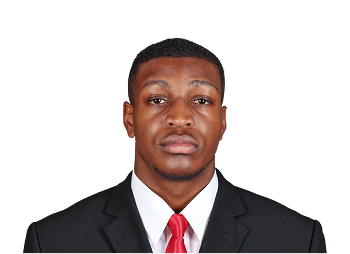
← Back to NFL Draft Big Board Channing Tindall Georgia HT: 6020 WT: 230 YR: SR POS: LB OVR RK 66 POS RK CEILING POTENTIAL 7 KEY STRENGTHS KEY CONCERNS PLAYSTYLE & SCHEME FIT PLAYER COMPARISON: CEILING GRADE ANALYSIS Near Elite (70-74) A high-caliber prospect who is expected to become a significant contributor by Year 2. These players have outstanding physical tools and strong football IQ, with only minor flaws in their game. They demonstrate consistency at a high level and project as future Pro Bowl-caliber players if properly developed. Primary scout: Brandon Lundberg Football Scout 365 NFL Draft Grade Scale Football Scout 365 grades reflect a prospect’s projected long-term NFL value and role. Draft ranges are general value projections, not predictions of an exact selection. Positional value, team needs, scheme fit, medical information and athletic testing can influence where a player is ultimately selected. How Football Scout 365 Grades NFL Draft Prospects Elite (75+): A rare, high-impact prospect with elite physical tools, advanced football intelligence and the ability to make an immediate NFL impact. Elite prospects carry franchise-altering potential and typically project as top 5–10 selections in the first round. Near Elite (70–74): A high-caliber prospect with outstanding physical tools, strong football intelligence and only minor developmental limitations. Near Elite prospects project as significant early-career contributors with Pro Bowl upside and first-round draft value. High-End Starter Potential (65–69): A starting-caliber prospect with strong physical tools, quality technical skills and a defined NFL role. These players may require development before reaching their ceiling but generally carry second- or third-round draft value. Mid-Level Starter Potential (60–64): A solid prospect with NFL-level tools and a pathway to becoming a dependable starter if key limitations are addressed. These players generally carry third- to fifth-round draft value. Low-Level Starter Potential (55–59): A developmental prospect who could become a low-end starter, high-end backup or valuable specialist in the right role. These players generally carry fifth- to seventh-round draft value. Backup Level (50–54): A depth or rotational prospect with enough functional ability to compete for an NFL roster spot but limited long-term starting potential. These players generally project as late Day 3 selections or priority undrafted free agents. Not NFL Level (Below 50): A developmental or camp prospect who does not currently demonstrate enough consistency, technical refinement or functional NFL traits to project as a regular contributor. These players generally project as undrafted free agents, practice-squad candidates or camp invitations. Draft position can vary based on positional value, team needs, scheme fit, medical evaluation and athletic testing.
- NFL Draft Watch: 10 Key Players to Watch in Week 2 of College Football
NFL Draft Watch: 10 Key Players to Watch in Week 2 of College Football Week two of the 2024 college football season will provide us with some intriguing games to watch, led by the game of the week: Michigan vs. Texas in Ann Arbor at Noon on Saturday. Both College GameDay and Fox's Big Noon Kickoff will be outside of The Big House for one of the most anticipated games of the year. With plenty of NFL talent on both teams, this will be a massive game for Texas QB Quinn Ewers. Another notable matchup includes Colorado at Nebraska. The Buffaloes head to Lincoln to face a much-improved Nebraska team in year two of the Matt Rhule era. Can Shedeur Sanders and Travis Hunter come out of Lincoln 2-0, or will the Cornhuskers get a Week 2 statement win? Week Two Top Matchups In College Football Texas at Michigan (Saturday, Sept. 7 at 12 p.m. ET, FOX) Tennessee at NC State (Saturday, Sept. 7 at 7:30 p.m. ET, ABC) Oklahoma State vs. Arkansas (Saturday, Sept. 7 at 12 p.m. ET, ABC) Boise State at Oregon (Saturday, Sept. 7 at 7:30 p.m. ET, Peacock) Iowa at Iowa State (Saturday, Sept. 7 at 3:30 p.m. ET, CBS) Colorado at Nebraska (Saturday, Sept. 7 at 7:30 p.m. ET, NBC) 10 Key Players to Watch in Week 2 of College Football 1. Quinn Ewers, QB, Texas at Michigan (Saturday, Sept. 7 at 12 p.m. ET, FOX) Ewers faces a significant test on the road against Michigan, a top-ranked team with an elite defense. This game will likely be one of the toughest matchups of his college career. Ewers has displayed impressive arm strength and pocket presence, but he will need to improve his consistency, particularly with deep throws, to cement himself as a top quarterback prospect for the 2025 NFL Draft. 2. Will Johnson, CB, Michigan vs. Texas (Saturday, Sept. 7 at 12 p.m. ET, FOX Johnson is considered one of the best cornerbacks in college football, and he will be tasked with covering Texas’ speedy wideouts like Isaiah Bond. After a strong performance in Week 1, which included a pick-six, Johnson will look to solidify his standing as a top-three prospect for the 2025 NFL Draft. His ability to match up against Texas’ deep receiving corps will be key. 3. James Pearce Jr., EDGE, Tennessee at NC State (Saturday, Sept. 7 at 7:30 p.m. ET, ABC) Pearce enters Week 2 as a highly-touted pass rusher, and this game will give him a chance to showcase his elite burst and bend off the edge. He will be facing an NC State offensive line anchored by Anthony Belton. After a relatively quiet Week 1, Pearce needs to step up and prove why he is considered a top-10 talent for the 2025 NFL Draft. 4. Ollie Gordon II, RB, Oklahoma State vs. Arkansas (Saturday, Sept. 7 at 12 p.m. ET, ABC) Gordon’s ability to create big plays through his vision and stride control will be put to the test against Arkansas' stout run defense. With his knack for breaking tackles and forcing missed tackles, Gordon could be a draft riser. His ability to navigate a tough defensive front and put up big numbers could catapult him into the national spotlight. 5. Dylan Sampson, RB, Tennessee at NC State (Saturday, Sept. 7 at 7:30 p.m. ET, ABC) Sampson’s speed and ability to hit the home run play make him a dangerous weapon for Tennessee. He faces a tough NC State defense, and his performance will be closely watched by NFL scouts. Known for his quickness and acceleration, Sampson is poised to emerge as one of the top running back prospects in this draft class if he continues his strong start. 6. Kelvin Banks Jr., OT, Texas at Michigan (Saturday, Sept. 7 at 12 p.m. ET, FOX) Banks is Texas’ anchor on the offensive line, and his matchup against Michigan’s talented defensive front will be a critical factor in this game. Banks excelled in Week 1, but facing Michigan’s pass rush, led by Josaiah Stewart and Mason Graham, will be a true test of his ability. A strong performance could solidify his status as one of the top offensive tackle prospects for the 2025 NFL Draft. 7. Ashton Jeanty, RB, Boise State at Oregon (Saturday, Sept. 7 at 7:30 p.m. ET, Peacock) Jeanty is coming off an eye-popping 267-yard, six-touchdown performance in Week 1. He will face a stiffer test against Oregon, and how he handles the elevated competition will be critical for his draft stock. Known for his quickness and elusiveness, Jeanty can continue to make his case as one of the top running backs in the 2025 class with another standout performance. 8. Sebastian Castro, CB, Iowa at Iowa State (Saturday, Sept. 7 at 3:30 p.m. ET, CBS) Castro’s coverage skills and versatility as a hybrid nickel corner/safety will be tested against a capable Iowa State passing attack. After a strong Week 1 showing, Castro will have the opportunity to elevate his draft stock in the intense Cy-Hawk rivalry game. His ability to shut down key passing plays could make him a key defensive player to watch for NFL scouts. 9. Travis Hunter, WR/CB, Colorado at Nebraska (Saturday, Sept. 7 at 7:30 p.m. ET, NBC) Hunter’s ability to play both wide receiver and cornerback at a high level makes him one of the most intriguing prospects in college football. After a dynamic two-way performance in Week 1, Hunter will look to build on that against Nebraska. His performance on offense and defense will be critical for Colorado, and he has the potential to rise into the top 10 of the 2025 NFL Draft. 10. Colston Loveland, TE, Michigan vs. Texas (Saturday, Sept. 7 at 12 p.m. ET, FOX) Loveland is one of the most athletic tight ends in the 2025 NFL Draft class. After a strong Week 1 performance, he will face a tough Texas defense. Loveland’s ability to stretch the field and create mismatches against linebackers and safeties will be crucial for Michigan’s passing attack. A standout performance in this high-profile game could boost his draft stock significantly.