.png)


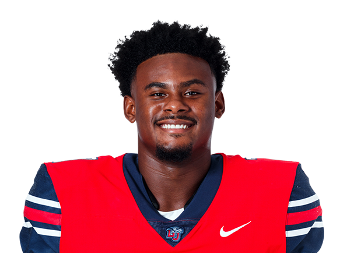
PLAYSTYLE & SCHEME FIT
Most schools recruited Willis as an athlete and not as a quarterback as a high school recruit. In 2016, Willis committed to Virginia Tech as an athlete, and the program planned to transition him to play defensive back. After some thought about his future, Willis decided to de-commit, believing in his ability to play QB. He searched for a school that would afford him a chance to play QB. The school he chose would be Auburn under then-head coach Gus Malzahn.
While at Auburn, Willis would start his career as the backup behind Jarrett Stidham in 2017-18, only seeing the field for spot duty. In 2019, after Stidham departed for the NFL, Willis was poised to take over as the starter for the Tigers but would inevitably lose out to Bo Nix. That is when Willis decided to transfer to Liberty, where he would sit out the 2019 season under the transfer rules before taking over as the Flames starter in 2020 and 2021.
Malik Willis has all the tools and is a confident leader. He has a cannon for an arm but lacks touch at the short and intermediate areas of the football field. Upon entering the NFL, his greatest asset will be his mobility, a trait he can rely on while developing other critical skills as a passer. Willis can provide a Lamar Jackson style of play as both a runner and a passer, forcing defenses to defend all eleven. He will benefit early in his career by playing in an offense that uses RPO and zone-read concepts.
PLAYER COMPARISON:
CEILING GRADE ANALYSIS
Low-Level Starter Potential (55-59)
A player with the upside to be a low-end starter or high-level backup within a couple of seasons. While they have solid physical tools, inconsistencies in technique, processing, or durability limit their ceiling. They are developmental prospects who may carve out a role as specialists or system fits.
Primary scout:
Brandon Lundberg
Football Scout 365 NFL Draft Grade Scale
Football Scout 365 grades reflect a prospect’s projected long-term NFL value and role. Draft ranges are general value projections, not predictions of an exact selection. Positional value, team needs, scheme fit, medical information and athletic testing can influence where a player is ultimately selected.
How Football Scout 365 Grades NFL Draft Prospects
-
Elite (75+): A rare, high-impact prospect with elite physical tools, advanced football intelligence and the ability to make an immediate NFL impact. Elite prospects carry franchise-altering potential and typically project as top 5–10 selections in the first round.
-
Near Elite (70–74): A high-caliber prospect with outstanding physical tools, strong football intelligence and only minor developmental limitations. Near Elite prospects project as significant early-career contributors with Pro Bowl upside and first-round draft value.
-
High-End Starter Potential (65–69): A starting-caliber prospect with strong physical tools, quality technical skills and a defined NFL role. These players may require development before reaching their ceiling but generally carry second- or third-round draft value.
-
Mid-Level Starter Potential (60–64): A solid prospect with NFL-level tools and a pathway to becoming a dependable starter if key limitations are addressed. These players generally carry third- to fifth-round draft value.
-
Low-Level Starter Potential (55–59): A developmental prospect who could become a low-end starter, high-end backup or valuable specialist in the right role. These players generally carry fifth- to seventh-round draft value.
-
Backup Level (50–54): A depth or rotational prospect with enough functional ability to compete for an NFL roster spot but limited long-term starting potential. These players generally project as late Day 3 selections or priority undrafted free agents.
-
Not NFL Level (Below 50): A developmental or camp prospect who does not currently demonstrate enough consistency, technical refinement or functional NFL traits to project as a regular contributor. These players generally project as undrafted free agents, practice-squad candidates or camp invitations.
Draft position can vary based on positional value, team needs, scheme fit, medical evaluation and athletic testing.