Search Results
Search this site
1757 results found with an empty search
- Charlie Becker
← Back to NFL Draft Big Board Charlie Becker Indiana HT: 6040 WT: 204 YR: JR POS: WR OVR RK 7 POS RK CEILING POTENTIAL WR2 Near Elite KEY STRENGTHS Contested-Catch Reliability Vertical Tracking Chain-Moving Ability KEY CONCERNS Press-Release Route Tree Expansion Separation Consistency PLAYSTYLE & SCHEME FIT Charlie Becker is a high-end boundary X receiver whose grade is built on size, catch radius, contested-catch ability, and vertical tracking. He wins above the rim, stacks coverage downfield, and gives the quarterback a large strike zone on back-shoulder throws, posts, fades, and intermediate isolation routes. His cleanest NFL fit is in a play-action or vertical passing system that uses him as a perimeter mismatch and red-zone target. The ceiling depends on sharpening his press-release package, expanding the route tree, and proving the routine-play consistency needed for a full WR1 workload. PLAYER COMPARISON: Alec Pierce Becker fits the Alec Pierce comparison because both receivers have the size-speed profile to win vertically and create matchup stress outside the numbers. The comparison works best through the boundary role, downfield tracking, back-shoulder utility, and ability to win above smaller corners. The difference is that Pierce entered the NFL with a more established athletic-testing profile, while Becker still needs a larger route sample and more press-release refinement before the projection is as stable. CEILING GRADE ANALYSIS Near Elite (70-74) A high-caliber prospect who is expected to become a significant contributor by Year 2. These players have outstanding physical tools and strong football IQ, with only minor flaws in their game. They demonstrate consistency at a high level and project as future Pro Bowl-caliber players if properly developed. Primary scout: Brandon Lundberg Football Scout 365 NFL Draft Grade Scale Football Scout 365 grades reflect a prospect’s projected long-term NFL value and role. Draft ranges are general value projections, not predictions of an exact selection. Positional value, team needs, scheme fit, medical information and athletic testing can influence where a player is ultimately selected. How Football Scout 365 Grades NFL Draft Prospects Elite (75+): A rare, high-impact prospect with elite physical tools, advanced football intelligence and the ability to make an immediate NFL impact. Elite prospects carry franchise-altering potential and typically project as top 5–10 selections in the first round. Near Elite (70–74): A high-caliber prospect with outstanding physical tools, strong football intelligence and only minor developmental limitations. Near Elite prospects project as significant early-career contributors with Pro Bowl upside and first-round draft value. High-End Starter Potential (65–69): A starting-caliber prospect with strong physical tools, quality technical skills and a defined NFL role. These players may require development before reaching their ceiling but generally carry second- or third-round draft value. Mid-Level Starter Potential (60–64): A solid prospect with NFL-level tools and a pathway to becoming a dependable starter if key limitations are addressed. These players generally carry third- to fifth-round draft value. Low-Level Starter Potential (55–59): A developmental prospect who could become a low-end starter, high-end backup or valuable specialist in the right role. These players generally carry fifth- to seventh-round draft value. Backup Level (50–54): A depth or rotational prospect with enough functional ability to compete for an NFL roster spot but limited long-term starting potential. These players generally project as late Day 3 selections or priority undrafted free agents. Not NFL Level (Below 50): A developmental or camp prospect who does not currently demonstrate enough consistency, technical refinement or functional NFL traits to project as a regular contributor. These players generally project as undrafted free agents, practice-squad candidates or camp invitations. Draft position can vary based on positional value, team needs, scheme fit, medical evaluation and athletic testing.
- Xavier Legette
Given his breakout year, size, and athletic metrics, Legette has the potential to be among the top starters on his team within his second or third year in the NFL, despite the need for more consistent production evidence. ← Back to NFL Draft Big Board Xavier Legette South Carolina HT: 6010 WT: 221 YR: RSO POS: WR OVR RK 26 POS RK CEILING POTENTIAL 7 KEY STRENGTHS Big Catch Radius Effective Start Stop Ability Physicality KEY CONCERNS Consistency Could Break More Tackles Improve After Catch PLAYSTYLE & SCHEME FIT Legette is considered a prototypical "X" receiver, showcasing the ability to overpower defenders and utilize his physicality in his routes and run blocking. His blend of size, speed, and agility allows him to be effective in various offensive schemes, particularly in those valuing vertical threats and strong outside presence. PLAYER COMPARISON: CEILING GRADE ANALYSIS High-End Starter Potential (65-69) A player expected to become a top-tier starter within their first few years. They possess strong physical tools and good technical skills but may have some limitations in their game. With development, they can reach near-elite levels and provide consistent impact at their position. Primary scout: Brandon Lundberg Football Scout 365 NFL Draft Grade Scale Football Scout 365 grades reflect a prospect’s projected long-term NFL value and role. Draft ranges are general value projections, not predictions of an exact selection. Positional value, team needs, scheme fit, medical information and athletic testing can influence where a player is ultimately selected. How Football Scout 365 Grades NFL Draft Prospects Elite (75+): A rare, high-impact prospect with elite physical tools, advanced football intelligence and the ability to make an immediate NFL impact. Elite prospects carry franchise-altering potential and typically project as top 5–10 selections in the first round. Near Elite (70–74): A high-caliber prospect with outstanding physical tools, strong football intelligence and only minor developmental limitations. Near Elite prospects project as significant early-career contributors with Pro Bowl upside and first-round draft value. High-End Starter Potential (65–69): A starting-caliber prospect with strong physical tools, quality technical skills and a defined NFL role. These players may require development before reaching their ceiling but generally carry second- or third-round draft value. Mid-Level Starter Potential (60–64): A solid prospect with NFL-level tools and a pathway to becoming a dependable starter if key limitations are addressed. These players generally carry third- to fifth-round draft value. Low-Level Starter Potential (55–59): A developmental prospect who could become a low-end starter, high-end backup or valuable specialist in the right role. These players generally carry fifth- to seventh-round draft value. Backup Level (50–54): A depth or rotational prospect with enough functional ability to compete for an NFL roster spot but limited long-term starting potential. These players generally project as late Day 3 selections or priority undrafted free agents. Not NFL Level (Below 50): A developmental or camp prospect who does not currently demonstrate enough consistency, technical refinement or functional NFL traits to project as a regular contributor. These players generally project as undrafted free agents, practice-squad candidates or camp invitations. Draft position can vary based on positional value, team needs, scheme fit, medical evaluation and athletic testing.
- Bryan Bresee
Bresee possesses elite instant impact upside, and he is a player who has top ten NFL Draft potential even after missing 2/3 of the 2021 college football season. At 6-5, 300lbs, Bresee possesses elite length. On tape, he has an explosive first step combined with the elite positional strength needed to be a success at the NFL level. He also possesses elite lateral quickness and twitchiness for an interior defender. He can shoot through a gap in a hurry on one play to force a bad throw, and on the next play, he can shoot through a hole to close off a run lane. Bresee can play different techniques along the line, but he projects as a 3-tech in the NFL. ← Back to NFL Draft Big Board Bryan Bresee Clemson HT: 6055 WT: 298 YR: JR POS: IDL OVR RK 14 POS RK CEILING POTENTIAL 2 KEY STRENGTHS Strength Length Athleticism KEY CONCERNS Pad Level Double Team Hand Use PLAYSTYLE & SCHEME FIT In terms of scheme fit at the NFL level, Bresee's skill set is well-suited for a variety of defensive schemes. He has the potential to thrive in a 4-3 defensive system as a defensive tackle or defensive end, where he can use his athleticism and quickness to create pressure on the quarterback and disrupt plays. He could also be a good fit for a 3-4 defensive scheme, where he can play as a defensive end or as a pass-rushing outside linebacker. PLAYER COMPARISON: CEILING GRADE ANALYSIS High-End Starter Potential (65-69) A player expected to become a top-tier starter within their first few years. They possess strong physical tools and good technical skills but may have some limitations in their game. With development, they can reach near-elite levels and provide consistent impact at their position. Primary scout: Brandon Lundberg Football Scout 365 NFL Draft Grade Scale Football Scout 365 grades reflect a prospect’s projected long-term NFL value and role. Draft ranges are general value projections, not predictions of an exact selection. Positional value, team needs, scheme fit, medical information and athletic testing can influence where a player is ultimately selected. How Football Scout 365 Grades NFL Draft Prospects Elite (75+): A rare, high-impact prospect with elite physical tools, advanced football intelligence and the ability to make an immediate NFL impact. Elite prospects carry franchise-altering potential and typically project as top 5–10 selections in the first round. Near Elite (70–74): A high-caliber prospect with outstanding physical tools, strong football intelligence and only minor developmental limitations. Near Elite prospects project as significant early-career contributors with Pro Bowl upside and first-round draft value. High-End Starter Potential (65–69): A starting-caliber prospect with strong physical tools, quality technical skills and a defined NFL role. These players may require development before reaching their ceiling but generally carry second- or third-round draft value. Mid-Level Starter Potential (60–64): A solid prospect with NFL-level tools and a pathway to becoming a dependable starter if key limitations are addressed. These players generally carry third- to fifth-round draft value. Low-Level Starter Potential (55–59): A developmental prospect who could become a low-end starter, high-end backup or valuable specialist in the right role. These players generally carry fifth- to seventh-round draft value. Backup Level (50–54): A depth or rotational prospect with enough functional ability to compete for an NFL roster spot but limited long-term starting potential. These players generally project as late Day 3 selections or priority undrafted free agents. Not NFL Level (Below 50): A developmental or camp prospect who does not currently demonstrate enough consistency, technical refinement or functional NFL traits to project as a regular contributor. These players generally project as undrafted free agents, practice-squad candidates or camp invitations. Draft position can vary based on positional value, team needs, scheme fit, medical evaluation and athletic testing.
- Justin Fields
Fields displayed some inconsistent play in 2020, but we have to consider that Ohio State had several games canceled, and the Big Ten's stringent Covid-19 protocols being a factor in how a team can practice and how that might play a role. Fields put on a show against Clemson in the CFP Semifinal, showing the elite level accuracy that was consistent in 2019. He is a near-lock for the number two overall pick in the 2021 NFL Draft. ← Back to NFL Draft Big Board Justin Fields Ohio State HT: 6030 WT: 223 YR: JR POS: QB OVR RK 3 POS RK CEILING POTENTIAL 2 KEY STRENGTHS KEY CONCERNS PLAYSTYLE & SCHEME FIT Fields displayed some inconsistent play in 2020, but we have to consider that Ohio State had several games canceled, and the Big Ten's stringent Covid-19 protocols being a factor in how a team can practice and how that might play a role. Fields put on a show against Clemson in the CFP Semifinal, showing the elite level accuracy that was consistent in 2019. He is a near-lock for the number two overall pick in the 2021 NFL Draft. PLAYER COMPARISON: CEILING GRADE ANALYSIS High-End Starter Potential (65-69) A player expected to become a top-tier starter within their first few years. They possess strong physical tools and good technical skills but may have some limitations in their game. With development, they can reach near-elite levels and provide consistent impact at their position. Primary scout: Brandon Lundberg Football Scout 365 NFL Draft Grade Scale Football Scout 365 grades reflect a prospect’s projected long-term NFL value and role. Draft ranges are general value projections, not predictions of an exact selection. Positional value, team needs, scheme fit, medical information and athletic testing can influence where a player is ultimately selected. How Football Scout 365 Grades NFL Draft Prospects Elite (75+): A rare, high-impact prospect with elite physical tools, advanced football intelligence and the ability to make an immediate NFL impact. Elite prospects carry franchise-altering potential and typically project as top 5–10 selections in the first round. Near Elite (70–74): A high-caliber prospect with outstanding physical tools, strong football intelligence and only minor developmental limitations. Near Elite prospects project as significant early-career contributors with Pro Bowl upside and first-round draft value. High-End Starter Potential (65–69): A starting-caliber prospect with strong physical tools, quality technical skills and a defined NFL role. These players may require development before reaching their ceiling but generally carry second- or third-round draft value. Mid-Level Starter Potential (60–64): A solid prospect with NFL-level tools and a pathway to becoming a dependable starter if key limitations are addressed. These players generally carry third- to fifth-round draft value. Low-Level Starter Potential (55–59): A developmental prospect who could become a low-end starter, high-end backup or valuable specialist in the right role. These players generally carry fifth- to seventh-round draft value. Backup Level (50–54): A depth or rotational prospect with enough functional ability to compete for an NFL roster spot but limited long-term starting potential. These players generally project as late Day 3 selections or priority undrafted free agents. Not NFL Level (Below 50): A developmental or camp prospect who does not currently demonstrate enough consistency, technical refinement or functional NFL traits to project as a regular contributor. These players generally project as undrafted free agents, practice-squad candidates or camp invitations. Draft position can vary based on positional value, team needs, scheme fit, medical evaluation and athletic testing.
- Tate Ratledge
← Back to NFL Draft Big Board Tate Ratledge Georgia HT: 6060 WT: 310 YR: SR POS: IOL OVR RK 92 POS RK CEILING POTENTIAL 4 KEY STRENGTHS Power at the POA Finishing Mentality Experienced & Battle-Tested KEY CONCERNS Balance and Body Control Struggles with Quickness & Counters Positional Versatility PLAYSTYLE & SCHEME FIT Ratledge is a physically imposing, power-oriented right guard with a mauling presence in the run game. His raw strength, functional athleticism, and aggressive mentality make him a great fit for gap/power running schemes, but he has enough athletic ability to contribute in inside zone concepts as well. His pass protection technique is solid, but he can struggle against quicker interior rushers due to occasional balance issues and forward lean. His high floor, SEC pedigree, and tone-setting physicality make him a Day 2 starter candidate for teams needing interior power. PLAYER COMPARISON: CEILING GRADE ANALYSIS Mid-Level Starter Potential (60-64) A solid, dependable starter with the potential to exceed expectations. They have good athleticism and tools but may lack elite traits. While they show flashes of high-level play, they also have some notable weaknesses that must be developed. These players often need 2-3 years to establish themselves. Primary scout: Brandon Lundberg Football Scout 365 NFL Draft Grade Scale Football Scout 365 grades reflect a prospect’s projected long-term NFL value and role. Draft ranges are general value projections, not predictions of an exact selection. Positional value, team needs, scheme fit, medical information and athletic testing can influence where a player is ultimately selected. How Football Scout 365 Grades NFL Draft Prospects Elite (75+): A rare, high-impact prospect with elite physical tools, advanced football intelligence and the ability to make an immediate NFL impact. Elite prospects carry franchise-altering potential and typically project as top 5–10 selections in the first round. Near Elite (70–74): A high-caliber prospect with outstanding physical tools, strong football intelligence and only minor developmental limitations. Near Elite prospects project as significant early-career contributors with Pro Bowl upside and first-round draft value. High-End Starter Potential (65–69): A starting-caliber prospect with strong physical tools, quality technical skills and a defined NFL role. These players may require development before reaching their ceiling but generally carry second- or third-round draft value. Mid-Level Starter Potential (60–64): A solid prospect with NFL-level tools and a pathway to becoming a dependable starter if key limitations are addressed. These players generally carry third- to fifth-round draft value. Low-Level Starter Potential (55–59): A developmental prospect who could become a low-end starter, high-end backup or valuable specialist in the right role. These players generally carry fifth- to seventh-round draft value. Backup Level (50–54): A depth or rotational prospect with enough functional ability to compete for an NFL roster spot but limited long-term starting potential. These players generally project as late Day 3 selections or priority undrafted free agents. Not NFL Level (Below 50): A developmental or camp prospect who does not currently demonstrate enough consistency, technical refinement or functional NFL traits to project as a regular contributor. These players generally project as undrafted free agents, practice-squad candidates or camp invitations. Draft position can vary based on positional value, team needs, scheme fit, medical evaluation and athletic testing.
- Hendon Hooker
Hendon Hooker transferred to Tennessee from Virginia Tech in 2021. He would not enter the 2021 season as the starter, but he would eventually take over without turning back, posting 2900 yards, 31 TD's, and only 3 INT's. In 2022, Hooker is already off to a similar start. Hooker has proven to be an efficient player in an offense that doesn't ask him to do much as a passer beyond his predetermined read. Hooker's development will depend on where he lands in the NFL. If forced to start as a rookie, he will have a lot of ups and downs, so it is advisable that whoever drafts him build the offense around his strengths early. ← Back to NFL Draft Big Board Hendon Hooker Tennessee HT: 6031 WT: 217 YR: RSR POS: QB OVR RK 26 POS RK CEILING POTENTIAL 5 KEY STRENGTHS Arm Strength Mobility Accuracy KEY CONCERNS Progressions Agility Upright Runner PLAYSTYLE & SCHEME FIT Hendon Hooker is a dual-threat quarterback with a strong arm and the ability to make plays out of the structure of the offense. He is accurate in the pocket and on the move. An offense that incorporates zone read and RPO concepts combined with play-action passes and rollouts can allow him to test defenses vertically. PLAYER COMPARISON: CEILING GRADE ANALYSIS Mid-Level Starter Potential (60-64) A solid, dependable starter with the potential to exceed expectations. They have good athleticism and tools but may lack elite traits. While they show flashes of high-level play, they also have some notable weaknesses that must be developed. These players often need 2-3 years to establish themselves. Primary scout: Brandon Lundberg Football Scout 365 NFL Draft Grade Scale Football Scout 365 grades reflect a prospect’s projected long-term NFL value and role. Draft ranges are general value projections, not predictions of an exact selection. Positional value, team needs, scheme fit, medical information and athletic testing can influence where a player is ultimately selected. How Football Scout 365 Grades NFL Draft Prospects Elite (75+): A rare, high-impact prospect with elite physical tools, advanced football intelligence and the ability to make an immediate NFL impact. Elite prospects carry franchise-altering potential and typically project as top 5–10 selections in the first round. Near Elite (70–74): A high-caliber prospect with outstanding physical tools, strong football intelligence and only minor developmental limitations. Near Elite prospects project as significant early-career contributors with Pro Bowl upside and first-round draft value. High-End Starter Potential (65–69): A starting-caliber prospect with strong physical tools, quality technical skills and a defined NFL role. These players may require development before reaching their ceiling but generally carry second- or third-round draft value. Mid-Level Starter Potential (60–64): A solid prospect with NFL-level tools and a pathway to becoming a dependable starter if key limitations are addressed. These players generally carry third- to fifth-round draft value. Low-Level Starter Potential (55–59): A developmental prospect who could become a low-end starter, high-end backup or valuable specialist in the right role. These players generally carry fifth- to seventh-round draft value. Backup Level (50–54): A depth or rotational prospect with enough functional ability to compete for an NFL roster spot but limited long-term starting potential. These players generally project as late Day 3 selections or priority undrafted free agents. Not NFL Level (Below 50): A developmental or camp prospect who does not currently demonstrate enough consistency, technical refinement or functional NFL traits to project as a regular contributor. These players generally project as undrafted free agents, practice-squad candidates or camp invitations. Draft position can vary based on positional value, team needs, scheme fit, medical evaluation and athletic testing.
- Brian Thomas Jr.
Thomas Jr. projects as a High-End Starter Potential (65-69) prospect. He has the physical tools and receiving skills to become a key component in an NFL passing attack. With further development in route running and physicality, he could elevate his game to become a consistent and dangerous threat on the outside. ← Back to NFL Draft Big Board Brian Thomas Jr. LSU HT: 6040 WT: 205 YR: JR POS: WR OVR RK 15 POS RK CEILING POTENTIAL 4 KEY STRENGTHS Ball Tracking Hands Catch Radius KEY CONCERNS Refine Routes Run Blocking Improve Strength PLAYSTYLE & SCHEME FIT Brian Thomas Jr. is a tall, physically imposing wide receiver. His size and ball-tracking ability make him an ideal fit for offenses that emphasize a deep passing game. He needs to improve in route running precision and physicality in run blocking. His style is well-suited for a vertical or spread offense where he can utilize his deep route and jump-ball abilities. PLAYER COMPARISON: CEILING GRADE ANALYSIS Near Elite (70-74) A high-caliber prospect who is expected to become a significant contributor by Year 2. These players have outstanding physical tools and strong football IQ, with only minor flaws in their game. They demonstrate consistency at a high level and project as future Pro Bowl-caliber players if properly developed. Primary scout: Brandon Lundberg Football Scout 365 NFL Draft Grade Scale Football Scout 365 grades reflect a prospect’s projected long-term NFL value and role. Draft ranges are general value projections, not predictions of an exact selection. Positional value, team needs, scheme fit, medical information and athletic testing can influence where a player is ultimately selected. How Football Scout 365 Grades NFL Draft Prospects Elite (75+): A rare, high-impact prospect with elite physical tools, advanced football intelligence and the ability to make an immediate NFL impact. Elite prospects carry franchise-altering potential and typically project as top 5–10 selections in the first round. Near Elite (70–74): A high-caliber prospect with outstanding physical tools, strong football intelligence and only minor developmental limitations. Near Elite prospects project as significant early-career contributors with Pro Bowl upside and first-round draft value. High-End Starter Potential (65–69): A starting-caliber prospect with strong physical tools, quality technical skills and a defined NFL role. These players may require development before reaching their ceiling but generally carry second- or third-round draft value. Mid-Level Starter Potential (60–64): A solid prospect with NFL-level tools and a pathway to becoming a dependable starter if key limitations are addressed. These players generally carry third- to fifth-round draft value. Low-Level Starter Potential (55–59): A developmental prospect who could become a low-end starter, high-end backup or valuable specialist in the right role. These players generally carry fifth- to seventh-round draft value. Backup Level (50–54): A depth or rotational prospect with enough functional ability to compete for an NFL roster spot but limited long-term starting potential. These players generally project as late Day 3 selections or priority undrafted free agents. Not NFL Level (Below 50): A developmental or camp prospect who does not currently demonstrate enough consistency, technical refinement or functional NFL traits to project as a regular contributor. These players generally project as undrafted free agents, practice-squad candidates or camp invitations. Draft position can vary based on positional value, team needs, scheme fit, medical evaluation and athletic testing.
- 2026 NFL Draft Analysis | Football Scout 365
2026 NFL Draft analysis, scouting reports, prospect rankings, mock drafts, and Big Board updates featuring Fernando Mendoza, Rueben Bain Jr., Caleb Downs, and other top prospects. 2026 NFL DRAFT ANALYSIS CJ Carr 2027 NFL Draft Breakdown: Can He Be QB1? CJ Carr’s anticipation and deep accuracy give him a path to the top of the 2027 NFL Draft class. Watch the breakdown of his strengths and next development step. Brandon Lundberg Oct 2 Jeremiyah Love Dynasty Rookie Profile – Fantasy Football 2026 Jeremiyah Love enters the 2026 fantasy football season as a premium Cardinals rookie running back with three-down upside, elite draft capital, and RB1 dynasty value. Brandon Lundberg Jul 13 Carnell Tate Dynasty Rookie Profile – Fantasy Football 2026 Carnell Tate enters the 2026 fantasy football season as a polished Titans rookie wide receiver with route-running skill, strong draft capital, and long-term WR2 dynasty upside. Brandon Lundberg Jun 26 Fernando Mendoza Dynasty Rookie Profile – Fantasy Football 2026 Fernando Mendoza dynasty rookie profile for 2026 fantasy football, including Raiders outlook, Superflex value, rookie projection, scouting report, and dynasty ranking. Brandon Lundberg Jun 18 2026 NFL Draft Grades: Final Analysis for All 32 Teams The 2026 NFL Draft is complete, and Football Scout 365 grades every team’s full draft class with analysis based on pick value, team need, scheme fit, positional value, and roster-building logic. Brandon Lundberg Apr 27 Best Available Players After Round 1 of the 2026 NFL Draft: Football Scout 365 Day 2 Big Board Day 2 of the 2026 NFL Draft sets up as a defense-heavy board. After Round 1 leaned into offensive line, pass rush, and skill-position talent, several of the top remaining Football Scout 365 prospects are still available at cornerback, linebacker, safety, and interior defensive line. Brandon Lundberg Apr 24 2026 NFL Draft Live Tracker: Every Pick, Grades, and Analysis for All 3 Days Follow the 2026 NFL Draft live with instant grades, team-fit analysis, and pick-by-pick breakdowns from Football Scout 365. Updated throughout all 3 days of the draft. Brandon Lundberg Apr 23 2026 NFL Mock Draft: Dexter Lawrence Trade Shakes Up Top 10; Ty Simpson to Arizona? The 2026 NFL Draft may lack elite top-end strength at quarterback, but it offers real starter value across the offensive line, edge, linebacker, and wide receiver groups. Here is Football Scout 365’s final full first-round mock draft with all 32 picks and analysis. Brandon Lundberg Apr 20 2026 NFL Draft Big Board: Top 100 Prospects Update Featuring Caleb Downs, Jeremiyah Love, Fernando Mendoza As we enter the month of April, the 2026 NFL Draft is approaching quickly. This marks the final update to the Football Scout 365 NFL Draft Big Board ahead of the draft. As with our pre-Combine release, this board is structured using our tiered grading system — the same framework applied throughout our film evaluations. Brandon Lundberg Apr 1 2026 NFL Draft: Las Vegas Raiders Post-Free Agency 3-Round Mock Draft The Las Vegas Raiders were aggressive in free agency, but their draft path still feels clear. In this post-free-agency 3-round 2026 NFL mock draft, Las Vegas lands its quarterback of the future in Fernando Mendoza, adds interior defensive line help with Lee Hunter, and finds another weapon for the offense in Ted Hurst. Brandon Lundberg Mar 16 1 2 3 4 5
- Derrick Harmon
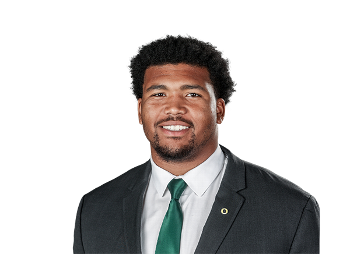
← Back to NFL Draft Big Board Derrick Harmon Oregon HT: 6050 WT: 310 YR: JR POS: IDL OVR RK 44 POS RK CEILING POTENTIAL 5 KEY STRENGTHS Powerful At POA Great Hand Usage Smart Run Defender KEY CONCERNS Limited Agility & Bend Pad Level Inconsistencies Limited Secondary Moves PLAYSTYLE & SCHEME FIT Derrick Harmon is a powerful, versatile defensive lineman with NFL-caliber size, length, and strength to be an impactful run defender and interior disruptor. His ability to anchor against double teams, shed blocks, and generate push as a pass rusher makes him a three-down player with scheme versatility. While not a true pass-rushing DT, Harmon wins with power, technique, and leverage, and his ability to play multiple positions across the defensive line makes him a valuable asset. He projects best as a 2i-tech in an even front but has the versatility to line up anywhere from nose tackle to 3-tech in odd and even fronts. PLAYER COMPARISON: CEILING GRADE ANALYSIS High-End Starter Potential (65-69) A player expected to become a top-tier starter within their first few years. They possess strong physical tools and good technical skills but may have some limitations in their game. With development, they can reach near-elite levels and provide consistent impact at their position. Primary scout: Brandon Lundberg Football Scout 365 NFL Draft Grade Scale Football Scout 365 grades reflect a prospect’s projected long-term NFL value and role. Draft ranges are general value projections, not predictions of an exact selection. Positional value, team needs, scheme fit, medical information and athletic testing can influence where a player is ultimately selected. How Football Scout 365 Grades NFL Draft Prospects Elite (75+): A rare, high-impact prospect with elite physical tools, advanced football intelligence and the ability to make an immediate NFL impact. Elite prospects carry franchise-altering potential and typically project as top 5–10 selections in the first round. Near Elite (70–74): A high-caliber prospect with outstanding physical tools, strong football intelligence and only minor developmental limitations. Near Elite prospects project as significant early-career contributors with Pro Bowl upside and first-round draft value. High-End Starter Potential (65–69): A starting-caliber prospect with strong physical tools, quality technical skills and a defined NFL role. These players may require development before reaching their ceiling but generally carry second- or third-round draft value. Mid-Level Starter Potential (60–64): A solid prospect with NFL-level tools and a pathway to becoming a dependable starter if key limitations are addressed. These players generally carry third- to fifth-round draft value. Low-Level Starter Potential (55–59): A developmental prospect who could become a low-end starter, high-end backup or valuable specialist in the right role. These players generally carry fifth- to seventh-round draft value. Backup Level (50–54): A depth or rotational prospect with enough functional ability to compete for an NFL roster spot but limited long-term starting potential. These players generally project as late Day 3 selections or priority undrafted free agents. Not NFL Level (Below 50): A developmental or camp prospect who does not currently demonstrate enough consistency, technical refinement or functional NFL traits to project as a regular contributor. These players generally project as undrafted free agents, practice-squad candidates or camp invitations. Draft position can vary based on positional value, team needs, scheme fit, medical evaluation and athletic testing.
- Olumuyiwa Fashanu
Olu Fashanu stands out as a top-tier offensive tackle prospect for the NFL Draft. His blend of size, athleticism, and technique sets him apart, projecting him as a likely Day 1 selection with the potential to develop into an All-Pro talent. His ability to immediately contribute in both pass protection and the run game will make him a valuable asset to any team. With further refinement in pad level and consistency, Fashanu has the makings of a cornerstone left tackle in the NFL. ← Back to NFL Draft Big Board Olumuyiwa Fashanu Penn State HT: 6060 WT: 308 YR: JR POS: OT OVR RK 13 POS RK CEILING POTENTIAL 2 KEY STRENGTHS Strong Anchor Lateral Agility Size KEY CONCERNS High Pad Level Overset Tendency Leverage PLAYSTYLE & SCHEME FIT Fashanu is a prototypical left tackle with the size, strength, and agility needed to excel at the highest level. His ability to mirror pass rushers, combined with his strength in anchoring, makes him a formidable pass protector. In the run game, his athleticism allows him to be effective in space, making him a fit for schemes that value mobility and versatility in their offensive linemen. Fashanu’s high motor and ability to finish plays add value to any offensive line unit. He would thrive in a zone-blocking scheme that can utilize his mobility and leverage his skills in space. PLAYER COMPARISON: CEILING GRADE ANALYSIS Near Elite (70-74) A high-caliber prospect who is expected to become a significant contributor by Year 2. These players have outstanding physical tools and strong football IQ, with only minor flaws in their game. They demonstrate consistency at a high level and project as future Pro Bowl-caliber players if properly developed. Primary scout: Brandon Lundberg Football Scout 365 NFL Draft Grade Scale Football Scout 365 grades reflect a prospect’s projected long-term NFL value and role. Draft ranges are general value projections, not predictions of an exact selection. Positional value, team needs, scheme fit, medical information and athletic testing can influence where a player is ultimately selected. How Football Scout 365 Grades NFL Draft Prospects Elite (75+): A rare, high-impact prospect with elite physical tools, advanced football intelligence and the ability to make an immediate NFL impact. Elite prospects carry franchise-altering potential and typically project as top 5–10 selections in the first round. Near Elite (70–74): A high-caliber prospect with outstanding physical tools, strong football intelligence and only minor developmental limitations. Near Elite prospects project as significant early-career contributors with Pro Bowl upside and first-round draft value. High-End Starter Potential (65–69): A starting-caliber prospect with strong physical tools, quality technical skills and a defined NFL role. These players may require development before reaching their ceiling but generally carry second- or third-round draft value. Mid-Level Starter Potential (60–64): A solid prospect with NFL-level tools and a pathway to becoming a dependable starter if key limitations are addressed. These players generally carry third- to fifth-round draft value. Low-Level Starter Potential (55–59): A developmental prospect who could become a low-end starter, high-end backup or valuable specialist in the right role. These players generally carry fifth- to seventh-round draft value. Backup Level (50–54): A depth or rotational prospect with enough functional ability to compete for an NFL roster spot but limited long-term starting potential. These players generally project as late Day 3 selections or priority undrafted free agents. Not NFL Level (Below 50): A developmental or camp prospect who does not currently demonstrate enough consistency, technical refinement or functional NFL traits to project as a regular contributor. These players generally project as undrafted free agents, practice-squad candidates or camp invitations. Draft position can vary based on positional value, team needs, scheme fit, medical evaluation and athletic testing.
- Deonte Brown
A wide, and strong interior player at 338 lbs, Brown is a very good run blocker. He is a good pass blocker but has shown a tendency to get beat against twitchier, more athletic interior defenders. He has only played guard in college, so his versatility might come into question. ← Back to NFL Draft Big Board Deonte Brown Alabama HT: 6030 WT: 364 YR: RSR POS: IOL OVR RK 89 POS RK CEILING POTENTIAL 6 KEY STRENGTHS KEY CONCERNS PLAYSTYLE & SCHEME FIT A wide, and strong interior player at 338 lbs, Brown is a very good run blocker. He is a good pass blocker but has shown a tendency to get beat against twitchier, more athletic interior defenders. He has only played guard in college, so his versatility might come into question. PLAYER COMPARISON: CEILING GRADE ANALYSIS High-End Starter Potential (65-69) A player expected to become a top-tier starter within their first few years. They possess strong physical tools and good technical skills but may have some limitations in their game. With development, they can reach near-elite levels and provide consistent impact at their position. Primary scout: Brandon Lundberg Football Scout 365 NFL Draft Grade Scale Football Scout 365 grades reflect a prospect’s projected long-term NFL value and role. Draft ranges are general value projections, not predictions of an exact selection. Positional value, team needs, scheme fit, medical information and athletic testing can influence where a player is ultimately selected. How Football Scout 365 Grades NFL Draft Prospects Elite (75+): A rare, high-impact prospect with elite physical tools, advanced football intelligence and the ability to make an immediate NFL impact. Elite prospects carry franchise-altering potential and typically project as top 5–10 selections in the first round. Near Elite (70–74): A high-caliber prospect with outstanding physical tools, strong football intelligence and only minor developmental limitations. Near Elite prospects project as significant early-career contributors with Pro Bowl upside and first-round draft value. High-End Starter Potential (65–69): A starting-caliber prospect with strong physical tools, quality technical skills and a defined NFL role. These players may require development before reaching their ceiling but generally carry second- or third-round draft value. Mid-Level Starter Potential (60–64): A solid prospect with NFL-level tools and a pathway to becoming a dependable starter if key limitations are addressed. These players generally carry third- to fifth-round draft value. Low-Level Starter Potential (55–59): A developmental prospect who could become a low-end starter, high-end backup or valuable specialist in the right role. These players generally carry fifth- to seventh-round draft value. Backup Level (50–54): A depth or rotational prospect with enough functional ability to compete for an NFL roster spot but limited long-term starting potential. These players generally project as late Day 3 selections or priority undrafted free agents. Not NFL Level (Below 50): A developmental or camp prospect who does not currently demonstrate enough consistency, technical refinement or functional NFL traits to project as a regular contributor. These players generally project as undrafted free agents, practice-squad candidates or camp invitations. Draft position can vary based on positional value, team needs, scheme fit, medical evaluation and athletic testing.
- Kingsley Enagbare
Kingsley Enagbare is an experienced player who is explosive at the point of attack. A lengthy player, Enagbare converts speed to power at an efficient rate. He shows good technique off the edge. He can use his length to widen his blocker before applying a counter move to gain inside leverage. Enagbare will enter the 2022 NFL Draft cycle as a player with a high ceiling but needs more polish to reach his ceiling. Enagbare will be effective as an edge defender in the NFL; he does not have inside flexibility at his size. He has the every-down ability needed, and he can play standing up or with his hand in the dirt. He plays with a good motor, has a pass rush plan, can improvise on the fly, and is very good at converting speed to power. He can bend and contort around a blocker with great success. He takes good angles as a pass rusher. His hand placement and hand power are also a strength. He needs to improve in the run game and his overall awareness. He can be a little nosey in the run game and lose leverage when facing a disciplined rushing attack. He can be gap schemed out of a play. ← Back to NFL Draft Big Board Kingsley Enagbare South Carolina HT: 6040 WT: 260 YR: SR POS: ED OVR RK 55 POS RK CEILING POTENTIAL 10 KEY STRENGTHS KEY CONCERNS PLAYSTYLE & SCHEME FIT Kingsley Enagbare is an experienced player who is explosive at the point of attack. A lengthy player, Enagbare converts speed to power at an efficient rate. He shows good technique off the edge. He can use his length to widen his blocker before applying a counter move to gain inside leverage. Enagbare will enter the 2022 NFL Draft cycle as a player with a high ceiling but needs more polish to reach his ceiling. Enagbare will be effective as an edge defender in the NFL; he does not have inside flexibility at his size. He has the every-down ability needed, and he can play standing up or with his hand in the dirt. He plays with a good motor, has a pass rush plan, can improvise on the fly, and is very good at converting speed to power. He can bend and contort around a blocker with great success. He takes good angles as a pass rusher. His hand placement and hand power are also a strength. He needs to improve in the run game and his overall awareness. He can be a little nosey in the run game and lose leverage when facing a disciplined rushing attack. He can be gap schemed out of a play. PLAYER COMPARISON: CEILING GRADE ANALYSIS Low-Level Starter Potential (55-59) A player with the upside to be a low-end starter or high-level backup within a couple of seasons. While they have solid physical tools, inconsistencies in technique, processing, or durability limit their ceiling. They are developmental prospects who may carve out a role as specialists or system fits. Primary scout: Brandon Lundberg Football Scout 365 NFL Draft Grade Scale Football Scout 365 grades reflect a prospect’s projected long-term NFL value and role. Draft ranges are general value projections, not predictions of an exact selection. Positional value, team needs, scheme fit, medical information and athletic testing can influence where a player is ultimately selected. How Football Scout 365 Grades NFL Draft Prospects Elite (75+): A rare, high-impact prospect with elite physical tools, advanced football intelligence and the ability to make an immediate NFL impact. Elite prospects carry franchise-altering potential and typically project as top 5–10 selections in the first round. Near Elite (70–74): A high-caliber prospect with outstanding physical tools, strong football intelligence and only minor developmental limitations. Near Elite prospects project as significant early-career contributors with Pro Bowl upside and first-round draft value. High-End Starter Potential (65–69): A starting-caliber prospect with strong physical tools, quality technical skills and a defined NFL role. These players may require development before reaching their ceiling but generally carry second- or third-round draft value. Mid-Level Starter Potential (60–64): A solid prospect with NFL-level tools and a pathway to becoming a dependable starter if key limitations are addressed. These players generally carry third- to fifth-round draft value. Low-Level Starter Potential (55–59): A developmental prospect who could become a low-end starter, high-end backup or valuable specialist in the right role. These players generally carry fifth- to seventh-round draft value. Backup Level (50–54): A depth or rotational prospect with enough functional ability to compete for an NFL roster spot but limited long-term starting potential. These players generally project as late Day 3 selections or priority undrafted free agents. Not NFL Level (Below 50): A developmental or camp prospect who does not currently demonstrate enough consistency, technical refinement or functional NFL traits to project as a regular contributor. These players generally project as undrafted free agents, practice-squad candidates or camp invitations. Draft position can vary based on positional value, team needs, scheme fit, medical evaluation and athletic testing.