Search Results
Search this site
1757 results found with an empty search
- Owen Pappoe
← Back to NFL Draft Big Board Owen Pappoe Auburn HT: 6002 WT: 225 YR: SR POS: LB OVR RK 61 POS RK CEILING POTENTIAL 4 KEY STRENGTHS KEY CONCERNS PLAYSTYLE & SCHEME FIT PLAYER COMPARISON: CEILING GRADE ANALYSIS Mid-Level Starter Potential (60-64) A solid, dependable starter with the potential to exceed expectations. They have good athleticism and tools but may lack elite traits. While they show flashes of high-level play, they also have some notable weaknesses that must be developed. These players often need 2-3 years to establish themselves. Primary scout: Brandon Lundberg Football Scout 365 NFL Draft Grade Scale Football Scout 365 grades reflect a prospect’s projected long-term NFL value and role. Draft ranges are general value projections, not predictions of an exact selection. Positional value, team needs, scheme fit, medical information and athletic testing can influence where a player is ultimately selected. How Football Scout 365 Grades NFL Draft Prospects Elite (75+): A rare, high-impact prospect with elite physical tools, advanced football intelligence and the ability to make an immediate NFL impact. Elite prospects carry franchise-altering potential and typically project as top 5–10 selections in the first round. Near Elite (70–74): A high-caliber prospect with outstanding physical tools, strong football intelligence and only minor developmental limitations. Near Elite prospects project as significant early-career contributors with Pro Bowl upside and first-round draft value. High-End Starter Potential (65–69): A starting-caliber prospect with strong physical tools, quality technical skills and a defined NFL role. These players may require development before reaching their ceiling but generally carry second- or third-round draft value. Mid-Level Starter Potential (60–64): A solid prospect with NFL-level tools and a pathway to becoming a dependable starter if key limitations are addressed. These players generally carry third- to fifth-round draft value. Low-Level Starter Potential (55–59): A developmental prospect who could become a low-end starter, high-end backup or valuable specialist in the right role. These players generally carry fifth- to seventh-round draft value. Backup Level (50–54): A depth or rotational prospect with enough functional ability to compete for an NFL roster spot but limited long-term starting potential. These players generally project as late Day 3 selections or priority undrafted free agents. Not NFL Level (Below 50): A developmental or camp prospect who does not currently demonstrate enough consistency, technical refinement or functional NFL traits to project as a regular contributor. These players generally project as undrafted free agents, practice-squad candidates or camp invitations. Draft position can vary based on positional value, team needs, scheme fit, medical evaluation and athletic testing.
- Will Campbell
Will Campbell has the makings of an NFL starter with the potential to be elite, especially if he continues to refine his technique and adaptability against diverse defensive fronts. His foundational skills, coupled with his physical attributes, project him as a likely first-round pick when he becomes draft eligible. ← Back to NFL Draft Big Board Will Campbell LSU HT: 6060 WT: 325 YR: JR POS: OT OVR RK 7 POS RK CEILING POTENTIAL 1 KEY STRENGTHS Positional Versatility Core Strength Run Blocking KEY CONCERNS Length for Tackle Pass-Pro Hand Timing Balance PLAYSTYLE & SCHEME FIT Will Campbell is an athletic and powerful tackle prospect with strong positional versatility, having excelled at left tackle for LSU but projecting effectively to guard or center due to his skill set. His excellent balance, anchor strength, and quick hands make him reliable in both run and pass protection. In the NFL, Campbell may be best suited on the interior to maximize his strengths, where his power and efficient technique can shine against interior defenders. Ideal for both zone and power schemes, Campbell offers immediate impact with the potential for Pro Bowl-level performance as a guard or tackle. PLAYER COMPARISON: CEILING GRADE ANALYSIS Near Elite (70-74) A high-caliber prospect who is expected to become a significant contributor by Year 2. These players have outstanding physical tools and strong football IQ, with only minor flaws in their game. They demonstrate consistency at a high level and project as future Pro Bowl-caliber players if properly developed. Primary scout: Brandon Lundberg Football Scout 365 NFL Draft Grade Scale Football Scout 365 grades reflect a prospect’s projected long-term NFL value and role. Draft ranges are general value projections, not predictions of an exact selection. Positional value, team needs, scheme fit, medical information and athletic testing can influence where a player is ultimately selected. How Football Scout 365 Grades NFL Draft Prospects Elite (75+): A rare, high-impact prospect with elite physical tools, advanced football intelligence and the ability to make an immediate NFL impact. Elite prospects carry franchise-altering potential and typically project as top 5–10 selections in the first round. Near Elite (70–74): A high-caliber prospect with outstanding physical tools, strong football intelligence and only minor developmental limitations. Near Elite prospects project as significant early-career contributors with Pro Bowl upside and first-round draft value. High-End Starter Potential (65–69): A starting-caliber prospect with strong physical tools, quality technical skills and a defined NFL role. These players may require development before reaching their ceiling but generally carry second- or third-round draft value. Mid-Level Starter Potential (60–64): A solid prospect with NFL-level tools and a pathway to becoming a dependable starter if key limitations are addressed. These players generally carry third- to fifth-round draft value. Low-Level Starter Potential (55–59): A developmental prospect who could become a low-end starter, high-end backup or valuable specialist in the right role. These players generally carry fifth- to seventh-round draft value. Backup Level (50–54): A depth or rotational prospect with enough functional ability to compete for an NFL roster spot but limited long-term starting potential. These players generally project as late Day 3 selections or priority undrafted free agents. Not NFL Level (Below 50): A developmental or camp prospect who does not currently demonstrate enough consistency, technical refinement or functional NFL traits to project as a regular contributor. These players generally project as undrafted free agents, practice-squad candidates or camp invitations. Draft position can vary based on positional value, team needs, scheme fit, medical evaluation and athletic testing.
- Kevin Winston Jr.
← Back to NFL Draft Big Board Kevin Winston Jr. Penn State HT: 6020 WT: 205 YR: JR POS: S OVR RK 56 POS RK CEILING POTENTIAL 4 KEY STRENGTHS Explosive Playmaker Alignment Versatility Tight End Eraser KEY CONCERNS Deep Coverage Instincts Recovery Ability Play Strength PLAYSTYLE & SCHEME FIT Winston Jr. is a long, rangy, and physical safety best suited for box safety, nickel, or Cover-3 strong safety roles. His elite tackling, burst, and pursuit speed make him a high-end run defender who thrives attacking downhill. However, his high-cut frame and inconsistent eye discipline in deep coverage limit his upside as a single-high safety. If used properly in an attacking zone-heavy system PLAYER COMPARISON: CEILING GRADE ANALYSIS High-End Starter Potential (65-69) A player expected to become a top-tier starter within their first few years. They possess strong physical tools and good technical skills but may have some limitations in their game. With development, they can reach near-elite levels and provide consistent impact at their position. Primary scout: Brandon Lundberg Football Scout 365 NFL Draft Grade Scale Football Scout 365 grades reflect a prospect’s projected long-term NFL value and role. Draft ranges are general value projections, not predictions of an exact selection. Positional value, team needs, scheme fit, medical information and athletic testing can influence where a player is ultimately selected. How Football Scout 365 Grades NFL Draft Prospects Elite (75+): A rare, high-impact prospect with elite physical tools, advanced football intelligence and the ability to make an immediate NFL impact. Elite prospects carry franchise-altering potential and typically project as top 5–10 selections in the first round. Near Elite (70–74): A high-caliber prospect with outstanding physical tools, strong football intelligence and only minor developmental limitations. Near Elite prospects project as significant early-career contributors with Pro Bowl upside and first-round draft value. High-End Starter Potential (65–69): A starting-caliber prospect with strong physical tools, quality technical skills and a defined NFL role. These players may require development before reaching their ceiling but generally carry second- or third-round draft value. Mid-Level Starter Potential (60–64): A solid prospect with NFL-level tools and a pathway to becoming a dependable starter if key limitations are addressed. These players generally carry third- to fifth-round draft value. Low-Level Starter Potential (55–59): A developmental prospect who could become a low-end starter, high-end backup or valuable specialist in the right role. These players generally carry fifth- to seventh-round draft value. Backup Level (50–54): A depth or rotational prospect with enough functional ability to compete for an NFL roster spot but limited long-term starting potential. These players generally project as late Day 3 selections or priority undrafted free agents. Not NFL Level (Below 50): A developmental or camp prospect who does not currently demonstrate enough consistency, technical refinement or functional NFL traits to project as a regular contributor. These players generally project as undrafted free agents, practice-squad candidates or camp invitations. Draft position can vary based on positional value, team needs, scheme fit, medical evaluation and athletic testing.
- Travis Jones
Jones is the best IDL at the Senior Bowl. He consistently dominated in one-on-one drills throughout, playing with great leverage and excellent hand usage. He is on the rise, according to most scouts. ← Back to NFL Draft Big Board Travis Jones Connecticut HT: 6040 WT: 333 YR: SR POS: IDL OVR RK 35 POS RK CEILING POTENTIAL 3 KEY STRENGTHS KEY CONCERNS PLAYSTYLE & SCHEME FIT Jones is the best IDL at the Senior Bowl. He consistently dominated in one-on-one drills throughout, playing with great leverage and excellent hand usage. He is on the rise, according to most scouts. PLAYER COMPARISON: CEILING GRADE ANALYSIS Near Elite (70-74) A high-caliber prospect who is expected to become a significant contributor by Year 2. These players have outstanding physical tools and strong football IQ, with only minor flaws in their game. They demonstrate consistency at a high level and project as future Pro Bowl-caliber players if properly developed. Primary scout: Brandon Lundberg Football Scout 365 NFL Draft Grade Scale Football Scout 365 grades reflect a prospect’s projected long-term NFL value and role. Draft ranges are general value projections, not predictions of an exact selection. Positional value, team needs, scheme fit, medical information and athletic testing can influence where a player is ultimately selected. How Football Scout 365 Grades NFL Draft Prospects Elite (75+): A rare, high-impact prospect with elite physical tools, advanced football intelligence and the ability to make an immediate NFL impact. Elite prospects carry franchise-altering potential and typically project as top 5–10 selections in the first round. Near Elite (70–74): A high-caliber prospect with outstanding physical tools, strong football intelligence and only minor developmental limitations. Near Elite prospects project as significant early-career contributors with Pro Bowl upside and first-round draft value. High-End Starter Potential (65–69): A starting-caliber prospect with strong physical tools, quality technical skills and a defined NFL role. These players may require development before reaching their ceiling but generally carry second- or third-round draft value. Mid-Level Starter Potential (60–64): A solid prospect with NFL-level tools and a pathway to becoming a dependable starter if key limitations are addressed. These players generally carry third- to fifth-round draft value. Low-Level Starter Potential (55–59): A developmental prospect who could become a low-end starter, high-end backup or valuable specialist in the right role. These players generally carry fifth- to seventh-round draft value. Backup Level (50–54): A depth or rotational prospect with enough functional ability to compete for an NFL roster spot but limited long-term starting potential. These players generally project as late Day 3 selections or priority undrafted free agents. Not NFL Level (Below 50): A developmental or camp prospect who does not currently demonstrate enough consistency, technical refinement or functional NFL traits to project as a regular contributor. These players generally project as undrafted free agents, practice-squad candidates or camp invitations. Draft position can vary based on positional value, team needs, scheme fit, medical evaluation and athletic testing.
- Joey Porter Jr.
At 6-2 195lbs, Joey Porter Jr. is excellent in man coverage on the outside, but a role in the slot might be warranted for a few reasons. His ability to body bigger receivers and TE's in the slot and his presence in the run game will be discussed ad nausea during the NFL draft combine season. But his ability to play vs. bigger outside receivers makes it a more difficult decision due to his elite length and fluid hips. There are some negatives. He could be more solid in zone defense. At times on film, he lacks the closing speed needed in the NFL to play in a zone-based scheme. He can also be a little too aggressive in coverage, an area he needed to clean up in 2022 after a rocky 2021 season where he was flagged in coverage ten times vs. three times in 2022. ← Back to NFL Draft Big Board Joey Porter Jr. Penn State HT: 6024 WT: 193 YR: RJR POS: CB OVR RK 13 POS RK CEILING POTENTIAL 3 KEY STRENGTHS Lengthy Versatility Physicality KEY CONCERNS In Space Transitional Speed Locate Ball PLAYSTYLE & SCHEME FIT In terms of his NFL scheme fit, Porter Jr. would be a good fit for a team that plays a press-man coverage scheme or a Cover 3 defense. His size and physicality make him a good candidate to play on the boundary, where he can use his length to disrupt receivers and make plays on the ball. He also has good speed and agility, which would allow him to play in zone coverage and effectively break on the ball. PLAYER COMPARISON: CEILING GRADE ANALYSIS High-End Starter Potential (65-69) A player expected to become a top-tier starter within their first few years. They possess strong physical tools and good technical skills but may have some limitations in their game. With development, they can reach near-elite levels and provide consistent impact at their position. Primary scout: Brandon Lundberg Football Scout 365 NFL Draft Grade Scale Football Scout 365 grades reflect a prospect’s projected long-term NFL value and role. Draft ranges are general value projections, not predictions of an exact selection. Positional value, team needs, scheme fit, medical information and athletic testing can influence where a player is ultimately selected. How Football Scout 365 Grades NFL Draft Prospects Elite (75+): A rare, high-impact prospect with elite physical tools, advanced football intelligence and the ability to make an immediate NFL impact. Elite prospects carry franchise-altering potential and typically project as top 5–10 selections in the first round. Near Elite (70–74): A high-caliber prospect with outstanding physical tools, strong football intelligence and only minor developmental limitations. Near Elite prospects project as significant early-career contributors with Pro Bowl upside and first-round draft value. High-End Starter Potential (65–69): A starting-caliber prospect with strong physical tools, quality technical skills and a defined NFL role. These players may require development before reaching their ceiling but generally carry second- or third-round draft value. Mid-Level Starter Potential (60–64): A solid prospect with NFL-level tools and a pathway to becoming a dependable starter if key limitations are addressed. These players generally carry third- to fifth-round draft value. Low-Level Starter Potential (55–59): A developmental prospect who could become a low-end starter, high-end backup or valuable specialist in the right role. These players generally carry fifth- to seventh-round draft value. Backup Level (50–54): A depth or rotational prospect with enough functional ability to compete for an NFL roster spot but limited long-term starting potential. These players generally project as late Day 3 selections or priority undrafted free agents. Not NFL Level (Below 50): A developmental or camp prospect who does not currently demonstrate enough consistency, technical refinement or functional NFL traits to project as a regular contributor. These players generally project as undrafted free agents, practice-squad candidates or camp invitations. Draft position can vary based on positional value, team needs, scheme fit, medical evaluation and athletic testing.
- Emeka Egbuka
Egbuka has shown tremendous potential and productivity at Ohio State, particularly in his sophomore year. He brings a rare combination of speed, agility, and route-running prowess to the field. While he needs to develop his abilities in contested catches and improve his consistency, his overall skill set positions him as a high-potential prospect for the NFL. ← Back to NFL Draft Big Board Emeka Egbuka Ohio State HT: 6010 WT: 205 YR: SR POS: WR OVR RK 20 POS RK CEILING POTENTIAL 2 KEY STRENGTHS Elite Ball Tracking After Catch Ability Savvy Route Runner KEY CONCERNS Limited Vertical Speed Struggles vs. Physicality Expand Route Tree PLAYSTYLE & SCHEME FIT Emeka Egbuka is a smooth, technically refined slot receiver with natural hands, route-running intelligence, and elite ball-tracking ability. He wins underneath and in the intermediate game with tempo, manipulation, and crisp transitions. Lacks true breakaway speed but compensates with footwork, burst, and toughness after the catch. Best fit as a primary slot receiver in timing-based offenses like West Coast or Spread schemes that rely on rhythm passing and YAC opportunities. PLAYER COMPARISON: CEILING GRADE ANALYSIS High-End Starter Potential (65-69) A player expected to become a top-tier starter within their first few years. They possess strong physical tools and good technical skills but may have some limitations in their game. With development, they can reach near-elite levels and provide consistent impact at their position. Primary scout: Brandon Lundberg Football Scout 365 NFL Draft Grade Scale Football Scout 365 grades reflect a prospect’s projected long-term NFL value and role. Draft ranges are general value projections, not predictions of an exact selection. Positional value, team needs, scheme fit, medical information and athletic testing can influence where a player is ultimately selected. How Football Scout 365 Grades NFL Draft Prospects Elite (75+): A rare, high-impact prospect with elite physical tools, advanced football intelligence and the ability to make an immediate NFL impact. Elite prospects carry franchise-altering potential and typically project as top 5–10 selections in the first round. Near Elite (70–74): A high-caliber prospect with outstanding physical tools, strong football intelligence and only minor developmental limitations. Near Elite prospects project as significant early-career contributors with Pro Bowl upside and first-round draft value. High-End Starter Potential (65–69): A starting-caliber prospect with strong physical tools, quality technical skills and a defined NFL role. These players may require development before reaching their ceiling but generally carry second- or third-round draft value. Mid-Level Starter Potential (60–64): A solid prospect with NFL-level tools and a pathway to becoming a dependable starter if key limitations are addressed. These players generally carry third- to fifth-round draft value. Low-Level Starter Potential (55–59): A developmental prospect who could become a low-end starter, high-end backup or valuable specialist in the right role. These players generally carry fifth- to seventh-round draft value. Backup Level (50–54): A depth or rotational prospect with enough functional ability to compete for an NFL roster spot but limited long-term starting potential. These players generally project as late Day 3 selections or priority undrafted free agents. Not NFL Level (Below 50): A developmental or camp prospect who does not currently demonstrate enough consistency, technical refinement or functional NFL traits to project as a regular contributor. These players generally project as undrafted free agents, practice-squad candidates or camp invitations. Draft position can vary based on positional value, team needs, scheme fit, medical evaluation and athletic testing.
- Mac Jones
Mac Jones had the highest QBR vs. top 25 opponents among all QB’s with at least 100 pass attempts since 2014. (To qualify, the player must start 75% of his team's games). Mac Jones had a fantastic season in 2020. Jones ascension up NFL draft boards, earning a potential first-round projection from a lot of scouts. Jones is a pure pocket passer with good mobility. He is an anticipatory thrower who identifies the opening in coverage and leads his receivers to that spot. Jones doesn't wow you with his physique, and he won't wow anyone with arm strength, but it is his ability to go through his progressions and find the open man while navigating the pocket that sets him apart. Jones will not wow anyone with off-platform throws or wild adlibbing, but in a prostyle system that involves timing and rhythm passing, he can excel. ← Back to NFL Draft Big Board Mac Jones Alabama HT: 6030 WT: 217 YR: RJR POS: QB OVR RK 15 POS RK CEILING POTENTIAL 4 KEY STRENGTHS KEY CONCERNS PLAYSTYLE & SCHEME FIT Mac Jones had the highest QBR vs. top 25 opponents among all QB’s with at least 100 pass attempts since 2014. (To qualify, the player must start 75% of his team's games). Mac Jones had a fantastic season in 2020. Jones ascension up NFL draft boards, earning a potential first-round projection from a lot of scouts. Jones is a pure pocket passer with good mobility. He is an anticipatory thrower who identifies the opening in coverage and leads his receivers to that spot. Jones doesn't wow you with his physique, and he won't wow anyone with arm strength, but it is his ability to go through his progressions and find the open man while navigating the pocket that sets him apart. Jones will not wow anyone with off-platform throws or wild adlibbing, but in a prostyle system that involves timing and rhythm passing, he can excel. PLAYER COMPARISON: CEILING GRADE ANALYSIS Mid-Level Starter Potential (60-64) A solid, dependable starter with the potential to exceed expectations. They have good athleticism and tools but may lack elite traits. While they show flashes of high-level play, they also have some notable weaknesses that must be developed. These players often need 2-3 years to establish themselves. Primary scout: Brandon Lundberg Football Scout 365 NFL Draft Grade Scale Football Scout 365 grades reflect a prospect’s projected long-term NFL value and role. Draft ranges are general value projections, not predictions of an exact selection. Positional value, team needs, scheme fit, medical information and athletic testing can influence where a player is ultimately selected. How Football Scout 365 Grades NFL Draft Prospects Elite (75+): A rare, high-impact prospect with elite physical tools, advanced football intelligence and the ability to make an immediate NFL impact. Elite prospects carry franchise-altering potential and typically project as top 5–10 selections in the first round. Near Elite (70–74): A high-caliber prospect with outstanding physical tools, strong football intelligence and only minor developmental limitations. Near Elite prospects project as significant early-career contributors with Pro Bowl upside and first-round draft value. High-End Starter Potential (65–69): A starting-caliber prospect with strong physical tools, quality technical skills and a defined NFL role. These players may require development before reaching their ceiling but generally carry second- or third-round draft value. Mid-Level Starter Potential (60–64): A solid prospect with NFL-level tools and a pathway to becoming a dependable starter if key limitations are addressed. These players generally carry third- to fifth-round draft value. Low-Level Starter Potential (55–59): A developmental prospect who could become a low-end starter, high-end backup or valuable specialist in the right role. These players generally carry fifth- to seventh-round draft value. Backup Level (50–54): A depth or rotational prospect with enough functional ability to compete for an NFL roster spot but limited long-term starting potential. These players generally project as late Day 3 selections or priority undrafted free agents. Not NFL Level (Below 50): A developmental or camp prospect who does not currently demonstrate enough consistency, technical refinement or functional NFL traits to project as a regular contributor. These players generally project as undrafted free agents, practice-squad candidates or camp invitations. Draft position can vary based on positional value, team needs, scheme fit, medical evaluation and athletic testing.
- Gregory Rousseau
A long player who can slide inside when needed. He is not yet fully developed, but his upside is what scouts might be eyeing. He uses quick hands to disengage with blockers and can set the edge and force runs back inside. He does need to work on his strength at the next level. He was a high school WR, which explains his hand usage and his raw ability as an edge defender. His pass-rush ability might be more suited on the inside rather than trying to win the edge. He is an outstanding prospect who has the NFL size and ability to develop into an impactful starter. Another item to keep in mind, he only has one year as a starter, injured in 2018, and sat out 2020. ← Back to NFL Draft Big Board Gregory Rousseau Miami HT: 6050 WT: 260 YR: RSO POS: ED OVR RK 36 POS RK CEILING POTENTIAL 5 KEY STRENGTHS KEY CONCERNS PLAYSTYLE & SCHEME FIT A long player who can slide inside when needed. He is not yet fully developed, but his upside is what scouts might be eyeing. He uses quick hands to disengage with blockers and can set the edge and force runs back inside. He does need to work on his strength at the next level. He was a high school WR, which explains his hand usage and his raw ability as an edge defender. His pass-rush ability might be more suited on the inside rather than trying to win the edge. He is an outstanding prospect who has the NFL size and ability to develop into an impactful starter. Another item to keep in mind, he only has one year as a starter, injured in 2018, and sat out 2020. PLAYER COMPARISON: CEILING GRADE ANALYSIS High-End Starter Potential (65-69) A player expected to become a top-tier starter within their first few years. They possess strong physical tools and good technical skills but may have some limitations in their game. With development, they can reach near-elite levels and provide consistent impact at their position. Primary scout: Brandon Lundberg Football Scout 365 NFL Draft Grade Scale Football Scout 365 grades reflect a prospect’s projected long-term NFL value and role. Draft ranges are general value projections, not predictions of an exact selection. Positional value, team needs, scheme fit, medical information and athletic testing can influence where a player is ultimately selected. How Football Scout 365 Grades NFL Draft Prospects Elite (75+): A rare, high-impact prospect with elite physical tools, advanced football intelligence and the ability to make an immediate NFL impact. Elite prospects carry franchise-altering potential and typically project as top 5–10 selections in the first round. Near Elite (70–74): A high-caliber prospect with outstanding physical tools, strong football intelligence and only minor developmental limitations. Near Elite prospects project as significant early-career contributors with Pro Bowl upside and first-round draft value. High-End Starter Potential (65–69): A starting-caliber prospect with strong physical tools, quality technical skills and a defined NFL role. These players may require development before reaching their ceiling but generally carry second- or third-round draft value. Mid-Level Starter Potential (60–64): A solid prospect with NFL-level tools and a pathway to becoming a dependable starter if key limitations are addressed. These players generally carry third- to fifth-round draft value. Low-Level Starter Potential (55–59): A developmental prospect who could become a low-end starter, high-end backup or valuable specialist in the right role. These players generally carry fifth- to seventh-round draft value. Backup Level (50–54): A depth or rotational prospect with enough functional ability to compete for an NFL roster spot but limited long-term starting potential. These players generally project as late Day 3 selections or priority undrafted free agents. Not NFL Level (Below 50): A developmental or camp prospect who does not currently demonstrate enough consistency, technical refinement or functional NFL traits to project as a regular contributor. These players generally project as undrafted free agents, practice-squad candidates or camp invitations. Draft position can vary based on positional value, team needs, scheme fit, medical evaluation and athletic testing.
- Tyson Campbell
Campbell is a long outside corner who possesses good speed. He is a fluid player that does a good job staying locked on his man in stride. He is a willing tackler. Cambell has not reached his full potential in Athens and is a high upside player. ← Back to NFL Draft Big Board Tyson Campbell Georgia HT: 6020 WT: 185 YR: JR POS: CB OVR RK 75 POS RK CEILING POTENTIAL 9 KEY STRENGTHS KEY CONCERNS PLAYSTYLE & SCHEME FIT Campbell is a long outside corner who possesses good speed. He is a fluid player that does a good job staying locked on his man in stride. He is a willing tackler. Cambell has not reached his full potential in Athens and is a high upside player. PLAYER COMPARISON: CEILING GRADE ANALYSIS Low-Level Starter Potential (55-59) A player with the upside to be a low-end starter or high-level backup within a couple of seasons. While they have solid physical tools, inconsistencies in technique, processing, or durability limit their ceiling. They are developmental prospects who may carve out a role as specialists or system fits. Primary scout: Brandon Lundberg Football Scout 365 NFL Draft Grade Scale Football Scout 365 grades reflect a prospect’s projected long-term NFL value and role. Draft ranges are general value projections, not predictions of an exact selection. Positional value, team needs, scheme fit, medical information and athletic testing can influence where a player is ultimately selected. How Football Scout 365 Grades NFL Draft Prospects Elite (75+): A rare, high-impact prospect with elite physical tools, advanced football intelligence and the ability to make an immediate NFL impact. Elite prospects carry franchise-altering potential and typically project as top 5–10 selections in the first round. Near Elite (70–74): A high-caliber prospect with outstanding physical tools, strong football intelligence and only minor developmental limitations. Near Elite prospects project as significant early-career contributors with Pro Bowl upside and first-round draft value. High-End Starter Potential (65–69): A starting-caliber prospect with strong physical tools, quality technical skills and a defined NFL role. These players may require development before reaching their ceiling but generally carry second- or third-round draft value. Mid-Level Starter Potential (60–64): A solid prospect with NFL-level tools and a pathway to becoming a dependable starter if key limitations are addressed. These players generally carry third- to fifth-round draft value. Low-Level Starter Potential (55–59): A developmental prospect who could become a low-end starter, high-end backup or valuable specialist in the right role. These players generally carry fifth- to seventh-round draft value. Backup Level (50–54): A depth or rotational prospect with enough functional ability to compete for an NFL roster spot but limited long-term starting potential. These players generally project as late Day 3 selections or priority undrafted free agents. Not NFL Level (Below 50): A developmental or camp prospect who does not currently demonstrate enough consistency, technical refinement or functional NFL traits to project as a regular contributor. These players generally project as undrafted free agents, practice-squad candidates or camp invitations. Draft position can vary based on positional value, team needs, scheme fit, medical evaluation and athletic testing.
- Tyler Shelvin
Brilliant against the run will take on single and double teams with the same enthusiasm. High motor player but needs to develop more as a pass rusher. ← Back to NFL Draft Big Board Tyler Shelvin LSU HT: 6030 WT: 362 YR: RJR POS: IDL OVR RK 84 POS RK CEILING POTENTIAL 7 KEY STRENGTHS KEY CONCERNS PLAYSTYLE & SCHEME FIT Brilliant against the run will take on single and double teams with the same enthusiasm. High motor player but needs to develop more as a pass rusher. PLAYER COMPARISON: CEILING GRADE ANALYSIS Low-Level Starter Potential (55-59) A player with the upside to be a low-end starter or high-level backup within a couple of seasons. While they have solid physical tools, inconsistencies in technique, processing, or durability limit their ceiling. They are developmental prospects who may carve out a role as specialists or system fits. Primary scout: Brandon Lundberg Football Scout 365 NFL Draft Grade Scale Football Scout 365 grades reflect a prospect’s projected long-term NFL value and role. Draft ranges are general value projections, not predictions of an exact selection. Positional value, team needs, scheme fit, medical information and athletic testing can influence where a player is ultimately selected. How Football Scout 365 Grades NFL Draft Prospects Elite (75+): A rare, high-impact prospect with elite physical tools, advanced football intelligence and the ability to make an immediate NFL impact. Elite prospects carry franchise-altering potential and typically project as top 5–10 selections in the first round. Near Elite (70–74): A high-caliber prospect with outstanding physical tools, strong football intelligence and only minor developmental limitations. Near Elite prospects project as significant early-career contributors with Pro Bowl upside and first-round draft value. High-End Starter Potential (65–69): A starting-caliber prospect with strong physical tools, quality technical skills and a defined NFL role. These players may require development before reaching their ceiling but generally carry second- or third-round draft value. Mid-Level Starter Potential (60–64): A solid prospect with NFL-level tools and a pathway to becoming a dependable starter if key limitations are addressed. These players generally carry third- to fifth-round draft value. Low-Level Starter Potential (55–59): A developmental prospect who could become a low-end starter, high-end backup or valuable specialist in the right role. These players generally carry fifth- to seventh-round draft value. Backup Level (50–54): A depth or rotational prospect with enough functional ability to compete for an NFL roster spot but limited long-term starting potential. These players generally project as late Day 3 selections or priority undrafted free agents. Not NFL Level (Below 50): A developmental or camp prospect who does not currently demonstrate enough consistency, technical refinement or functional NFL traits to project as a regular contributor. These players generally project as undrafted free agents, practice-squad candidates or camp invitations. Draft position can vary based on positional value, team needs, scheme fit, medical evaluation and athletic testing.
- Austin Booker
Overall, Booker is a high-upside prospect due to his physical attributes and pass-rushing ability. He's likely to require some developmental time, particularly to improve his run defense and physicality. However, his pass-rush skills and athleticism make him a compelling option for teams needing edge rush talent. His draft position will depend on teams' assessments of his potential versus his need for development. ← Back to NFL Draft Big Board Austin Booker Kansas HT: 6060 WT: 245 YR: RSO POS: ED OVR RK 89 POS RK CEILING POTENTIAL 10 KEY STRENGTHS Outstanding Athleticism Has A Plan Strong Motor KEY CONCERNS Add Weight Experience Can Be To Aggressive PLAYSTYLE & SCHEME FIT Austin Booker has demonstrated he is an outstanding athlete with an explosive first step and good bend around the edge. He possesses a variety of pass-rush moves and a great motor. His best fit would be in a scheme that allows him to utilize his speed and agility on the edge, primarily on passing downs while he develops his run defense and adds bulk. PLAYER COMPARISON: CEILING GRADE ANALYSIS Low-Level Starter Potential (55-59) A player with the upside to be a low-end starter or high-level backup within a couple of seasons. While they have solid physical tools, inconsistencies in technique, processing, or durability limit their ceiling. They are developmental prospects who may carve out a role as specialists or system fits. Primary scout: Brandon Lundberg Football Scout 365 NFL Draft Grade Scale Football Scout 365 grades reflect a prospect’s projected long-term NFL value and role. Draft ranges are general value projections, not predictions of an exact selection. Positional value, team needs, scheme fit, medical information and athletic testing can influence where a player is ultimately selected. How Football Scout 365 Grades NFL Draft Prospects Elite (75+): A rare, high-impact prospect with elite physical tools, advanced football intelligence and the ability to make an immediate NFL impact. Elite prospects carry franchise-altering potential and typically project as top 5–10 selections in the first round. Near Elite (70–74): A high-caliber prospect with outstanding physical tools, strong football intelligence and only minor developmental limitations. Near Elite prospects project as significant early-career contributors with Pro Bowl upside and first-round draft value. High-End Starter Potential (65–69): A starting-caliber prospect with strong physical tools, quality technical skills and a defined NFL role. These players may require development before reaching their ceiling but generally carry second- or third-round draft value. Mid-Level Starter Potential (60–64): A solid prospect with NFL-level tools and a pathway to becoming a dependable starter if key limitations are addressed. These players generally carry third- to fifth-round draft value. Low-Level Starter Potential (55–59): A developmental prospect who could become a low-end starter, high-end backup or valuable specialist in the right role. These players generally carry fifth- to seventh-round draft value. Backup Level (50–54): A depth or rotational prospect with enough functional ability to compete for an NFL roster spot but limited long-term starting potential. These players generally project as late Day 3 selections or priority undrafted free agents. Not NFL Level (Below 50): A developmental or camp prospect who does not currently demonstrate enough consistency, technical refinement or functional NFL traits to project as a regular contributor. These players generally project as undrafted free agents, practice-squad candidates or camp invitations. Draft position can vary based on positional value, team needs, scheme fit, medical evaluation and athletic testing.
- Troy Fautanu
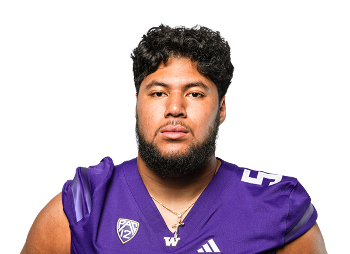
Overall, Troy Fautanu projects as a "Mid-Level Starter Potential" in the NFL. His solid foundation in pass protection and the potential for improvement in run blocking suggest he could develop into a reliable starter, especially if he refines his technique at the second level and improves his bend and agility. His immediate impact may be as a rotational player, but with the right development, he could become a dependable starter within his first few years in the league. ← Back to NFL Draft Big Board Troy Fautanu Washington HT: 6040 WT: 317 YR: RSO POS: OT OVR RK 32 POS RK CEILING POTENTIAL 6 KEY STRENGTHS Pass Pro Footwork Hand Placement KEY CONCERNS 2nd Level Bend Agility PLAYSTYLE & SCHEME FIT Troy Fautanu showcases a balanced blend of power and technique, making him a versatile offensive tackle capable of adapting to various schemes. He has demonstrated proficiency in pass protection, utilizing his above-average hand placement and footwork to effectively counter edge rushers. Fautanu's run blocking is solid, though there's room for improvement in consistency and technique at the second level. His agility and ability to sustain blocks can be leveraged in zone-blocking schemes, where lateral movement and maintaining blocks are critical. However, his skill set also aligns well with power-run schemes due to his physicality and finishing ability. PLAYER COMPARISON: CEILING GRADE ANALYSIS High-End Starter Potential (65-69) A player expected to become a top-tier starter within their first few years. They possess strong physical tools and good technical skills but may have some limitations in their game. With development, they can reach near-elite levels and provide consistent impact at their position. Primary scout: Brandon Lundberg Football Scout 365 NFL Draft Grade Scale Football Scout 365 grades reflect a prospect’s projected long-term NFL value and role. Draft ranges are general value projections, not predictions of an exact selection. Positional value, team needs, scheme fit, medical information and athletic testing can influence where a player is ultimately selected. How Football Scout 365 Grades NFL Draft Prospects Elite (75+): A rare, high-impact prospect with elite physical tools, advanced football intelligence and the ability to make an immediate NFL impact. Elite prospects carry franchise-altering potential and typically project as top 5–10 selections in the first round. Near Elite (70–74): A high-caliber prospect with outstanding physical tools, strong football intelligence and only minor developmental limitations. Near Elite prospects project as significant early-career contributors with Pro Bowl upside and first-round draft value. High-End Starter Potential (65–69): A starting-caliber prospect with strong physical tools, quality technical skills and a defined NFL role. These players may require development before reaching their ceiling but generally carry second- or third-round draft value. Mid-Level Starter Potential (60–64): A solid prospect with NFL-level tools and a pathway to becoming a dependable starter if key limitations are addressed. These players generally carry third- to fifth-round draft value. Low-Level Starter Potential (55–59): A developmental prospect who could become a low-end starter, high-end backup or valuable specialist in the right role. These players generally carry fifth- to seventh-round draft value. Backup Level (50–54): A depth or rotational prospect with enough functional ability to compete for an NFL roster spot but limited long-term starting potential. These players generally project as late Day 3 selections or priority undrafted free agents. Not NFL Level (Below 50): A developmental or camp prospect who does not currently demonstrate enough consistency, technical refinement or functional NFL traits to project as a regular contributor. These players generally project as undrafted free agents, practice-squad candidates or camp invitations. Draft position can vary based on positional value, team needs, scheme fit, medical evaluation and athletic testing.