Search Results
Search this site
1757 results found with an empty search
- Kade Pieper
← Back to NFL Draft Big Board Kade Pieper Iowa HT: 6030 WT: 298 YR: SR POS: IOL OVR RK 30 POS RK CEILING POTENTIAL IOL1 High-End Starter Potential KEY STRENGTHS Reach-block movement Second-level balance Hands / stunt recognition KEY CONCERNS Length limitations Get-off consistency Late-rep attachment PLAYSTYLE & SCHEME FIT Kade Pieper is an athletic interior blocker whose profile is built on lateral movement, balance, and the ability to locate and sustain blocks in space. He fits best as a zone guard who can execute reach blocks, climb to linebackers, and contribute as a puller, with potential center flexibility requiring further evaluation. The concern is whether his length limitations and inconsistent get-off create too many isolated pass-protection losses against longer interior rushers. His starting pathway depends on consistently winning the first contact and maintaining attachment when defenders change direction late in the rep, particularly in offenses that demand frequent solo pass sets. PLAYER COMPARISON: CEILING GRADE ANALYSIS High-End Starter Potential (65-69) A player expected to become a top-tier starter within their first few years. They possess strong physical tools and good technical skills but may have some limitations in their game. With development, they can reach near-elite levels and provide consistent impact at their position. Primary scout: Brandon Lundberg Football Scout 365 NFL Draft Grade Scale Football Scout 365 grades reflect a prospect’s projected long-term NFL value and role. Draft ranges are general value projections, not predictions of an exact selection. Positional value, team needs, scheme fit, medical information and athletic testing can influence where a player is ultimately selected. How Football Scout 365 Grades NFL Draft Prospects Elite (75+): A rare, high-impact prospect with elite physical tools, advanced football intelligence and the ability to make an immediate NFL impact. Elite prospects carry franchise-altering potential and typically project as top 5–10 selections in the first round. Near Elite (70–74): A high-caliber prospect with outstanding physical tools, strong football intelligence and only minor developmental limitations. Near Elite prospects project as significant early-career contributors with Pro Bowl upside and first-round draft value. High-End Starter Potential (65–69): A starting-caliber prospect with strong physical tools, quality technical skills and a defined NFL role. These players may require development before reaching their ceiling but generally carry second- or third-round draft value. Mid-Level Starter Potential (60–64): A solid prospect with NFL-level tools and a pathway to becoming a dependable starter if key limitations are addressed. These players generally carry third- to fifth-round draft value. Low-Level Starter Potential (55–59): A developmental prospect who could become a low-end starter, high-end backup or valuable specialist in the right role. These players generally carry fifth- to seventh-round draft value. Backup Level (50–54): A depth or rotational prospect with enough functional ability to compete for an NFL roster spot but limited long-term starting potential. These players generally project as late Day 3 selections or priority undrafted free agents. Not NFL Level (Below 50): A developmental or camp prospect who does not currently demonstrate enough consistency, technical refinement or functional NFL traits to project as a regular contributor. These players generally project as undrafted free agents, practice-squad candidates or camp invitations. Draft position can vary based on positional value, team needs, scheme fit, medical evaluation and athletic testing.
- Najee Harris
Hard to tackle, shifty, yet not a burner. At times, Harris has shown a lack of discipline as a runner, but in the 2020 SEC title game, and CFP, Harris has come on strong displaying a high level of athleticism as both a runner and a pass-catcher. He can run high at times at 6-2, but that's not a major factor. He is a more dynamic receiver than he gets credit for, and that's the differentiating factor in our rankings; he displayed high-level receiver skills in 2020, at times reminding me of a young Lev Bell. ← Back to NFL Draft Big Board Najee Harris Alabama HT: 6020 WT: 230 YR: SR POS: RB OVR RK 19 POS RK CEILING POTENTIAL 1 KEY STRENGTHS KEY CONCERNS PLAYSTYLE & SCHEME FIT Hard to tackle, shifty, yet not a burner. At times, Harris has shown a lack of discipline as a runner, but in the 2020 SEC title game, and CFP, Harris has come on strong displaying a high level of athleticism as both a runner and a pass-catcher. He can run high at times at 6-2, but that's not a major factor. He is a more dynamic receiver than he gets credit for, and that's the differentiating factor in our rankings; he displayed high-level receiver skills in 2020, at times reminding me of a young Lev Bell. PLAYER COMPARISON: CEILING GRADE ANALYSIS Mid-Level Starter Potential (60-64) A solid, dependable starter with the potential to exceed expectations. They have good athleticism and tools but may lack elite traits. While they show flashes of high-level play, they also have some notable weaknesses that must be developed. These players often need 2-3 years to establish themselves. Primary scout: Brandon Lundberg Football Scout 365 NFL Draft Grade Scale Football Scout 365 grades reflect a prospect’s projected long-term NFL value and role. Draft ranges are general value projections, not predictions of an exact selection. Positional value, team needs, scheme fit, medical information and athletic testing can influence where a player is ultimately selected. How Football Scout 365 Grades NFL Draft Prospects Elite (75+): A rare, high-impact prospect with elite physical tools, advanced football intelligence and the ability to make an immediate NFL impact. Elite prospects carry franchise-altering potential and typically project as top 5–10 selections in the first round. Near Elite (70–74): A high-caliber prospect with outstanding physical tools, strong football intelligence and only minor developmental limitations. Near Elite prospects project as significant early-career contributors with Pro Bowl upside and first-round draft value. High-End Starter Potential (65–69): A starting-caliber prospect with strong physical tools, quality technical skills and a defined NFL role. These players may require development before reaching their ceiling but generally carry second- or third-round draft value. Mid-Level Starter Potential (60–64): A solid prospect with NFL-level tools and a pathway to becoming a dependable starter if key limitations are addressed. These players generally carry third- to fifth-round draft value. Low-Level Starter Potential (55–59): A developmental prospect who could become a low-end starter, high-end backup or valuable specialist in the right role. These players generally carry fifth- to seventh-round draft value. Backup Level (50–54): A depth or rotational prospect with enough functional ability to compete for an NFL roster spot but limited long-term starting potential. These players generally project as late Day 3 selections or priority undrafted free agents. Not NFL Level (Below 50): A developmental or camp prospect who does not currently demonstrate enough consistency, technical refinement or functional NFL traits to project as a regular contributor. These players generally project as undrafted free agents, practice-squad candidates or camp invitations. Draft position can vary based on positional value, team needs, scheme fit, medical evaluation and athletic testing.
- Laiatu Latu
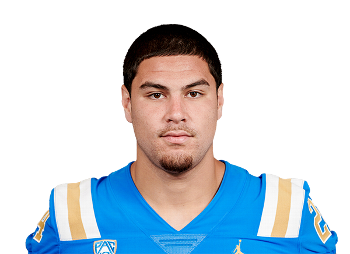
UCLA edge rusher Laiatu Latu's excellent quickness, body control, and hand usage make him a menacing presence to quarterbacks. At 6'4", 265 lbs, with a 40-time of 4.70 seconds, his athletic profile is solid, and his comeback from a severe neck injury to earn First Team All-Pac-12 and College Football Comeback Player of the Year in 2022 showcases his tenacity. Latu's broad range of pass rush moves and ability to win the edge underline his potential, although concerns exist regarding his power at the point of attack and change of direction. His projection as a Day 1 pick and a winning starter from day one, especially in teams with an odd front scheme, hints at his immediate impact potential in the NFL. Latu's resilience and continuous development hint at a promising professional trajectory as a three-down player with further strength and technique refinement. ← Back to NFL Draft Big Board Laiatu Latu UCLA HT: 6050 WT: 265 YR: SR POS: ED OVR RK 17 POS RK CEILING POTENTIAL 3 KEY STRENGTHS Quickness Versatility Resilience KEY CONCERNS Power Agility Coverage PLAYSTYLE & SCHEME FIT Laiatu Latu's play style is characterized by his explosive quickness off the edge, adept hand usage, and body control which makes him a formidable pass rusher, able to shake off offensive linemen and create pressure on quarterbacks. He also has the flexibility to drop back into coverage, although his change of direction could be a limiting factor in man coverage situations. In terms of scheme fit, Latu would thrive in an odd front scheme as an edge rusher where his pass-rushing skills can be maximized, and his ability to set the edge against the run can be further developed with enhanced strength. His physicality and relentless motor also suggest a good fit in aggressive, attacking defensive schemes. For player comparisons based on play style and body composition, Latu draws similarities to players like Chandler Jones, due to his length and pass-rushing prowess, Shaquil Barrett, for his versatility and ability to create pressure, and Jason Pierre-Paul, whose resilience and comeback from adversity parallel Latu's own journey, coupled with a comparable athletic frame and edge-rushing capability. PLAYER COMPARISON: CEILING GRADE ANALYSIS High-End Starter Potential (65-69) A player expected to become a top-tier starter within their first few years. They possess strong physical tools and good technical skills but may have some limitations in their game. With development, they can reach near-elite levels and provide consistent impact at their position. Primary scout: Brandon Lundberg Football Scout 365 NFL Draft Grade Scale Football Scout 365 grades reflect a prospect’s projected long-term NFL value and role. Draft ranges are general value projections, not predictions of an exact selection. Positional value, team needs, scheme fit, medical information and athletic testing can influence where a player is ultimately selected. How Football Scout 365 Grades NFL Draft Prospects Elite (75+): A rare, high-impact prospect with elite physical tools, advanced football intelligence and the ability to make an immediate NFL impact. Elite prospects carry franchise-altering potential and typically project as top 5–10 selections in the first round. Near Elite (70–74): A high-caliber prospect with outstanding physical tools, strong football intelligence and only minor developmental limitations. Near Elite prospects project as significant early-career contributors with Pro Bowl upside and first-round draft value. High-End Starter Potential (65–69): A starting-caliber prospect with strong physical tools, quality technical skills and a defined NFL role. These players may require development before reaching their ceiling but generally carry second- or third-round draft value. Mid-Level Starter Potential (60–64): A solid prospect with NFL-level tools and a pathway to becoming a dependable starter if key limitations are addressed. These players generally carry third- to fifth-round draft value. Low-Level Starter Potential (55–59): A developmental prospect who could become a low-end starter, high-end backup or valuable specialist in the right role. These players generally carry fifth- to seventh-round draft value. Backup Level (50–54): A depth or rotational prospect with enough functional ability to compete for an NFL roster spot but limited long-term starting potential. These players generally project as late Day 3 selections or priority undrafted free agents. Not NFL Level (Below 50): A developmental or camp prospect who does not currently demonstrate enough consistency, technical refinement or functional NFL traits to project as a regular contributor. These players generally project as undrafted free agents, practice-squad candidates or camp invitations. Draft position can vary based on positional value, team needs, scheme fit, medical evaluation and athletic testing.
- Max Iheanachor
← Back to NFL Draft Big Board Max Iheanachor Arizona State HT: 6060 WT: 330 YR: SR POS: OT OVR RK 23 POS RK CEILING POTENTIAL KEY STRENGTHS Size–Athleticism Profile Scheme Versatility Pass-Pro Upside KEY CONCERNS Technical Rawness Leverage & Sustain Processing vs. Games PLAYSTYLE & SCHEME FIT Max Iheanachor is a traits-heavy, ascending tackle prospect with rare movement skills and high developmental upside. At 6’5”, 325 pounds, he brings excellent lean mass, lateral quickness, and fluid body control that project cleanly into outside-zone systems. His kick slide is twitchy and he shows the range to meet speed off the edge, while his play strength flashes in both run and pass phases. However, inconsistent hand placement, protection recognition issues, and unrefined footwork create avoidable losses in pass protection. He wins more with athleticism than polish at this stage. Iheanachor projects as a high-upside starting tackle in a movement-based scheme, with early swing tackle value while his technique stabilizes. PLAYER COMPARISON: CEILING GRADE ANALYSIS High-End Starter Potential (65-69) A player expected to become a top-tier starter within their first few years. They possess strong physical tools and good technical skills but may have some limitations in their game. With development, they can reach near-elite levels and provide consistent impact at their position. Primary scout: Brandon Lundberg Football Scout 365 NFL Draft Grade Scale Football Scout 365 grades reflect a prospect’s projected long-term NFL value and role. Draft ranges are general value projections, not predictions of an exact selection. Positional value, team needs, scheme fit, medical information and athletic testing can influence where a player is ultimately selected. How Football Scout 365 Grades NFL Draft Prospects Elite (75+): A rare, high-impact prospect with elite physical tools, advanced football intelligence and the ability to make an immediate NFL impact. Elite prospects carry franchise-altering potential and typically project as top 5–10 selections in the first round. Near Elite (70–74): A high-caliber prospect with outstanding physical tools, strong football intelligence and only minor developmental limitations. Near Elite prospects project as significant early-career contributors with Pro Bowl upside and first-round draft value. High-End Starter Potential (65–69): A starting-caliber prospect with strong physical tools, quality technical skills and a defined NFL role. These players may require development before reaching their ceiling but generally carry second- or third-round draft value. Mid-Level Starter Potential (60–64): A solid prospect with NFL-level tools and a pathway to becoming a dependable starter if key limitations are addressed. These players generally carry third- to fifth-round draft value. Low-Level Starter Potential (55–59): A developmental prospect who could become a low-end starter, high-end backup or valuable specialist in the right role. These players generally carry fifth- to seventh-round draft value. Backup Level (50–54): A depth or rotational prospect with enough functional ability to compete for an NFL roster spot but limited long-term starting potential. These players generally project as late Day 3 selections or priority undrafted free agents. Not NFL Level (Below 50): A developmental or camp prospect who does not currently demonstrate enough consistency, technical refinement or functional NFL traits to project as a regular contributor. These players generally project as undrafted free agents, practice-squad candidates or camp invitations. Draft position can vary based on positional value, team needs, scheme fit, medical evaluation and athletic testing.
- Jake Slaughter
← Back to NFL Draft Big Board Jake Slaughter Florida HT: 6050 WT: 308 YR: SR POS: IOL OVR RK 92 POS RK CEILING POTENTIAL KEY STRENGTHS Elite Pass Blocking Zone Fit Movement Skills Intelligence & Communication KEY CONCERNS Lower-Body Strength Aggression Management Reach Speed in Zone PLAYSTYLE & SCHEME FIT Jake Slaughter is a technically advanced, high-IQ center with immediate NFL starting traits in pass protection. At 6’4”, 300+ pounds, he wins with leverage, balance, and elite hand placement rather than overwhelming mass. He anchors exceptionally well against interior power, resets quickly versus counters, and consistently keeps his chest clean with precise inside hand positioning. In the run game, he operates best in zone or movement-based schemes where his agility and second-level accuracy shine. While he generates solid push, he is more positional than dominant as a drive blocker and can be challenged by longer, heavier nose tackles. Slaughter projects as a plug-and-play starting center with long-term stability and potential Pro Bowl upside if his functional power continues to develop. PLAYER COMPARISON: CEILING GRADE ANALYSIS Mid-Level Starter Potential (60-64) A solid, dependable starter with the potential to exceed expectations. They have good athleticism and tools but may lack elite traits. While they show flashes of high-level play, they also have some notable weaknesses that must be developed. These players often need 2-3 years to establish themselves. Primary scout: Brandon Lundberg Football Scout 365 NFL Draft Grade Scale Football Scout 365 grades reflect a prospect’s projected long-term NFL value and role. Draft ranges are general value projections, not predictions of an exact selection. Positional value, team needs, scheme fit, medical information and athletic testing can influence where a player is ultimately selected. How Football Scout 365 Grades NFL Draft Prospects Elite (75+): A rare, high-impact prospect with elite physical tools, advanced football intelligence and the ability to make an immediate NFL impact. Elite prospects carry franchise-altering potential and typically project as top 5–10 selections in the first round. Near Elite (70–74): A high-caliber prospect with outstanding physical tools, strong football intelligence and only minor developmental limitations. Near Elite prospects project as significant early-career contributors with Pro Bowl upside and first-round draft value. High-End Starter Potential (65–69): A starting-caliber prospect with strong physical tools, quality technical skills and a defined NFL role. These players may require development before reaching their ceiling but generally carry second- or third-round draft value. Mid-Level Starter Potential (60–64): A solid prospect with NFL-level tools and a pathway to becoming a dependable starter if key limitations are addressed. These players generally carry third- to fifth-round draft value. Low-Level Starter Potential (55–59): A developmental prospect who could become a low-end starter, high-end backup or valuable specialist in the right role. These players generally carry fifth- to seventh-round draft value. Backup Level (50–54): A depth or rotational prospect with enough functional ability to compete for an NFL roster spot but limited long-term starting potential. These players generally project as late Day 3 selections or priority undrafted free agents. Not NFL Level (Below 50): A developmental or camp prospect who does not currently demonstrate enough consistency, technical refinement or functional NFL traits to project as a regular contributor. These players generally project as undrafted free agents, practice-squad candidates or camp invitations. Draft position can vary based on positional value, team needs, scheme fit, medical evaluation and athletic testing.
- Owen Pappoe
← Back to NFL Draft Big Board Owen Pappoe Auburn HT: 6002 WT: 225 YR: SR POS: LB OVR RK 61 POS RK CEILING POTENTIAL 4 KEY STRENGTHS KEY CONCERNS PLAYSTYLE & SCHEME FIT PLAYER COMPARISON: CEILING GRADE ANALYSIS Mid-Level Starter Potential (60-64) A solid, dependable starter with the potential to exceed expectations. They have good athleticism and tools but may lack elite traits. While they show flashes of high-level play, they also have some notable weaknesses that must be developed. These players often need 2-3 years to establish themselves. Primary scout: Brandon Lundberg Football Scout 365 NFL Draft Grade Scale Football Scout 365 grades reflect a prospect’s projected long-term NFL value and role. Draft ranges are general value projections, not predictions of an exact selection. Positional value, team needs, scheme fit, medical information and athletic testing can influence where a player is ultimately selected. How Football Scout 365 Grades NFL Draft Prospects Elite (75+): A rare, high-impact prospect with elite physical tools, advanced football intelligence and the ability to make an immediate NFL impact. Elite prospects carry franchise-altering potential and typically project as top 5–10 selections in the first round. Near Elite (70–74): A high-caliber prospect with outstanding physical tools, strong football intelligence and only minor developmental limitations. Near Elite prospects project as significant early-career contributors with Pro Bowl upside and first-round draft value. High-End Starter Potential (65–69): A starting-caliber prospect with strong physical tools, quality technical skills and a defined NFL role. These players may require development before reaching their ceiling but generally carry second- or third-round draft value. Mid-Level Starter Potential (60–64): A solid prospect with NFL-level tools and a pathway to becoming a dependable starter if key limitations are addressed. These players generally carry third- to fifth-round draft value. Low-Level Starter Potential (55–59): A developmental prospect who could become a low-end starter, high-end backup or valuable specialist in the right role. These players generally carry fifth- to seventh-round draft value. Backup Level (50–54): A depth or rotational prospect with enough functional ability to compete for an NFL roster spot but limited long-term starting potential. These players generally project as late Day 3 selections or priority undrafted free agents. Not NFL Level (Below 50): A developmental or camp prospect who does not currently demonstrate enough consistency, technical refinement or functional NFL traits to project as a regular contributor. These players generally project as undrafted free agents, practice-squad candidates or camp invitations. Draft position can vary based on positional value, team needs, scheme fit, medical evaluation and athletic testing.
- Will Campbell
Will Campbell has the makings of an NFL starter with the potential to be elite, especially if he continues to refine his technique and adaptability against diverse defensive fronts. His foundational skills, coupled with his physical attributes, project him as a likely first-round pick when he becomes draft eligible. ← Back to NFL Draft Big Board Will Campbell LSU HT: 6060 WT: 325 YR: JR POS: OT OVR RK 7 POS RK CEILING POTENTIAL 1 KEY STRENGTHS Positional Versatility Core Strength Run Blocking KEY CONCERNS Length for Tackle Pass-Pro Hand Timing Balance PLAYSTYLE & SCHEME FIT Will Campbell is an athletic and powerful tackle prospect with strong positional versatility, having excelled at left tackle for LSU but projecting effectively to guard or center due to his skill set. His excellent balance, anchor strength, and quick hands make him reliable in both run and pass protection. In the NFL, Campbell may be best suited on the interior to maximize his strengths, where his power and efficient technique can shine against interior defenders. Ideal for both zone and power schemes, Campbell offers immediate impact with the potential for Pro Bowl-level performance as a guard or tackle. PLAYER COMPARISON: CEILING GRADE ANALYSIS Near Elite (70-74) A high-caliber prospect who is expected to become a significant contributor by Year 2. These players have outstanding physical tools and strong football IQ, with only minor flaws in their game. They demonstrate consistency at a high level and project as future Pro Bowl-caliber players if properly developed. Primary scout: Brandon Lundberg Football Scout 365 NFL Draft Grade Scale Football Scout 365 grades reflect a prospect’s projected long-term NFL value and role. Draft ranges are general value projections, not predictions of an exact selection. Positional value, team needs, scheme fit, medical information and athletic testing can influence where a player is ultimately selected. How Football Scout 365 Grades NFL Draft Prospects Elite (75+): A rare, high-impact prospect with elite physical tools, advanced football intelligence and the ability to make an immediate NFL impact. Elite prospects carry franchise-altering potential and typically project as top 5–10 selections in the first round. Near Elite (70–74): A high-caliber prospect with outstanding physical tools, strong football intelligence and only minor developmental limitations. Near Elite prospects project as significant early-career contributors with Pro Bowl upside and first-round draft value. High-End Starter Potential (65–69): A starting-caliber prospect with strong physical tools, quality technical skills and a defined NFL role. These players may require development before reaching their ceiling but generally carry second- or third-round draft value. Mid-Level Starter Potential (60–64): A solid prospect with NFL-level tools and a pathway to becoming a dependable starter if key limitations are addressed. These players generally carry third- to fifth-round draft value. Low-Level Starter Potential (55–59): A developmental prospect who could become a low-end starter, high-end backup or valuable specialist in the right role. These players generally carry fifth- to seventh-round draft value. Backup Level (50–54): A depth or rotational prospect with enough functional ability to compete for an NFL roster spot but limited long-term starting potential. These players generally project as late Day 3 selections or priority undrafted free agents. Not NFL Level (Below 50): A developmental or camp prospect who does not currently demonstrate enough consistency, technical refinement or functional NFL traits to project as a regular contributor. These players generally project as undrafted free agents, practice-squad candidates or camp invitations. Draft position can vary based on positional value, team needs, scheme fit, medical evaluation and athletic testing.
- Kevin Winston Jr.
← Back to NFL Draft Big Board Kevin Winston Jr. Penn State HT: 6020 WT: 205 YR: JR POS: S OVR RK 56 POS RK CEILING POTENTIAL 4 KEY STRENGTHS Explosive Playmaker Alignment Versatility Tight End Eraser KEY CONCERNS Deep Coverage Instincts Recovery Ability Play Strength PLAYSTYLE & SCHEME FIT Winston Jr. is a long, rangy, and physical safety best suited for box safety, nickel, or Cover-3 strong safety roles. His elite tackling, burst, and pursuit speed make him a high-end run defender who thrives attacking downhill. However, his high-cut frame and inconsistent eye discipline in deep coverage limit his upside as a single-high safety. If used properly in an attacking zone-heavy system PLAYER COMPARISON: CEILING GRADE ANALYSIS High-End Starter Potential (65-69) A player expected to become a top-tier starter within their first few years. They possess strong physical tools and good technical skills but may have some limitations in their game. With development, they can reach near-elite levels and provide consistent impact at their position. Primary scout: Brandon Lundberg Football Scout 365 NFL Draft Grade Scale Football Scout 365 grades reflect a prospect’s projected long-term NFL value and role. Draft ranges are general value projections, not predictions of an exact selection. Positional value, team needs, scheme fit, medical information and athletic testing can influence where a player is ultimately selected. How Football Scout 365 Grades NFL Draft Prospects Elite (75+): A rare, high-impact prospect with elite physical tools, advanced football intelligence and the ability to make an immediate NFL impact. Elite prospects carry franchise-altering potential and typically project as top 5–10 selections in the first round. Near Elite (70–74): A high-caliber prospect with outstanding physical tools, strong football intelligence and only minor developmental limitations. Near Elite prospects project as significant early-career contributors with Pro Bowl upside and first-round draft value. High-End Starter Potential (65–69): A starting-caliber prospect with strong physical tools, quality technical skills and a defined NFL role. These players may require development before reaching their ceiling but generally carry second- or third-round draft value. Mid-Level Starter Potential (60–64): A solid prospect with NFL-level tools and a pathway to becoming a dependable starter if key limitations are addressed. These players generally carry third- to fifth-round draft value. Low-Level Starter Potential (55–59): A developmental prospect who could become a low-end starter, high-end backup or valuable specialist in the right role. These players generally carry fifth- to seventh-round draft value. Backup Level (50–54): A depth or rotational prospect with enough functional ability to compete for an NFL roster spot but limited long-term starting potential. These players generally project as late Day 3 selections or priority undrafted free agents. Not NFL Level (Below 50): A developmental or camp prospect who does not currently demonstrate enough consistency, technical refinement or functional NFL traits to project as a regular contributor. These players generally project as undrafted free agents, practice-squad candidates or camp invitations. Draft position can vary based on positional value, team needs, scheme fit, medical evaluation and athletic testing.
- Travis Jones
Jones is the best IDL at the Senior Bowl. He consistently dominated in one-on-one drills throughout, playing with great leverage and excellent hand usage. He is on the rise, according to most scouts. ← Back to NFL Draft Big Board Travis Jones Connecticut HT: 6040 WT: 333 YR: SR POS: IDL OVR RK 35 POS RK CEILING POTENTIAL 3 KEY STRENGTHS KEY CONCERNS PLAYSTYLE & SCHEME FIT Jones is the best IDL at the Senior Bowl. He consistently dominated in one-on-one drills throughout, playing with great leverage and excellent hand usage. He is on the rise, according to most scouts. PLAYER COMPARISON: CEILING GRADE ANALYSIS Near Elite (70-74) A high-caliber prospect who is expected to become a significant contributor by Year 2. These players have outstanding physical tools and strong football IQ, with only minor flaws in their game. They demonstrate consistency at a high level and project as future Pro Bowl-caliber players if properly developed. Primary scout: Brandon Lundberg Football Scout 365 NFL Draft Grade Scale Football Scout 365 grades reflect a prospect’s projected long-term NFL value and role. Draft ranges are general value projections, not predictions of an exact selection. Positional value, team needs, scheme fit, medical information and athletic testing can influence where a player is ultimately selected. How Football Scout 365 Grades NFL Draft Prospects Elite (75+): A rare, high-impact prospect with elite physical tools, advanced football intelligence and the ability to make an immediate NFL impact. Elite prospects carry franchise-altering potential and typically project as top 5–10 selections in the first round. Near Elite (70–74): A high-caliber prospect with outstanding physical tools, strong football intelligence and only minor developmental limitations. Near Elite prospects project as significant early-career contributors with Pro Bowl upside and first-round draft value. High-End Starter Potential (65–69): A starting-caliber prospect with strong physical tools, quality technical skills and a defined NFL role. These players may require development before reaching their ceiling but generally carry second- or third-round draft value. Mid-Level Starter Potential (60–64): A solid prospect with NFL-level tools and a pathway to becoming a dependable starter if key limitations are addressed. These players generally carry third- to fifth-round draft value. Low-Level Starter Potential (55–59): A developmental prospect who could become a low-end starter, high-end backup or valuable specialist in the right role. These players generally carry fifth- to seventh-round draft value. Backup Level (50–54): A depth or rotational prospect with enough functional ability to compete for an NFL roster spot but limited long-term starting potential. These players generally project as late Day 3 selections or priority undrafted free agents. Not NFL Level (Below 50): A developmental or camp prospect who does not currently demonstrate enough consistency, technical refinement or functional NFL traits to project as a regular contributor. These players generally project as undrafted free agents, practice-squad candidates or camp invitations. Draft position can vary based on positional value, team needs, scheme fit, medical evaluation and athletic testing.
- Joey Porter Jr.
At 6-2 195lbs, Joey Porter Jr. is excellent in man coverage on the outside, but a role in the slot might be warranted for a few reasons. His ability to body bigger receivers and TE's in the slot and his presence in the run game will be discussed ad nausea during the NFL draft combine season. But his ability to play vs. bigger outside receivers makes it a more difficult decision due to his elite length and fluid hips. There are some negatives. He could be more solid in zone defense. At times on film, he lacks the closing speed needed in the NFL to play in a zone-based scheme. He can also be a little too aggressive in coverage, an area he needed to clean up in 2022 after a rocky 2021 season where he was flagged in coverage ten times vs. three times in 2022. ← Back to NFL Draft Big Board Joey Porter Jr. Penn State HT: 6024 WT: 193 YR: RJR POS: CB OVR RK 13 POS RK CEILING POTENTIAL 3 KEY STRENGTHS Lengthy Versatility Physicality KEY CONCERNS In Space Transitional Speed Locate Ball PLAYSTYLE & SCHEME FIT In terms of his NFL scheme fit, Porter Jr. would be a good fit for a team that plays a press-man coverage scheme or a Cover 3 defense. His size and physicality make him a good candidate to play on the boundary, where he can use his length to disrupt receivers and make plays on the ball. He also has good speed and agility, which would allow him to play in zone coverage and effectively break on the ball. PLAYER COMPARISON: CEILING GRADE ANALYSIS High-End Starter Potential (65-69) A player expected to become a top-tier starter within their first few years. They possess strong physical tools and good technical skills but may have some limitations in their game. With development, they can reach near-elite levels and provide consistent impact at their position. Primary scout: Brandon Lundberg Football Scout 365 NFL Draft Grade Scale Football Scout 365 grades reflect a prospect’s projected long-term NFL value and role. Draft ranges are general value projections, not predictions of an exact selection. Positional value, team needs, scheme fit, medical information and athletic testing can influence where a player is ultimately selected. How Football Scout 365 Grades NFL Draft Prospects Elite (75+): A rare, high-impact prospect with elite physical tools, advanced football intelligence and the ability to make an immediate NFL impact. Elite prospects carry franchise-altering potential and typically project as top 5–10 selections in the first round. Near Elite (70–74): A high-caliber prospect with outstanding physical tools, strong football intelligence and only minor developmental limitations. Near Elite prospects project as significant early-career contributors with Pro Bowl upside and first-round draft value. High-End Starter Potential (65–69): A starting-caliber prospect with strong physical tools, quality technical skills and a defined NFL role. These players may require development before reaching their ceiling but generally carry second- or third-round draft value. Mid-Level Starter Potential (60–64): A solid prospect with NFL-level tools and a pathway to becoming a dependable starter if key limitations are addressed. These players generally carry third- to fifth-round draft value. Low-Level Starter Potential (55–59): A developmental prospect who could become a low-end starter, high-end backup or valuable specialist in the right role. These players generally carry fifth- to seventh-round draft value. Backup Level (50–54): A depth or rotational prospect with enough functional ability to compete for an NFL roster spot but limited long-term starting potential. These players generally project as late Day 3 selections or priority undrafted free agents. Not NFL Level (Below 50): A developmental or camp prospect who does not currently demonstrate enough consistency, technical refinement or functional NFL traits to project as a regular contributor. These players generally project as undrafted free agents, practice-squad candidates or camp invitations. Draft position can vary based on positional value, team needs, scheme fit, medical evaluation and athletic testing.
- Emeka Egbuka
Egbuka has shown tremendous potential and productivity at Ohio State, particularly in his sophomore year. He brings a rare combination of speed, agility, and route-running prowess to the field. While he needs to develop his abilities in contested catches and improve his consistency, his overall skill set positions him as a high-potential prospect for the NFL. ← Back to NFL Draft Big Board Emeka Egbuka Ohio State HT: 6010 WT: 205 YR: SR POS: WR OVR RK 20 POS RK CEILING POTENTIAL 2 KEY STRENGTHS Elite Ball Tracking After Catch Ability Savvy Route Runner KEY CONCERNS Limited Vertical Speed Struggles vs. Physicality Expand Route Tree PLAYSTYLE & SCHEME FIT Emeka Egbuka is a smooth, technically refined slot receiver with natural hands, route-running intelligence, and elite ball-tracking ability. He wins underneath and in the intermediate game with tempo, manipulation, and crisp transitions. Lacks true breakaway speed but compensates with footwork, burst, and toughness after the catch. Best fit as a primary slot receiver in timing-based offenses like West Coast or Spread schemes that rely on rhythm passing and YAC opportunities. PLAYER COMPARISON: CEILING GRADE ANALYSIS High-End Starter Potential (65-69) A player expected to become a top-tier starter within their first few years. They possess strong physical tools and good technical skills but may have some limitations in their game. With development, they can reach near-elite levels and provide consistent impact at their position. Primary scout: Brandon Lundberg Football Scout 365 NFL Draft Grade Scale Football Scout 365 grades reflect a prospect’s projected long-term NFL value and role. Draft ranges are general value projections, not predictions of an exact selection. Positional value, team needs, scheme fit, medical information and athletic testing can influence where a player is ultimately selected. How Football Scout 365 Grades NFL Draft Prospects Elite (75+): A rare, high-impact prospect with elite physical tools, advanced football intelligence and the ability to make an immediate NFL impact. Elite prospects carry franchise-altering potential and typically project as top 5–10 selections in the first round. Near Elite (70–74): A high-caliber prospect with outstanding physical tools, strong football intelligence and only minor developmental limitations. Near Elite prospects project as significant early-career contributors with Pro Bowl upside and first-round draft value. High-End Starter Potential (65–69): A starting-caliber prospect with strong physical tools, quality technical skills and a defined NFL role. These players may require development before reaching their ceiling but generally carry second- or third-round draft value. Mid-Level Starter Potential (60–64): A solid prospect with NFL-level tools and a pathway to becoming a dependable starter if key limitations are addressed. These players generally carry third- to fifth-round draft value. Low-Level Starter Potential (55–59): A developmental prospect who could become a low-end starter, high-end backup or valuable specialist in the right role. These players generally carry fifth- to seventh-round draft value. Backup Level (50–54): A depth or rotational prospect with enough functional ability to compete for an NFL roster spot but limited long-term starting potential. These players generally project as late Day 3 selections or priority undrafted free agents. Not NFL Level (Below 50): A developmental or camp prospect who does not currently demonstrate enough consistency, technical refinement or functional NFL traits to project as a regular contributor. These players generally project as undrafted free agents, practice-squad candidates or camp invitations. Draft position can vary based on positional value, team needs, scheme fit, medical evaluation and athletic testing.
- Mac Jones
Mac Jones had the highest QBR vs. top 25 opponents among all QB’s with at least 100 pass attempts since 2014. (To qualify, the player must start 75% of his team's games). Mac Jones had a fantastic season in 2020. Jones ascension up NFL draft boards, earning a potential first-round projection from a lot of scouts. Jones is a pure pocket passer with good mobility. He is an anticipatory thrower who identifies the opening in coverage and leads his receivers to that spot. Jones doesn't wow you with his physique, and he won't wow anyone with arm strength, but it is his ability to go through his progressions and find the open man while navigating the pocket that sets him apart. Jones will not wow anyone with off-platform throws or wild adlibbing, but in a prostyle system that involves timing and rhythm passing, he can excel. ← Back to NFL Draft Big Board Mac Jones Alabama HT: 6030 WT: 217 YR: RJR POS: QB OVR RK 15 POS RK CEILING POTENTIAL 4 KEY STRENGTHS KEY CONCERNS PLAYSTYLE & SCHEME FIT Mac Jones had the highest QBR vs. top 25 opponents among all QB’s with at least 100 pass attempts since 2014. (To qualify, the player must start 75% of his team's games). Mac Jones had a fantastic season in 2020. Jones ascension up NFL draft boards, earning a potential first-round projection from a lot of scouts. Jones is a pure pocket passer with good mobility. He is an anticipatory thrower who identifies the opening in coverage and leads his receivers to that spot. Jones doesn't wow you with his physique, and he won't wow anyone with arm strength, but it is his ability to go through his progressions and find the open man while navigating the pocket that sets him apart. Jones will not wow anyone with off-platform throws or wild adlibbing, but in a prostyle system that involves timing and rhythm passing, he can excel. PLAYER COMPARISON: CEILING GRADE ANALYSIS Mid-Level Starter Potential (60-64) A solid, dependable starter with the potential to exceed expectations. They have good athleticism and tools but may lack elite traits. While they show flashes of high-level play, they also have some notable weaknesses that must be developed. These players often need 2-3 years to establish themselves. Primary scout: Brandon Lundberg Football Scout 365 NFL Draft Grade Scale Football Scout 365 grades reflect a prospect’s projected long-term NFL value and role. Draft ranges are general value projections, not predictions of an exact selection. Positional value, team needs, scheme fit, medical information and athletic testing can influence where a player is ultimately selected. How Football Scout 365 Grades NFL Draft Prospects Elite (75+): A rare, high-impact prospect with elite physical tools, advanced football intelligence and the ability to make an immediate NFL impact. Elite prospects carry franchise-altering potential and typically project as top 5–10 selections in the first round. Near Elite (70–74): A high-caliber prospect with outstanding physical tools, strong football intelligence and only minor developmental limitations. Near Elite prospects project as significant early-career contributors with Pro Bowl upside and first-round draft value. High-End Starter Potential (65–69): A starting-caliber prospect with strong physical tools, quality technical skills and a defined NFL role. These players may require development before reaching their ceiling but generally carry second- or third-round draft value. Mid-Level Starter Potential (60–64): A solid prospect with NFL-level tools and a pathway to becoming a dependable starter if key limitations are addressed. These players generally carry third- to fifth-round draft value. Low-Level Starter Potential (55–59): A developmental prospect who could become a low-end starter, high-end backup or valuable specialist in the right role. These players generally carry fifth- to seventh-round draft value. Backup Level (50–54): A depth or rotational prospect with enough functional ability to compete for an NFL roster spot but limited long-term starting potential. These players generally project as late Day 3 selections or priority undrafted free agents. Not NFL Level (Below 50): A developmental or camp prospect who does not currently demonstrate enough consistency, technical refinement or functional NFL traits to project as a regular contributor. These players generally project as undrafted free agents, practice-squad candidates or camp invitations. Draft position can vary based on positional value, team needs, scheme fit, medical evaluation and athletic testing.