Search Results
Search this site
1757 results found with an empty search
- Fantasy Football Week 14: Must-Add Waiver Wire Targets to Navigate Late-Season Bye Weeks
Fantasy Football Week 14: Must-Add Waiver Wire Targets to Navigate Late-Season Bye Weeks As the fantasy football regular season reaches its conclusion, Week 14 presents unique challenges with the Ravens, Broncos, Texans, Colts, Patriots, and Commanders all on bye. For fantasy football managers pushing for the playoffs, here are the top waiver wire targets to help fill gaps and secure a competitive edge. Must-Add Waiver Wire Targets to Navigate Late-Season Bye Weeks Quarterbacks Will Levis, Tennessee Titans (Rostered: 4.0%) Levis continues to show promise after his Week 12 performance of 278 passing yards and two touchdowns. With matchups against the Jaguars (twice), Bengals, and Colts from Weeks 14-17, Levis is primed for success. The Titans’ soft schedule makes him a reliable QB2 option with potential upside for the playoffs. Matthew Stafford, Los Angeles Rams (Rostered: 28.3%) Stafford bounced back in Week 12 with 278 passing yards and two touchdowns, finishing as a top-12 QB. When Cooper Kupp and Puka Nacua are healthy, Stafford thrives, averaging over 18 fantasy points per game in his last two full outings. While matchups against the Browns and Ravens are tough, Stafford is a strong depth option for QB-needy teams. Running Backs Jeremy McNichols, Washington Commanders (Rostered: 1.2%) With Brian Robinson Jr. (ankle) and Austin Ekeler (concussion) sidelined, McNichols has an opportunity to shine. In Week 13, he played a significant role, totaling 32 rushing yards on six carries. Facing the Titans in Week 14, McNichols’ versatility makes him a high-priority waiver claim, especially for managers needing a fill-in RB. Jordan Mason, San Francisco 49ers (Rostered: 42.0%) With Christian McCaffrey’s knee injury in Week 13, Mason stepped up, leading the 49ers with 78 rushing yards on 13 carries. Mason has proven his value in McCaffrey’s absence earlier this season and would be a plug-and-play RB1 should McCaffrey miss additional time. Mason is a must-add for any team needing running back depth. Sincere McCormick, Las Vegas Raiders (Rostered: 0.0%) McCormick emerged as the Raiders’ lead rusher in Week 13, tallying 64 rushing yards on 12 carries. Injuries to Alexander Mattison and Zamir White have opened the door for McCormick to secure a larger role. While his status depends on the health of his teammates, McCormick’s efficiency (5.3 yards per carry) makes him an intriguing bench stash. Wide Receivers Nick Westbrook-Ikhine, Tennessee Titans (Rostered: 17.0%) Westbrook-Ikhine’s touchdown streak extended in Week 13 with two scores on three receptions for 61 yards. He’s found the end zone eight times in his last eight games, solidifying his role as a key red-zone target. With the Titans’ favorable schedule, Westbrook-Ikhine is a WR3/flex option for managers in need of consistent production. Marquez Valdes-Scantling, New Orleans Saints (Rostered: 15.6%) Valdes-Scantling has emerged as a key big-play weapon for the Saints, highlighted by 196 receiving yards and three touchdowns over Weeks 10 and 11. While his deep-threat role can lead to boom-or-bust performances, his ability to deliver game-changing plays makes him a worthwhile addition for teams needing upside at WR. With the Saints’ favorable schedule, Valdes-Scantling is a potential flex play for the fantasy playoffs. Parker Washington, Jacksonville Jaguars (Rostered: 1.0%) Washington stepped up in Week 13 with Trevor Lawrence sidelined, posting six catches for 103 yards and a touchdown on 12 targets. With Lawrence’s status uncertain and a matchup against the Titans’ struggling secondary in Week 14, Washington is a sneaky add for WR-needy teams looking for immediate production. Adam Thielen, Carolina Panthers (Rostered: 19.9%) Thielen returned to form in Week 13, averaging 7.0 targets, 5.5 receptions, and 78 receiving yards per game since Week 12. His chemistry with Bryce Young makes him a reliable flex option, especially in PPR formats. As the Panthers face favorable matchups ahead, Thielen is a valuable depth piece for the playoffs. Tight Ends Dawson Knox, Buffalo Bills (Rostered: 8%) Knox led the Bills in receiving on a cold, snowy evening in Buffalo during Week 13, highlighted by a 39-yard reception in the second quarter. With Dalton Kincaid sidelined due to a knee injury, Knox has stepped into a larger role, earning a 14% target share over the last two weeks. The Rams, Knox's Week 14 opponent, have struggled to defend tight ends, allowing the eighth-most fantasy points per game to the position. If Kincaid remains out, Knox becomes a top streaming option for managers without a locked-in top-5 tight end. Juwan Johnson, New Orleans Saints (Rostered: 4%) In Week 13, Juwan Johnson led the New Orleans Saints in receiving yards, catching five of seven targets for 36 yards in a 21-14 loss to the Los Angeles Rams. With Taysom Hill likely sidelined due to a knee injury, Johnson is expected to see increased targets, making him a viable streaming option for Week 14. The Saints face the New York Giants, who have allowed the eighth-most fantasy points per game to tight ends this season. Johnson's expanded role and favorable matchup position him as a valuable addition for fantasy managers seeking tight end depth. Proactive Planning for the Fantasy Football Playoffs Week 14’s byepocalypse creates significant roster gaps, but these waiver-wire pickups provide key opportunities to address positional needs and maintain momentum heading into the fantasy playoffs. Act quickly to secure these impactful players before your league competitors do.
- Elite QB Blueprint: How 2021-2024 NFL Draft Quarterbacks Stacked Up Against Today’s Elite QBs Using Pre-Draft Scouting Data
Elite QB Blueprint: How 2021-2024 NFL Draft Quarterbacks Stacked Up Against Today’s Elite QBs Using Pre-Draft Scouting Data Our "Elite QB Blueprint Model" evaluates top quarterback prospects against the core attributes of today’s NFL stars, like Patrick Mahomes and Joe Burrow, using data-driven benchmarks to project who has the talent, adaptability, and skill to thrive at the highest level. What is The Elite QB Blueprint Model? In the ever-evolving landscape of the NFL, finding a franchise quarterback has become both a high-stakes art and a science. Our Elite QB Blueprint Model serves as a roadmap for identifying top quarterback prospects by evaluating them against the attributes of today’s elite quarterbacks, like Patrick Mahomes, Joe Burrow, and Josh Allen. Using six core attributes—arm talent, accuracy, mobility, improvisational skills, football IQ, and experience—each weighted by its importance to NFL success, this model provides a comprehensive benchmark for what it takes to thrive at the highest level. Building the Perfect Quarterback Profile: Core Attributes and Weights The Elite QB Blueprint Model evaluates prospects against six key attributes, each carefully weighted based on its importance to NFL success. The model uses data-driven benchmarks, elite quarterback comparisons, and scouting insights to gauge how closely new prospects match up to NFL stars like Patrick Mahomes, Joe Burrow, and Josh Allen. Below, each core trait is defined along with benchmarks and notable NFL comparisons, creating a profile to evaluate new quarterbacks. Arm Talent and Arm Strength (20%) Definition: This measures a quarterback's ability to throw with both power and control, crucial for deep throws and tight-window passes. Benchmark: Consistent, high-velocity throws across field levels, with quarterbacks averaging 250–300 passing yards per game. Elite Comparisons: Patrick Mahomes (diverse arm angles), Josh Allen (deep-throw power), Justin Herbert (blend of accuracy with power). Why it Matters: A quarterback’s arm strength opens up the playbook by challenging defenses at all depths, keeping them honest on every down. Accuracy (20%) Definition: Precision across short, intermediate, and deep routes, especially in pressured scenarios, is essential for sustaining offensive drives. Benchmark: Completion rates above 65%, consistent across game situations and under defensive pressure. Elite Comparisons: Joe Burrow (touch and timing at all levels), Russell Wilson (deep-ball accuracy). Why it Matters: A high completion rate under pressure demonstrates reliability in passing and is critical for maintaining possession in high-stakes moments. Mobility and Athleticism (15%) Definition: The ability to extend plays, maneuver in the pocket, and evade pressure is crucial for versatility in high-stakes situations. Benchmark: 500+ rushing yards per season, or evident escapability and maneuverability within the pocket. Elite Comparisons: Lamar Jackson (top-end speed), Kyler Murray (quickness and agility), Russell Wilson (stability and balance in the pocket). Why it Matters: Mobility gives quarterbacks the ability to adapt when protection breaks down, allowing them to create plays on the ground or buy time for downfield options. Improvisational Skills (15%) Definition: The ability to adapt outside of the offensive structure, managing pressure with composure and creativity, is critical when plays break down. Benchmark: High completion rates on broken plays and effective yardage generation under pressure. Elite Comparisons: Patrick Mahomes (creative, off-script playmaking), Russell Wilson (effectiveness outside of designed plays). Why it Matters: This skill allows quarterbacks to create positive yardage in chaotic situations, ensuring offensive flexibility when defenses disrupt the initial play structure. Mental Processing and Football IQ (20%) Definition: The ability to quickly read defenses, make adaptive decisions, and efficiently process post-snap information is essential for high-level quarterbacking. Benchmark: High-efficiency rating (160+) and low turnover rates; quick, adaptive reads under pressure. Elite Comparisons: Joe Burrow (defensive reads and adaptability), Justin Herbert (rapid decision-making). Why it Matters: A quarterback’s Football IQ enables quick adaptation to complex defenses, making them less predictable and more effective across different play types. Experience and Production (10%) Definition: A quarterback’s collegiate experience, combined with consistent production, indicates their readiness for NFL complexities and adaptability to various scenarios. Benchmark: 30+ games played, a passer rating above 160, and multi-season high production. Elite Comparisons: Joe Burrow (extensive college production), Patrick Mahomes (high-volume passing). Why it Matters: Experience provides quarterbacks with the ability to read defenses effectively and handle varied situations, laying a strong foundation for NFL adaptability. Common Development Areas Analyzed Evaluating potential weaknesses provides an even clearer view of each quarterback’s readiness. Here are common developmental areas, each benchmarked for improvement: Mechanics and Footwork (20%) Definition: This evaluates a quarterback's consistency in footwork and throwing mechanics, which are vital for precise and powerful throws under pressure. Benchmark: Stability in throwing mechanics and footwork under duress, contributing to sustained accuracy and power across different situations. Elite Comparisons: Josh Allen (improved mechanics post-draft), Lamar Jackson (refined release and precision). Why it Matters: Consistent mechanics help quarterbacks maintain accuracy and minimize unnecessary turnovers. Poor mechanics can lead to erratic throws and misreads, particularly under defensive pressure. Pocket Presence and Navigation (20%) Definition: This assesses a quarterback’s ability to sense pressure, evade rushers, and keep the field in view to make quick decisions under stress. Benchmark: Minimal sack rates and effective evasion in high-pressure situations, with quarterbacks showing composure and adaptability. Elite Comparisons: Justin Herbert (calm pocket presence), Kyler Murray (effective pressure navigation while keeping eyes downfield). Why it Matters: Pocket presence separates the great quarterbacks from the good, as it determines how well a QB can avoid negative plays and stay poised to make accurate throws under pressure. Consistency in Accuracy (15%) Definition: This focuses on a quarterback’s ability to maintain precision on throws, especially under pressure or during crucial downs. Benchmark: High completion percentage under pressure, including short and intermediate throws, and minimal drop-off in accuracy when pressured. Elite Comparisons: Joe Burrow (consistently accurate despite defensive pressure), Russell Wilson (reliable accuracy across levels, including deep throws). Why it Matters: Accurate quarterbacks sustain offensive drives, converting on key downs and keeping their teams in scoring positions. Inconsistent accuracy, particularly under duress, can lead to missed opportunities and stalled drives. Decision-Making Under Pressure (25%) Definition: This measures a quarterback’s ability to make sound, efficient decisions when facing defensive pressure, avoiding forced throws and turnovers. Benchmark: Low turnover rates, high adjusted completion rates when pressured, and success on critical downs. Elite Comparisons: Russell Wilson (calm, efficient decisions in high-pressure scenarios), Lamar Jackson (avoids forced plays, keeps drives alive). Why it Matters: Decision-making under pressure is crucial for maintaining drive efficiency and avoiding costly mistakes. A QB who can make safe, productive decisions under duress will limit turnovers and maximize scoring opportunities. Trusting Offensive Structure (20%) Definition: This assesses a quarterback’s balance between improvisation and reliance on the designed play structure. Over-reliance on broken plays can disrupt offensive rhythm. Benchmark: High efficiency within structured offensive plays and low reliance on improvisation as the primary source of production. Elite Comparisons: Patrick Mahomes (developed trust in structured plays, enhancing overall efficiency). Why it Matters: While improvisation is essential, a quarterback who can trust and execute within an offense’s structure can elevate the entire team’s performance, staying efficient while minimizing chaos. Ranking Quarterbacks from 2021-2024 Based on Elite QB Profile Matches The following rankings reveal how recent first-round quarterback prospects align with the elite quarterback model: 1). Caleb Williams (2024) – 85% Match Strengths: Elite arm talent, creativity, high football IQ; excels with multi-angle throws and power in off-schedule plays. Weaknesses: Footwork inconsistencies; reliance on improvisation sometimes affects rhythm. Comparison: Patrick Mahomes Key Match Drivers: Arm talent (20%), improvisational skills (15%). Lowering Factor: Footwork inconsistencies impacting accuracy (20% weight). 2). Trevor Lawrence (2021) – 84% Match Strengths: Arm strength, composure under pressure, field vision. Weaknesses: Occasional accuracy drops under heavy pressure. Comparison: Justin Herbert Key Match Drivers: Arm strength (20%), mental processing (20%). Lowering Factor: Accuracy under pressure (20% weight). 3). Drake Maye (2024) – 82% Match Strengths: Accurate, quick decision-making, pocket awareness. Weaknesses: Inconsistent deep-ball accuracy. Comparison: Josh Allen Key Match Drivers: Accuracy (20%), mental processing (20%). Lowering Factor: Deep-ball accuracy (20% weight). 4). C.J. Stroud (2023) – 81% Match Strengths: Accuracy, pocket stability, intermediate route precision. Weaknesses: Limited off-script playmaking. Comparison: Joe Burrow Key Match Drivers: Pocket presence (20%), accuracy (20%). Lowering Factor: Off-script limitations (15% weight). 5). Jayden Daniels (2024) – 79% Match Strengths: Dual-threat, athletic, creative out of structure. Weaknesses: Needs improvement in pocket mechanics. Comparison: Lamar Jackson Key Match Drivers: Mobility (15%), improvisational skills (15%). Lowering Factor: Pocket mechanics inconsistency (15% weight). 6). Justin Fields (2021) – 78% Match Strengths: Athleticism, deep ball power, playmaking out of structure. Weaknesses: Intermediate accuracy, pressure navigation. Comparison: Lamar Jackson Key Match Drivers: Arm strength (20%), improvisational skills (15%). Lowering Factor: Intermediate accuracy (20% weight). 7). Bryce Young (2023) – 78% Match Strengths: Decision-making, accuracy under pressure, field awareness. Weaknesses: Durability concerns due to smaller stature. Comparison: Russell Wilson Key Match Drivers: Mental processing (20%), accuracy (20%). Lowering Factor: Durability (10% weight). 8). Michael Penix Jr. (2024) – 77% Match Strengths: Deep-ball accuracy, poised pocket presence. Weaknesses: Durability issues, footwork inconsistencies. Comparison: Justin Herbert Key Match Drivers: Deep-ball accuracy (20%), pocket management (20%). Lowering Factor: Durability (10% weight). 9). J.J. McCarthy (2024) – 76% Match Strengths: Play extension, accuracy in short-to-intermediate range, mobility. Weaknesses: Needs rhythm development in timing routes. Comparison: Joe Burrow Key Match Drivers: Play extension (15%), short-range accuracy (20%). Lowering Factor: Timing consistency (20% weight). 10). Bo Nix (2024) – 74% Match Strengths: Efficient decision-making, experience, and pocket awareness. Weaknesses: Limited deep-ball consistency and arm strength for high-velocity throws Comparison: Joe Burrow Key Match Drivers: Mental processing (20%), accuracy (20%). Lowering Factor: Arm strength limitations impacting deep-ball consistency (15% weight). 11). Kenny Pickett (2022) – 74% Match Strengths: Leadership, intermediate accuracy, sound processing. Weaknesses: Limited arm strength for deep throws. Comparison: Joe Burrow Key Match Drivers: Leadership (10%), intermediate accuracy (20%). Lowering Factor: Arm strength (20% weight). 12). Trey Lance (2021) – 73% Match Strengths: Raw arm talent, physicality, and dual-threat potential. Weaknesses: Limited experience, needs development in decision-making. Comparison: Josh Allen Key Match Drivers: Arm strength (20%), mobility (15%). Lowering Factor: Experience and decision-making (10% weight). 13.) Anthony Richardson (2023) – 72% Match Strengths: Explosive arm, elite athleticism. Weaknesses: Inconsistent footwork and structured decision-making. Comparison: Josh Allen Key Match Drivers: Arm strength (20%), athleticism (15%). Lowering Factor: Footwork and decision-making (20% weight). 14). Zach Wilson (2021) – 70% Match Strengths: Dynamic arm, short-area accuracy, off-platform versatility. Weaknesses: Decision-making under pressure, reading defenses. Comparison: Patrick Mahomes Key Match Drivers: Improvisational skills (15%), arm versatility (20%). Lowering Factor: Decision-making under pressure (20% weight). 15). Mac Jones (2021) – 69% Match Strengths: Processing speed, accuracy in short-to-intermediate range. Weaknesses: Limited arm strength and mobility. Comparison: Joe Burrow Key Match Drivers: Processing speed (20%), accuracy (20%). Lowering Factor: Arm strength (20% weight). These comparisons use the benchmark traits and weightings to quantify each quarterback's match to an elite profile, focusing on how their skills align with NFL-level success factors. This systematic analysis provides insights into each player’s strengths, developmental needs, and overall fit in comparison to top-tier quarterbacks in the league.
- 2024 NFL Draft: Ranking The Quarterbacks By Player Comparisons Ceiling vs. Floor Potential
2024 NFL Draft: Ranking The Quarterbacks By Player Comparisons Ceiling vs. Floor Potential Next Level QB Analysis: Every Detail Matters The quarterback grading process is our most rigorous and detailed analysis. The industry standard for evaluating a player typically involves watching four full games to understand how a player operates in different situations. However, we delve deeper into the QB position due to its importance in football and its complexity compared to other sports. For QBs, we analyze an entire season of film, which is time-consuming. Additionally, we examine advanced data metrics for every conceivable situation and scenario, with an emphasis on high-leverage situations like 3rd down and obvious passing situations, 4th quarter drives when trailing, and throws versus pressure and blitz. The data collection is extensive, and we sometimes consult others with different viewpoints to gain additional insights. Once we have all of this, we analyze NFL Combine data for further details and gather intelligence through the player interview process and reported medical evaluations. Every detail matters when evaluating the QB position. Player Comparisons, Painting a Picture of The Ceiling vs. The Floor. The 2024 NFL Draft is teeming with talent at the QB position. Each top prospect comes with their strengths and weaknesses. Our analysis highlights each QB's player comparison, which considers height, weight values, and comparable play styles. This analysis aims to identify a ceiling-level player comparison, a mid-level comparison, and a floor-level player comparison. Quarterback Prospect Rankings Based On Player Comparison Ceilings 1. Caleb Williams, USC (6′ 1″, 216lbs) Play Style/Scheme Fit: Williams is a dynamic, dual-threat quarterback ideal for a modern spread offense. His mobility and arm strength allow him to extend plays and fit into systems similar to those used by Patrick Mahomes. Final Analysis: Projected as an elite NFL prospect, Williams combines exceptional arm talent with off-script ability, making him a potential franchise quarterback. However, he needs to improve his trust in structured plays. Player Comparisons: Ceiling: Patrick Mahomes - shares off-script brilliance and arm strength. Mid-Level: Aaron Rodgers - combines mobility with accuracy. Floor: Kyler Murray - mobile but must overcome bailing early from the pocket. 2. Drake Maye, North Carolina (6′ 4″, 223lbs) Play Style/Scheme Fit: Excelling in a spread offense, Maye is also capable in a pro-style system, showcasing a strong arm and pocket awareness. Final Analysis: With high-end starter potential, Maye's accuracy and mobility position him as a future NFL leader, though he needs to improve his deep accuracy. Player Comparisons: Ceiling: Josh Allen - similar off-script ability and mobility. Mid-Level: Justin Herbert - strong arm with the ability to make plays in and out of the pocket. Floor: Daniel Jones - capable but needs to maintain structure and avoid mistakes. 3. J.J. McCarthy, Michigan (6′ 2″, 219lbs) Play Style/Scheme Fit: McCarthy fits best in a Shanahan/Payton-style offense, highlighting his mobility and short to intermediate passing strengths. Final Analysis: Shows potential as a high-level NFL starter with notable year-over-year improvements in footwork and mechanics at Michigan, particularly while under pressure. Player Comparisons: Ceiling: Joe Burrow - showcases clutch ability and accuracy. Mid-Level: Alex Smith - represents high-velocity throws and game management. Floor: Chad Pennington - intelligent but needs to improve deep throws. 4. Jayden Daniels, LSU (6′ 4″, 200lbs) Play Style/Scheme Fit: Ideal for RPO offenses, Daniels combines mobility with solid passing, suited for dynamic playmaking. Final Analysis: Despite concerns about his frame, Daniels' electrifying play and arm strength suggest a high NFL draft pick with top-20 potential. Player Comparisons: Ceiling: Lamar Jackson - high-level athleticism and improvisation. Mid-Level: Kyler Murray - shares mobility and playmaking. Floor: Justin Fields - dynamic but needs to enhance consistency under pressure. 5. Michael Penix Jr., Washington (6′ 3″, 214lbs) Play Style/Scheme Fit: A traditional pocket passer with strong arm strength, best fitting a pro-style or West Coast offense. Final Analysis: High-end starter potential if he overcomes injury history and enhances consistency, needing the right system for success. Player Comparisons: Ceiling: Tua Tagovailoa - strong, precise throws and good pocket presence. Mid-Level: Mac Jones - demonstrates good game management and accuracy. Floor: Case Keenum - solid but requires system support for success. 6. Bo Nix, Oregon (6′ 2″, 216lbs) Play Style/Scheme Fit: Nix is versatile, thriving in RPOs and schemes valuing mobility and off-script creativity. Final Analysis: Potential to be a solid NFL starter with improvements in footwork and consistency; his mobility and arm strength are assets. Player Comparisons: Ceiling: Jalen Hurts - similar mobility and playmaking ability. Mid-Level: Tim Tebow - showcases improvisational skills but needs accuracy refinement. Floor: Taysom Hill - versatile but limited as a traditional quarterback. 7. Spencer Rattler, South Carolina (6′ 1″, 216lbs) Play Style/Scheme Fit: Fits creative schemes utilizing his mobility and arm strength. Final Analysis: A developmental prospect, Rattler's journey reflects growth and potential; he needs to focus on decision-making and consistency. Player Comparisons: Ceiling: Jameis Winston - strong arm and playmaking ability. Mid-Level: Jay Cutler - arm talent but must address decision-making. Floor: Matt Corral - potential yet unproven at the NFL level, requiring development.
- Grey Zabel
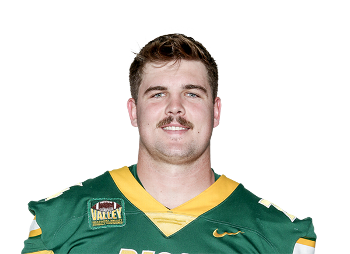
← Back to NFL Draft Big Board Grey Zabel North Dakota State HT: 6060 WT: 305 YR: SR POS: IOL OVR RK 47 POS RK CEILING POTENTIAL 3 KEY STRENGTHS Position Versatile Run-Blocking IQ Physical Finisher KEY CONCERNS Arm Length Hand Placement Leverage & Pad Level PLAYSTYLE & SCHEME FIT Zabel is a gritty, versatile offensive lineman with experience at both guard and tackle but best projects as a starting center or guard in a zone-heavy NFL scheme. His functional athleticism, anchor ability, and football IQ make him a strong developmental starting option. However, hand placement, leverage discipline, and ability to handle speed rushers on the edge remain concerns. Ideally, he kicks inside and develops into a reliable starter within his first two years. PLAYER COMPARISON: CEILING GRADE ANALYSIS High-End Starter Potential (65-69) A player expected to become a top-tier starter within their first few years. They possess strong physical tools and good technical skills but may have some limitations in their game. With development, they can reach near-elite levels and provide consistent impact at their position. Primary scout: Brandon Lundberg Football Scout 365 NFL Draft Grade Scale Football Scout 365 grades reflect a prospect’s projected long-term NFL value and role. Draft ranges are general value projections, not predictions of an exact selection. Positional value, team needs, scheme fit, medical information and athletic testing can influence where a player is ultimately selected. How Football Scout 365 Grades NFL Draft Prospects Elite (75+): A rare, high-impact prospect with elite physical tools, advanced football intelligence and the ability to make an immediate NFL impact. Elite prospects carry franchise-altering potential and typically project as top 5–10 selections in the first round. Near Elite (70–74): A high-caliber prospect with outstanding physical tools, strong football intelligence and only minor developmental limitations. Near Elite prospects project as significant early-career contributors with Pro Bowl upside and first-round draft value. High-End Starter Potential (65–69): A starting-caliber prospect with strong physical tools, quality technical skills and a defined NFL role. These players may require development before reaching their ceiling but generally carry second- or third-round draft value. Mid-Level Starter Potential (60–64): A solid prospect with NFL-level tools and a pathway to becoming a dependable starter if key limitations are addressed. These players generally carry third- to fifth-round draft value. Low-Level Starter Potential (55–59): A developmental prospect who could become a low-end starter, high-end backup or valuable specialist in the right role. These players generally carry fifth- to seventh-round draft value. Backup Level (50–54): A depth or rotational prospect with enough functional ability to compete for an NFL roster spot but limited long-term starting potential. These players generally project as late Day 3 selections or priority undrafted free agents. Not NFL Level (Below 50): A developmental or camp prospect who does not currently demonstrate enough consistency, technical refinement or functional NFL traits to project as a regular contributor. These players generally project as undrafted free agents, practice-squad candidates or camp invitations. Draft position can vary based on positional value, team needs, scheme fit, medical evaluation and athletic testing.
- Leonard Moore 2027 NFL Draft Scouting Report: Is He the Best Defensive Back in College Football?
Leonard Moore 2027 NFL Draft Scouting Report: Is He the Best Defensive Back in College Football? Leonard Moore enters the 2027 NFL Draft cycle as one of the top defensive backs in college football and Football Scout 365’s top-graded cornerback prospect in the class. The Notre Dame cornerback has the length, coverage discipline, route recognition, and ball skills NFL teams covet, with his 2026 season set to determine whether he locks himself into the top-five pick conversation. In this Leonard Moore 2027 NFL Draft scouting report, we break down his Football Scout 365 grade, film evaluation, player comparison, strengths, concerns, and NFL projection. Leonard Moore NFL Draft Scouting Report Overview Leonard Moore enters the 2026 college football season as one of the top cornerback prospects in the 2027 NFL Draft. At 6-foot-2 and roughly 195 pounds, the Notre Dame corner has the frame, length, and coverage profile NFL teams covet in a true boundary defender. After earning a starting role as a true freshman in 2024, Moore followed with a dominant 2025 season that included 31 tackles, five interceptions, seven pass breakups, Unanimous All-American recognition, and major award finalist consideration. His career production, including seven interceptions and 18 pass breakups through 26 games, matches the tape of a high-end CB1 prospect with legitimate top-of-board traits. Film Evaluation Moore wins with length, patience, and advanced coverage discipline. He is at his best when he can stay square, read the receiver’s stem, and use his frame to stay connected through the route. His man-coverage profile is the foundation of the grade because he can mirror without playing recklessly, remain calm at the top of routes, and contest throws without needing to grab or panic. Football Scout 365 breaks down Leonard Moore’s 2027 NFL Draft profile and top-five pick upside. The most translatable part of Moore’s game is the combination of route recognition and ball skills. He processes quickly in zone, understands spacing, and plays the football like a receiver at the catch point. His interception and pass-breakup production are not random. They come from timing, awareness, and the ability to close windows before the ball arrives. The developmental variable is physical maturity. Moore has prototype length, but he still needs to add functional mass to handle NFL press battles, stronger receivers, and perimeter run support. His tackling can also become more consistent in space. The coverage traits are already high-end, but the final top-10 profile depends on whether he adds enough play strength to become a complete NFL boundary corner. Player Comparison: Patrick Surtain II Comparison Type: Archetype / Trait-Based Comparison Moore has a Patrick Surtain II-style profile because of his length, patience, route recognition, and polished outside coverage. Surtain’s press-man strength was already verified when he entered the NFL, while Moore still has the 2026 season to confirm his physical growth and play strength. Grade and Projection Grade Tier: Elite Draft Projection: Top-5 Potential Moore lands in the Elite tier because his coverage profile is built on premium NFL cornerback traits: man-coverage control, route recognition, length, ball skills, and boundary confidence. The grade is supported by both the tape and production, giving him one of the cleanest CB1 projections in the 2027 NFL Draft. Leonard Moore 2027 NFL Draft Questions Is Leonard Moore the best defensive back in college football? Leonard Moore is firmly in that conversation entering the 2026 college football season. His combination of length, man-coverage discipline, route recognition, ball skills, and production makes him one of the top defensive backs in college football and Football Scout 365’s top-graded cornerback in the 2027 NFL Draft class. What is Leonard Moore’s 2027 NFL Draft projection? Leonard Moore projects as an Elite cornerback prospect with Round 1 value and top-five potential if his 2026 tape confirms his play strength, tackling consistency, and press-man physicality. His coverage profile already gives him one of the cleanest CB1 projections in the class. Why is Leonard Moore considered a top 2027 NFL Draft prospect? Moore is considered a top 2027 NFL Draft prospect because he has the traits NFL teams want in a boundary cornerback: size, length, patience, route recognition, ball skills, and the ability to stay in phase without panic. His production also supports the tape, including five interceptions and elite coverage efficiency in 2025. What are Leonard Moore’s biggest strengths? Leonard Moore’s biggest strengths are man coverage, route recognition, length, ball skills, and technical coverage discipline. He plays with patience, stays connected through routes, and has the catch-point instincts to turn coverage wins into interceptions and pass breakups. What does Leonard Moore need to improve before the NFL Draft? Moore’s main 2026 checkpoints are functional strength, tackling consistency, and press-man physicality. His coverage traits are already high-end, but adding more play strength and proving he can handle physical matchups will determine whether he locks into the top-five pick conversation. Who is Leonard Moore’s NFL player comparison? Leonard Moore has a Patrick Surtain II-style profile because of his length, patience, route recognition, and polished outside coverage. Surtain’s press-man strength was already verified when he entered the NFL, while Moore still has the 2026 season to confirm his physical growth and play strength.
- 2021 CFB Playoff Semi-Final: Michigan vs Georgia Situational Scouting and Matchup Analysis
2021 CFB Playoff Semi-Final: Michigan vs Georgia Situational Scouting and Matchup Analysis The Matchup: Michigan Offense vs. Georgia Defense Michigan Offense Overview In 2021, the Michigan offense relied heavily on its ability to run the football. Defenses have tried stacking the box, and Michigan Offensive Coordinator Josh Gattis ran the football anyway. They were determined all year to have an established identity as a team that wants to wear a defense down in multiple ways via the run game. Josh Gattis admitted that in 2020 he gave up on the run too often and that in 2021, he committed to relying on the run game more. Michigan Run Game Uses a Dynamic Body Blow Style The core of the 2021 Michigan offense is their use of gap scheme style runs to get a pulling lineman out in front of one of their three talented RB's the most notable being Hassan Haskins and Blake Corum, with a sprinkle of star true freshman RB Donovan Edwards. The Michigan offense averages 223 yards rushing per game, ranking 10th nationally while running behind their Joe Moore award-winning offensive line. Their coach (Sherrone Moore) has never coached an OL before, yet his unit is one of the top units in college football. The Michigan offense averages 5.3 yards per rush attempt in 2021. Hassan Haskins and the Michigan run game will wear on you fast The QB Situation At Michigan Provides a One-Two Punch And a Steady Hand As It's Starter At the QB position, Michigan has a steady, efficient player in Cade McNamara. McNamara has had the luxury of being the starter ahead of a true freshman (J.J. McCarthy), that possesses many high-level attributes that Cade does not possess. In short, Cade is the leader and efficient player who does not take a risk or put the ball in harm's way. Cade McNamara does not "wow" as a runner like McCarthy, and that's why J.J. enters the game on occasion. McCarthy adds the threat of run from the QB position in the drop-back passing game and the zone-read game. McNamara has made some critical plays in critical moments but ultimately is not expected to go out and win a game down multiple possessions. Michigan has brilliantly sprinkled in J.J. McCarthy All Season Georgia Defense Overview Where should I begin? The Georgia defense gives up 9.5 ppg (1st) and 253 total yards per game, 2nd nationally to Wisconsin, a team Michigan-dominated in Madison back in October. Georgia is also 3rd nationally behind Wisconsin and Alabama in rush yards per attempt, allowing 2.61 yards per attempt. The Georgia Defense Can Get You Behind Schedule With TFL's Furthermore, the Georgia defense ranks 37th nationally in TFL's on the season, which I was confident Georgia would be more dominant before my research in this category. I then analyzed the number of plays run against the Georgia defense vs. the total TFL's might be a better way to interpret this stat, and they are 6th nationally in TFL rate (11%). Jordan Davis Is a massive problem on the interior Georgia's Elite Defensive Line Led By Jordan Davis The Georgia defensive line is led by a behemoth of a human (Jordan Davis) who is 6-6, 340lbs. Davis is a true space-eater in the middle of the Georgia defense who often requires a double team. If you choose to single block Davis, he will wreak havoc in the middle of your offensive line, and that's the dilemma teams face every week against a Georgia defense loaded with blue-chip talent. Double Team Jordan Davis All You Want, The Bulldogs Defensive Front Thrives From The Consistent Jordan Davis Double Teams Once you get past Jordan Davis, the Bulldogs have another stout IDL that deserves a double team (Devonte Wyatt). Devonte Wyatt is a 6-3, 315lb anchor who is hard to move in the run game. Doubling Wyatt is a rob Peter to pay Paul scenario because they also have a 6-5, 290lb edge in Travon Walker. Walker is an edge setter who is often lined up to the wide side of the field and counted on heavily as an edge-setting run defender. Georgia Is Athletic and Deep At Linebacker Once you get past the DL, the Georgia defense has a bevy of high-caliber talent at the LB position led by ILB and top 20 NFL Draft prospect Nakobe Dean. Dean is a player who bats clean up in the run game. He is often playing clean at the 2nd level, and once teams find their way to the edge of the Georgia defense, they often find themselves one on one vs. Nakobe Dean. Nakobe Dean reads and reacts at a high level, displays his lateral quickness Versatile Safety Lewis Cine leads the Georgia Secondary At the third level of the Georgia defense, they have a leader in safety, Lewis Cine. Cine is second on the team in tackles and is a good run defender with great instincts. The Matchup: Michigan Defense vs. Georgia Offense Georgia Offense Overview The Georgia offense is similar to the Michigan offense. They want to establish the run and use play-action to catch opposing defenses off guard. They play pretty close to the vest led by a former walkon at QB (Stetson Bennett). Like Michigan, The Georgia Run Game Uses a Body Blow Approach With A One, Two Punch At RB they have an excellent combination similar to Michigan with Zamir White and James Cook. White is a between tackles body blows back who possesses NFL traits and size identical to Josh Jacobs. Both of the backs are good receivers; Cook is the better receiver of the two in terms of routes down the field, wheel, angle routes, and isolating LB's in space. Zamir White displays his jumpcut, contact balance, and power Georgia Offensive Line, Deep and Talented The Georgia offensive line is talented from left to right. They are not giants upfront, but they are not undersized. They are an agile group that, similar to Michigan, can effectively mix both zone and gap schemes. They will run a lot of Duo, and when teams shoot gaps, they will throw a counter or a trap at your defense, thwarting your plans. Georgia Receivers Talented, But No One Stands Out (Well, Maybe) The Georgia receivers are talented, but they don't have anyone outside of George Pickens that strikes fear. George Pickens is an NFL-caliber X receiver with a big frame. He is a matchup problem outside the numbers, but he has only been available for one game this season after sustaining an ACL injury in the spring. He is also one of the players who reportedly tested positive for Covid inside the ten-day quarantine window. Georgia's TE's Are Their Best Asset In The Pass Game Led By A True Freshman All-American The TE position is where Georgia has been solid. They are led by 6-4, 230lb freshman All-American Brock Bowers. His 47 catches and 747 yards with 11 TD's led the Bulldog's offense in 2021. Brock Bowers looks like the next Travis Kelce Michigan Defense Overview The Michigan defense led by All-American and Heisman finalist Aidan Hutchinson had a resurgence under new defensive coordinator Mike Macdonald. Macdonald is a former LB coach at the NFL level under Jim's Brother John for the Baltimore Ravens. Macdonald replaced the departed Don Brown, whose defense imploded in 2020, allowing 35 pts and 429 yards per game. Aidan Hutchinson & company can wreak havoc in a variety of ways New Defensive Coordinator Mike Macdonald Has Revived The Michigan Defense in 2021 In 2021, the Michigan defense is statistically at or near the top in almost every category. The change in the defensive scheme from a man-to-man approach to a more one-high cover three (zone) scheme has paid dividends. Michigan is 11th nationally in total yards allowed per game (311) and 4th in points allowed (16). The Michigan Defense Thrives Off Of Edge Pressure The Michigan defensive scheme thrives on getting pressure off the edge. Opposite of Aidan Hutchinson is another talented Edge rusher David Ojabo. Ojabo is a projected top ten pick, in our opinion, and will likely find himself mocked by other draft pundits in the top ten consistently as we move forward into NFL Draft season. Hutchinson and Ojabo combined for 25 total sacks in 2021. Both players are critical run stoppers on the edges of the Michigan defense. Michigan Interior Defensive Line is Average With Solid Rotation The rest of the Michigan defensive line is average to good (not Georgia level). Led by Mazi Smith, they use a rotation of different players up front, but the drop-off among depth players is significant and something I expect Georgia will try to exploit. The Michigan Linebackers Are Talented, Led By High IQ Linebacker Josh Ross At the second level of the Michigan defense, they are led by a senior LB who has a lot of experience (Josh Ross). He is in the midst of his best season at the position. He is not a burner, and he is a player who can be a liability in pass coverage, but his leadership and football IQ has been a key component to Michigans success. Outside of Ross, Michigan rotates several talented players at LB. Junior Colson is a notable player, and Michael Barrett is a guy who can come in and help with pass coverage at the LB position. Michigan Secondary No Longer The Liability The Michigan secondary has long separated itself from the liability it became in 2020, where Michigan as a team ranked 90th, allowing 250 yards per game. Dax Hill is a versatile playmaking nickel/Safety, look at the ground he covers In 2021, the Michigan secondary is one of the better groups in the Big Ten. Michigan as a team ranks 29th nationally, allowing 195 yards passing per game. They are led by safety/nickel Dax Hill who has instant impact potential at the NFL level; he is primarily their nickel corner and a player who can line up outside if asked. Dax Hill's versatility is key against Georgia. Hill possesses 4.3 forty speed and will match up against Georgia's talented freshman TE, Brock Bowers. I repeat, Dax Hill is a versatile, playmaking nickel/safety, he intercepts this If Michigan Wins: It will be because.... They Don't Give Up On The Run On Friday night, the Michigan run game will face a stiff test against a deep and athletic Georgia defensive front. Michigan has already faced two of the top run defenses in college football in 2021, Wisconsin and Iowa. Michigan Has Faced Two Of The Top Run Defenses In CFB Already With Mixed Results On the road in October vs. Wisconsin, the Michigan run game rushed the football 44 times for 112 yards (2.55 Yds Per Att.) and a single TD. The Badgers successfully stopped the run, but Michigan never gave up on running the football. The Wolverines would throw for 250 yards and three scores. Michigan Dominates Iowa On the Ground In Big Ten Championship Against the Iowa Hawkeyes in the Big Ten title game, the Wolverines rushed the football 34 times, amassing 211 yards, 6.21 yards per attempt, and 4 TD's. Michigan was able to find success on the edge of the Iowa defense in this game, popping some big runs, including a 67 yarder by Blake Corum that opened up the eventual onslaught of scoring by the Michigan offense. Blake Corum has been the lightning to Haskins thunder J.J. McCarthy Will Have a Role Michigan cannot give up on the run and expect to beat Georgia on the shoulders of Cade Mcnamara. One of the other ways Michigan can add pressure to the Georgia defense is with J.J. McCarthy's athleticism. McCarthy has been brought into games throughout the season to add a run dimension from the QB position. McCarthy is Not Just A Run Threat, He Displays Elite Level QB Traits as A Passer McCarthy has a live and accurate arm, he throws with a lot of zip, and he is the future of the Michigan offense. The Michigan staff has brought him along slowly and allowed him to develop behind McNamara. Throughout the season, McCarthy has come into games and thrown the football more and more. He can be a surprise X-factor in this game. Not just a runner, McCarthy can sling it with touch and accuracy Michigan Run Game Is Most Explosive In CFB One of the key components to Michigan's success in 2021 is that they have an explosive offense. They lead college football in run plays of 50+ yards, with 8 in 2021. If Michigan struggles to run between the tackles, they will try to work the edges of the Georgia defense, and if they can hit a big play or two, it can make all the difference in a game that could be low scoring and that hinges on the outcome of one or two plays. The Michigan Defense Must Be Stout Against The Run, Forcing Stetson Bennett Into 3rd And Obvious Situations. The Michigan defense matches up well against the Georgia offense, but the concern will be how well they handle the RB's out of the backfield as receivers and their use of the TE. Georgia likes to keep defenses guessing using a lot of play-action. Georgia will do all they can to get the ball out quick, protecting Stetson Bennett from getting hit, taking a strip-sack, or throwing a pressured pass into harm's way. Getting Pressure On Stetson Bennett Bennett is an above-average athlete who can escape pressure and move the sticks with his legs. But he is by far and away less efficient when under pressure completing 50% (adjusted) of his throws and accumulating a 38.4 NFL QB rating (PFF). According to PFF, Bennett completes 79% (adjusted) of his throws when he is kept clean, and his NFL QB Rating is 137.5. Mixing and Disguising Blitz Looks Pre And Post Snap Michigan can overload protection or use a delayed blitz to confuse the protection. Mike Macdonald has shown creativity in the past, and it's a staple in the Ravens defense he brought with him to Michigan. When teams work to double Aidan Hutchinson, you can send the extra LB, and don't forget about David Ojabo opposite of Hutchinson. Creative blitz scheme, Hutchinson draws a double, and no one home to take LB If Georgia Wins: It will be because.... Michigan cannot run the football effectively enough to get into manageable passing situations. I went back and watched Georgia against Florida to see how Florida hung in the game for so long before eventually getting the expected beatdown. Florida had success running the ball early, mixed in a decent amount of inside and outside runs, had success with a moving pocket and easy reads for their QB. Then the turnovers started to happen, and this is Georgia's game. Georgia will be patient and wait for their opponents to get greedy and make a mistake in a critical moment. If Michigan gets behind the chains, they may try to take a few more risks through the air. That’s where Georgia’s opportunistic defense can make plays. How the onslaught of turnovers began vs. Florida (strip fumble) Georgia Will Wait For You To Make Mistakes And Then Capitalize After a scoreless 1st QTR where Georgia's best drive happened on its opening drive and ended with a FG miss, Georgia wouldn't score until just under 9 mins to go in the 2nd QTR. They would slog along on an 11 play 63-yard drive that would end in a FG to go up 3-0. A few drives later, Florida would fumble deep in their territory, which led to a Georgia one-play TD drive with 2:16 to go. On Florida's next drive, they would throw a pick two plays in, leading to another short field TD for the Georgia offense. Florida would turn it over one more time with 7 seconds left, and Georgia would score a pick-six taking a 24-0 halftime lead. How the onslaught ended, a 21 point swing in around 3 mins You can Exploit Michigan LB's In Pass Coverage One on One Michigan is talented, but their LB's are susceptible to giving up plays in pass coverage. Georgia should try to exploit this early and often. If Michigan gives them underneath throws, take them. If the flat is open, take it. Work to force Michigan out of their comfort zone with quick throws and a moving pocket. Get Stetson Bennett out on the edge of the defense and let him make easy throws. Take what is available and don't force anything that is not there. Michigan Key 2022 NFL Draft Prospects to Watch Michigan has eight players currently ranked on our NFL Draft Big Board. They rank 3rd among all teams with eight players. Edge Aidan Hutchinson (1st on our board) Edge David Ojabo (10th on our board) Safety/Nickel Dax Hill (30th on our board) Georgia Key 2022 NFL Draft Prospects to Watch Georgia has 11 players on the Football Scout 365 NFL Draft Big Board. They lead all teams represented on our big board. DT Jordan Davis (17th on our board) LB Nakobe Dean (20th on our board) Edge Travon Walker (58th on our board and under review)
- 2026 NFL Draft: Early QB Outlook and Way-Too-Early Top 10 Prospect Rankings
2026 NFL Draft: Early QB Outlook and Way-Too-Early Top 10 Prospect Rankings The 2026 NFL Draft cycle is already buzzing with anticipation — especially at the quarterback position, where a group of toolsy, unproven passers offers more upside than the 2025 class, but far less certainty. From the intrigue surrounding Arch Manning to the resurgence hopes of Carson Beck, this year’s QB race is wide open and full of volatility. Beyond the quarterbacks, the 2026 class looks particularly strong in the trenches and on defense, with elite prospects emerging along both the offensive and defensive lines. While it’s still early and much will change between now and next April, this article offers a projection-based look at the top QBs and a way-too-early Top 10 prospect list based on ceiling potential. Here are the Top QB Prospects As Of Right Now There’s been early optimism that the 2026 quarterback class could surpass the 2025 group in overall talent and NFL potential, and there’s some truth to that. From a tools and traits perspective, this class flashes more upside. But it’s important to remember: this conversation is almost entirely projection-based. As of now, there is no clear-cut QB1 — no Caleb Williams, no Trevor Lawrence — just a group of talented, unproven, or inconsistent passers with a lot to prove in 2025. Arch Manning, Texas is the wild card with the biggest name. He’s played just nine games with two starts, but in limited reps last season, he posted an 88.0 PFF grade with six big-time throws and flashed dynamic rushing ability. His $6 million NIL valuation and the Manning family’s history of staying in school suggest he may not declare early — but if he takes a leap, he’ll be a top-three pick candidate. Drew Allar, Penn State Allar has the prototype frame (6’5”, 242), elite arm strength, and growing command of Penn State’s offense. He improved from 60% to 66.5% completions in 2024 and threw just 8 interceptions all year. He’ll need more consistency and help on the perimeter, but the tools are undeniable. Garrett Nussmeier, LSU He threw for 4,043 yards in 2024 and ranked top 10 in big-time throws. He’s accurate, aggressive, and fearless in the pocket, but turnovers remain an issue. If he cuts down the mistakes and shows more poise under pressure, he’ll push for Round 1. Cade Klubnik, Clemson Took a big step forward in 2024, throwing for 3,639 yards, 36 touchdowns, and only 6 interceptions. He led all returning FBS QBs in PFF passing grade and big-time throws, but still must prove he can thrive in-structure against top defenses. LaNorris Sellers, South Carolina He may be the most intriguing upside play in the class. At 6’3”, 240 pounds, he ranked fifth nationally with a 95.2 PFF deep passing grade and broke 47 tackles as a runner. He’s a raw, toolsy dual-threat with sky-high potential, but he must refine his accuracy and decision-making. Carson Beck, Miami He is the forgotten man. Coming out of the 2023 season, he was the early favorite to be the first quarterback selected in the 2025 NFL Draft. But after an inconsistent 2024 campaign at Georgia, Beck’s stock slid into Round 3 projection territory. Now at Miami, he gets a fresh start. He brings prototypical size, poise, and one of the quickest releases in the class. Beck operates with a strong base and can drive the ball into tight windows. If he puts together a clean, productive season in 2025, he could re-enter the Day 1 conversation — the traits are still there. Bottom line: The 2026 QB class should be stronger than 2025’s, but it’s still a high-ceiling, high-variance group. The eventual QB1 may not be Arch, Allar, or Klubnik — it could be someone still developing. This race is wide open. Other Quarterbacks to Watch Sam Leavitt, QB | Arizona State Fernando Mendoza, QB | Indiana (Cal transfer) Rocco Becht, QB | Iowa State John Mateer, QB | Oklahoma Mark Gronowski, QB | South Dakota State Top 10 Prospects for the 2026 NFL Draft Below is an early ranking of the top 10 prospects for the 2026 NFL Draft, ordered based on ceiling potential — and it’s important to emphasize this is by no means a definitive list. Just as with the quarterbacks discussed above, the rest of the field should be viewed through the same lens: at this stage, it’s all projection. 1. Arch Manning, QB, Texas Ht: 6'4" | Wt: 215 lbs Let’s address the elephant in the room: Arch Manning is unlikely to declare for the 2026 NFL Draft. The Manning family has a long-standing tradition of staying in school for four years, and Arch has appeared in just nine games with two starts. Still, his upside is undeniable. Across 233 snaps in 2024, he showcased high-level arm talent and underrated mobility. If he takes a significant leap in 2025, NFL teams with a need at QB will be trying to tank or do whatever they can via trade to move up. 2. Caleb Downs, S, Ohio State Ht: 6'0" | Wt: 205 lbs After transferring from Alabama, Caleb Downs helped anchor Ohio State’s national title run. He’s the most complete safety in college football — physical, instinctive, and versatile. Had he been draft-eligible in 2025, he would have graded out as an elite prospect. Over the past two seasons, he owns the second-highest PFF grade among all FBS safeties, and his 7.5 tackles for loss in 2024 ranked top-15 among defensive backs. A true back-end enforcer with top-10 upside. 3. Kadyn Proctor, OT, Alabama Ht: 6'7" | Wt: 345 lbs Proctor returned to Alabama with something to prove after a brief stint at Iowa. He has rare size and movement skills and allowed just one pressure in 96 snaps against Georgia and South Carolina combined. With refinement, he could be the top tackle off the board. 4. Peter Woods, DL, Clemson Ht: 6'3" | Wt: 300 lbs A power-packed interior disruptor, Woods posted 3 sacks and a forced fumble in 2024 while playing out of position for much of the year. His near elite grade and dominance in the run game place him among the top interior defenders in the nation. 5. TJ Parker, EDGE, Clemson Ht: 6'3" | Wt: 255 lbs Parker exploded for 11 sacks, 16.5 TFLs, and 4 forced fumbles in 2024. His ability to win with power or bend makes him a nightmare off the edge. He’s also one of only three Power Four EDGEs to post near elite grades in both pass rush and run defense. 6. Dani Dennis-Sutton, EDGE, Penn State Ht: 6'5" | Wt: 270 lbs With 8.5 sacks, 15 TFLs, and a monster playoff performance (including a pick-six vs. Notre Dame), DDS has rare explosiveness for his size. He’s the next great Nittany Lion pass rusher and could rise into top-10 lock status with a strong 2025. 7. Drew Allar, QB, Penn State Ht: 6'5" | Wt: 242 lbs Allar threw for 3,327 yards and 24 TDs in 2024 while protecting the football (only 1.5% turnover-worthy play rate). His arm strength is elite, but he needs to improve anticipation, footwork under pressure, and processing speed. Still, his ceiling remains immense. 8. Jeremiyah Love, RB, Notre Dame Ht: 6'0" | Wt: 206 lbs Love averaged 6.9 yards per carry, rushed for 1,125 yards and 17 TDs, and added 237 receiving yards in 2024. He’s explosive, slippery through tight spaces, and one of the top dual-threat backs in the country. If he repeats in 2025, round one is within reach. 9. Francis Mauigoa, OT, Miami (FL) Ht: 6'6" | Wt: 330 lbs Mauigoa started as a true freshman and is trending toward being a cornerstone tackle prospect. He allowed just one sack and one QB hit in 2024, showing improved balance and anchor strength. If he keeps developing, he could be a top-15 pick. 10. Zachariah Branch, WR, Georgia Ht: 5'10" | Wt: 185 lbs After transferring from USC, Branch brings elite speed and return ability to Athens. While Georgia’s offense may limit his raw stats, he’s a home-run threat every time he touches the ball. He had return touchdowns on both punts and kicks in 2023 and is the kind of weapon NFL offenses covet in space.
- Creed Humphrey
Humphrey is a wide specimen who plays with good leverage at the point of attack. He wins within the A gaps on the offensive line, which might be a limiting factor in his draft stock. He does exhibit good bend at the knees and shows good hand placement consistently. He has a lot of games under his belt, having started three years with the Sooners, so he brings a lot of experience to the NFL with him. He is functional enough to play in a zone, gap, or hybrid man style scheme at the NFL level and does possess NFL starter quality traits. ← Back to NFL Draft Big Board Creed Humphrey Oklahoma HT: 6050 WT: 312 YR: RJR POS: IOL OVR RK 45 POS RK CEILING POTENTIAL 4 KEY STRENGTHS KEY CONCERNS PLAYSTYLE & SCHEME FIT Humphrey is a wide specimen who plays with good leverage at the point of attack. He wins within the A gaps on the offensive line, which might be a limiting factor in his draft stock. He does exhibit good bend at the knees and shows good hand placement consistently. He has a lot of games under his belt, having started three years with the Sooners, so he brings a lot of experience to the NFL with him. He is functional enough to play in a zone, gap, or hybrid man style scheme at the NFL level and does possess NFL starter quality traits. PLAYER COMPARISON: CEILING GRADE ANALYSIS High-End Starter Potential (65-69) A player expected to become a top-tier starter within their first few years. They possess strong physical tools and good technical skills but may have some limitations in their game. With development, they can reach near-elite levels and provide consistent impact at their position. Primary scout: Brandon Lundberg Football Scout 365 NFL Draft Grade Scale Football Scout 365 grades reflect a prospect’s projected long-term NFL value and role. Draft ranges are general value projections, not predictions of an exact selection. Positional value, team needs, scheme fit, medical information and athletic testing can influence where a player is ultimately selected. How Football Scout 365 Grades NFL Draft Prospects Elite (75+): A rare, high-impact prospect with elite physical tools, advanced football intelligence and the ability to make an immediate NFL impact. Elite prospects carry franchise-altering potential and typically project as top 5–10 selections in the first round. Near Elite (70–74): A high-caliber prospect with outstanding physical tools, strong football intelligence and only minor developmental limitations. Near Elite prospects project as significant early-career contributors with Pro Bowl upside and first-round draft value. High-End Starter Potential (65–69): A starting-caliber prospect with strong physical tools, quality technical skills and a defined NFL role. These players may require development before reaching their ceiling but generally carry second- or third-round draft value. Mid-Level Starter Potential (60–64): A solid prospect with NFL-level tools and a pathway to becoming a dependable starter if key limitations are addressed. These players generally carry third- to fifth-round draft value. Low-Level Starter Potential (55–59): A developmental prospect who could become a low-end starter, high-end backup or valuable specialist in the right role. These players generally carry fifth- to seventh-round draft value. Backup Level (50–54): A depth or rotational prospect with enough functional ability to compete for an NFL roster spot but limited long-term starting potential. These players generally project as late Day 3 selections or priority undrafted free agents. Not NFL Level (Below 50): A developmental or camp prospect who does not currently demonstrate enough consistency, technical refinement or functional NFL traits to project as a regular contributor. These players generally project as undrafted free agents, practice-squad candidates or camp invitations. Draft position can vary based on positional value, team needs, scheme fit, medical evaluation and athletic testing.
- College Football Playoff: Controversy, Matchups, and the Tough Road Ahead for The Top Seed
College Football Playoff: Controversy, Matchups, and the Tough Road Ahead for The Top Seed The inaugural 12-team CFP sparks debate as Alabama is left out, Oregon faces a tough path, and Penn State gets the easiest route on paper. The inaugural 12-team College Football Playoff (CFP) is here, but not without controversy. Alabama's exclusion in favor of SMU has ignited debates about scheduling strategies, while Oregon’s No. 1 seed faces a surprisingly tough path. Meanwhile, Penn State appears to have drawn the easiest route, raising questions about seeding fairness. As the CFP era begins, discussions around conference titles, automatic bids, and future expansions are heating up. Top Seed Oregon Draws The Most Difficult Path Another hot topic is Oregon’s placement as the No. 1 seed. Despite their top ranking, Oregon appears to have drawn the most challenging path, potentially facing the winner of the Ohio State-Tennessee matchup. Logically, many projections had the top seed playing the winner of the 5-12 matchup in the first round, but instead, they will face the 8-9 seeds, which, on paper and based on the eye test, are far better teams than they have seeded in the 5-12 slots. Penn State Draws The Easiest Path On Paper Additionally, Penn State’s path as the No. 6 seed has raised eyebrows. On paper, they seem to have the easiest route, starting with an 11-seed SMU matchup and potentially facing Boise State next. This has fueled further debate about seeding fairness in this new playoff format. Future Playoff Expansion Lastly, discussions about playoff expansion are heating up, with some speculating it could happen as early as 2026. Critics are questioning the relevance of conference titles, suggesting they might be removed entirely or that automatic bids and first-round byes for conference champions should be reconsidered. Teams with First-Round Byes No. 1 Seed – Oregon (Big Ten Champion) In their inaugural Big Ten season, the Oregon Ducks achieved a flawless 13-0 record, solidifying their position as the nation's top team. Their season featured significant victories over Ohio State and Illinois, culminating in a 45-37 triumph against Penn State in the Big Ten Championship Game. This victory was propelled by quarterback Dillon Gabriel, who threw for 283 yards and four touchdowns, and a strong ground attack led by Jordan James and Noah Whittington. Under head coach Dan Lanning, Oregon's offense has been dynamic, while the defense has consistently disrupted opponents, exemplified by forcing two critical interceptions against Penn State. As the only undefeated team in the FBS, the Ducks have earned the No. 1 seed and will face the winner of the Ohio State vs. Tennessee matchup in the Rose Bowl. This game will test Oregon's balanced and explosive play against formidable competition. No. 2 Seed – Georgia (SEC Champion) Despite losing quarterback Carson Beck to injury just before halftime, Georgia claimed the SEC title with a dramatic 31-24 overtime victory against Texas. Backup quarterback Gunner Stockton stepped in and managed the game effectively while running back Trevor Etienne sealed the victory with a game-winning touchdown in overtime. The Bulldogs’ defense also played a critical role, holding Texas to just three points in the second half of regulation to force overtime. Under head coach Kirby Smart, Georgia showcased the resilience and team depth that has made them a perennial championship contender. The Bulldogs now look to continue their journey to a national championship as the No. 2 seed. They will face the winner of the Notre Dame vs. Indiana first-round matchup in the Sugar Bowl, where Georgia’s stout defense and versatile offense will look to advance further in the CFP. No. 3 Seed – Boise State (Mountain West Champion) Boise State's ascent to the No. 3 seed in the College Football Playoff marks a significant milestone in the program's history. The Broncos clinched the Mountain West Championship with a commanding 21-7 victory over UNLV. Running back Ashton Jeanty was instrumental, rushing for 209 yards and a touchdown, further solidifying his status as a Heisman Trophy contender. The Broncos concluded the season with a 12-1 record, their sole defeat being a narrow loss to Oregon, underscoring their competitiveness against top-tier teams. Defensively, Boise State has been solid, allowing an average of 22.6 points per game. This balanced performance on both offense and defense has been pivotal in securing their first-round bye. Looking ahead, Boise State is set to compete in the Fiesta Bowl against the winner of the Penn State vs. SMU matchup. Their potent running game, spearheaded by Jeanty, combined with a resilient defense, positions them as a formidable contender in their inaugural College Football Playoff appearance. No. 4 Seed – Arizona State (Big 12 Champion) Arizona State's remarkable season under head coach Kenny Dillingham culminated in a decisive 45-19 victory over Iowa State in the Big 12 Championship. Quarterback Sam Leavitt, a redshirt freshman, orchestrated the offense with precision, amassing 219 passing yards and three touchdowns. Leavitt's outstanding performance throughout the season earned him the Big 12 Offensive Freshman of the Year award. Complementing Leavitt's aerial assault, running back Cam Skattebo powered the ground game, contributing significantly to the Sun Devils' offensive balance. Skattebo's versatility was on full display, as he accounted for three touchdowns—two rushing and one receiving—in the championship game. Defensively, Arizona State has been formidable, allowing an average of 21.3 points per game, showcasing their ability to stifle opponents and create scoring opportunities for their offense. The Sun Devils' impressive 11-2 record and Big 12 title have secured them a first-round bye in the College Football Playoff. They are set to face the winner of the Texas vs. Clemson matchup in the Peach Bowl. With a potent offense led by Leavitt and a resilient defense, Arizona State is poised to make a significant impact in its inaugural CFP appearance. First-Round Matchups No. 12 Clemson (ACC Champion) at No. 5 Texas Texas, the SEC runner-up, will host ACC champion Clemson in a highly anticipated first-round matchup. Despite their 31-24 overtime loss to Georgia in the SEC Championship, the Longhorns' dynamic offense, led by Quinn Ewers, remains a formidable threat. Clemson, under Dabo Swinney, enters the game with momentum following a last-second field goal victory in the ACC title game. No. 9 Tennessee at No. 8 Ohio State Tennessee’s balanced offense travels to Columbus to face an Ohio State squad eager to bounce back from their regular-season finale loss to Michigan. Both teams hold 10-2 records, and this matchup could hinge on the performance of Ohio State’s defense against Tennessee’s high-powered attack. No. 11 SMU at No. 6 Penn State SMU’s inclusion in the playoff as the No. 11 seed has been one of the most debated decisions, but their offensive prowess has earned them a shot at the Nittany Lions. Penn State, fresh off a narrow 45-37 loss to Oregon in the Big Ten Championship, boasts a stout defense and a balanced offense that will test SMU’s capabilities. Happy Valley is set to host a fierce battle for the right to advance to the quarterfinals. No. 10 Indiana at No. 7 Notre Dame Indiana’s Cinderella season continues with a trip to South Bend to face Notre Dame. Under first-year head coach Curt Cignetti, the Hoosiers turned a 3-9 record in 2023 into an impressive 11-1 campaign. Meanwhile, Notre Dame, riding a 10-game win streak, enters with confidence as they seek their first national title since 1988.
- 2027 NFL Draft Hub: Big Board, Team Needs, Predictive Mock Draft & Prospect Rankings
2027 NFL Draft Hub: Big Board, Team Needs, Predictive Mock Draft & Prospect Rankings 2027 NFL Draft rankings, team needs, mock draft projections, and prospect scouting are easier to follow when they are connected in one place. The 2027 NFL Draft Hub brings those pieces together with Big Board rankings, team needs analysis, predictive mock draft data, prospect profiles, video analysis, player comparisons, and scheme-fit projection from Football Scout 365. The 2027 NFL Draft cycle is already taking shape, and this Hub was built to organize the class through a scouting-based lens. Instead of separating player rankings, team needs, mock draft projections, and scouting reports across disconnected pages, the NFL Draft Hub brings those pieces together in one streamlined interface. Built through an AI-assisted development workflow, the Hub is designed to turn Football Scout 365’s scouting data into a more searchable, interactive, and connected NFL Draft experience. ➡️ Launch the 2027 NFL Draft Hub 🚀 The current version of the NFL Draft Hub is focused on the 2027 NFL Draft class, but the long-term vision is broader. Football Scout 365 has built prospect data, scouting reports, rankings, and draft analysis across multiple draft cycles dating back to 2021. As the platform expands, the Hub can become a connected multi-year NFL Draft database that allows users to compare prospects, classes, grades, team fits, player profiles, and draft trends across multiple years. This launch is the next step in that scouting system. The 2027 version gives readers a cleaner way to track the current draft cycle while laying the foundation for a larger Football Scout 365 draft platform. Why We Built the 2027 NFL Draft Hub NFL Draft coverage is often fragmented. Fans search for Big Boards in one place, mock drafts in another, team needs somewhere else, and individual scouting reports across multiple articles or databases. That creates a disconnected view of the draft process. The Football Scout 365 NFL Draft Hub was built to solve that problem. The goal is to make the draft cycle easier to follow by connecting the most important parts of evaluation: prospect rankings, player grades, team needs, mock draft trends, scouting profiles, video analysis, player comparisons, and scheme-fit projection. Instead of viewing each part of the draft in isolation, the Hub gives readers a broader look at how prospects fit into the NFL Draft ecosystem. That matters because the draft is not just about ranking players. It is about understanding player value, positional value, roster construction, team-specific needs, and how each prospect projects into an NFL system. What Is Included in the NFL Draft Hub? The NFL Draft Hub is the central hub for Football Scout 365’s scouting and draft analysis throughout the 2027 cycle. 2027 NFL Draft Big Board The 2027 NFL Draft Big Board ranks prospects based on film evaluation, positional value, physical tools, production context, projection, and overall NFL upside. Each player ranking is built on Football Scout 365’s grading structure, which separates prospects into projection tiers rather than treating every ranking as equal. The Big Board helps identify which players project as early first-round candidates, future starters, developmental traits-based prospects, and high-upside risers entering the 2026 college football season. The board will continue to evolve as new film, production, testing data, and team context become available. While the current board is built around the 2027 class, the broader Hub structure is designed to eventually support a larger multi-year scouting database. Team Needs Analysis The team needs section connects prospect evaluation to NFL roster construction. Rather than looking at prospects in a vacuum, the Hub evaluates how player fits align with specific team needs, roster weaknesses, positional priorities, and long-term draft strategy. This helps frame the 2027 NFL Draft through the same lens NFL front offices use: value, need, scheme fit, and roster-building logic. As the NFL season progresses, team needs will become a major factor in projecting where prospects may fit at the next level. Predictive Mock Draft Tool The predictive mock draft section is designed to track projection logic, team-player fits, and mock draft outcomes throughout the cycle. Mock drafts are not just about guessing the order. They are about identifying patterns. Which players are consistently linked to certain teams? Which positions are most likely to be targeted early? Which prospects are rising based on positional demand, team needs, production, or league-wide trends? The predictive mock draft tool helps organize those signals into a cleaner draft projection framework. Player Profiles and Scouting Reports Football Scout 365 will continue to publish indexed player profiles and full scouting reports throughout the 2027 NFL Draft cycle. Those pages remain important for search, player-specific analysis, and deeper scouting context. The old football scout 365 NFL Draft Big Board format remains a central part of the system. The NFL Draft Hub adds the interactive layer. That means readers can use individual scouting reports for detailed evaluation while using the Hub to compare rankings, team fits, Big Board placement, video analysis, player comparisons, and broader draft trends in one interface. Video Analysis and Player Comparisons The enhanced Hub is also designed to support deeper player evaluation through video analysis and player comparisons. Dante Moore 2027 NFL Draft Summer Scouting Player comparisons are not used as exact projections. They are used as scouting tools to explain play style, role, athletic profile, positional usage, and developmental pathway. Combined with video analysis, those comparisons help readers understand how each prospect wins, where he fits, and what type of NFL role he may project into. How This Fits the Football Scout 365 Scouting Process Football Scout 365 evaluates prospects through a film-first process supported by data, production context, athletic profile, positional value, and scheme projection. The Hub reflects that same process. Each prospect is evaluated through traits that translate to the NFL: athletic ability, positional skill, play strength, processing, technical development, producti_on profile, role versatility, and scheme fit. The goal is not to chase early hype or mock draft consensus. The goal is to build a structured, repeatable scouting process that tracks how prospects develop over time. The Hub also represents the next step in how Football Scout 365 is using AI-assisted development to build better scouting tools. The evaluation process remains film-first, grade-driven, and scout-led, but AI-assisted workflows help turn structured player data into a more interactive draft experience. That includes faster interface development, cleaner data organization, improved search functionality, and a more connected way to view Big Board rankings, team needs, player profiles, predictive mock draft outcomes, and scheme-fit analysis. For the 2027 NFL Draft, that means identifying which players already have legitimate NFL traits and which players need stronger 2026 tape to solidify their draft stock. Long term, the same structure can support multi-year comparison across draft classes. That opens the door for comparing player grades, position groups, team fits, prospect development, and class strength from 2021 through 2027 and beyond. How to Use the 2027 NFL Draft Hub The 2027 NFL Draft Hub can be used in several ways, depending on the reader. Fans can track the top prospects in the class, compare Big Board rankings, and follow how players fit different NFL teams. Dynasty fantasy football players can connect prospect grades, positional value, offensive fit, and future opportunity to long-term fantasy football value. Draft analysts can compare player rankings, team needs, scouting reports, player profiles, video analysis, player comparisons, and predictive mock draft outcomes in one place. The Hub is built to become a central checkpoint throughout the NFL Draft cycle as prospects rise, fall, return to school, declare, test, and move through the pre-draft process. Explore the 2027 NFL Draft Hub The 2027 NFL Draft cycle will continue to change as the 2026 college football season unfolds, but the foundation is already in place. Football Scout 365 will continue updating the Hub with new player rankings, team needs analysis, scouting reports, mock draft projections, video breakdowns, player comparisons, and prospect profiles throughout the year. 🔗 Launch the 2027 NFL Draft Hub Also explore: ➡️ 2027 NFL Draft Big Board ➡️ 2027 NFL Draft QB Rankings ➡️ 2027 NFL Draft RB Rankings ➡️ 2027 NFL Draft WR Rankings
- Carnell Tate Dynasty Rookie Profile – Fantasy Football 2026
Carnell Tate Dynasty Rookie Profile – Fantasy Football 2026 Carnell Tate enters the 2026 fantasy football season as one of the more polished rookie wide receivers in the dynasty class. Drafted No. 4 overall by the Tennessee Titans, Tate brings a refined perimeter profile built around route detail, body control, catch-point consistency, and downfield ball tracking. He is not an overwhelming traits-based WR1 prospect, but his ability to separate with tempo and finish through contact gives him a clear path to early NFL usage. Tate joins a Titans offense built around Cam Ward, giving him immediate long-term appeal if the passing game takes a step forward. His rookie-year fantasy value will depend on how quickly he earns target volume, but his draft capital, polish, and strong offseason reports keep him firmly in the long-term dynasty asset range. Check Out The New Dynasty Fantasy Rankings Hub For updated rookie rankings, superflex trade values, player tiers, rookie values, startup strategy, team fits, and long-term roster-building analysis, visit the Dynasty Fantasy Football Hub. College Career Recap – Tate’s Path to the NFL WR – Tennessee Titans | Drafted: Round 1, Pick 4 | College: Ohio State Tate arrived at Ohio State as a major recruit and developed into one of the most reliable receivers in the Buckeyes’ offense. Across three seasons, he caught 121 passes for 1,872 yards and 14 touchdowns while appearing in 39 games with 27 starts. His production profile was not built on manufactured touches; it was built around route polish, vertical tracking, and consistent work at the catch point. His 2025 season pushed him into the top-five conversation. Tate caught 51 passes for 875 yards and nine touchdowns, averaging 17.2 yards per reception while earning second-team Associated Press All-American honors and first-team All-Big Ten recognition. He also entered the NFL with a 4.53-second 40-yard dash, confirming enough functional speed to threaten vertically even if he is not a true burner. The appeal for dynasty is the combination of polish and role projection. Tate does not need to become a target-hog immediately to hold value. If he earns steady perimeter snaps and builds chemistry with Ward, he has the skill set to grow into a stable fantasy WR2 type by Year 2 or Year 3. NFL Scouting Report – Strengths & Weaknesses For a deeper look at Tate’s NFL Draft evaluation, watch the Football Scout 365 film breakdown below. The video examines why Tate became one of the top wide receiver prospects in the 2026 NFL Draft, with a focus on his route-running detail, catch-point reliability, and ability to win as a polished perimeter target. Tate’s strongest NFL traits show up in timing-based passing situations. He creates separation through leverage, tempo, and efficient footwork rather than pure speed. His body control and ball-tracking ability give quarterbacks a reliable target outside the numbers, and that profile should translate well if Tennessee gives him enough early target volume. For a deeper look at Tate’s NFL Draft evaluation, watch the Football Scout 365 film breakdown below. The video was produced before the draft and explains why Tate was firmly in the WR1 conversation for the 2026 NFL Draft, with a focus on his route-running polish, separation ability, catch-point reliability, and contested-catch success. Carnell Tate NFL Draft Scouting Report: Is He the WR1? Carnell Tate 2026 NFL Draft film breakdown from Football Scout 365, covering his separation craft, ball skills, contested-catch timing, and long-term fantasy football projection. Strengths Advanced route-running and separation craft Strong catch-point timing and body control Natural ball tracking on vertical and intermediate throws Reliable hands with the ability to finish through contact Polished perimeter profile with early WR2 role potential Areas to Improve Not a true vertical burner Needs to add more play strength Can be challenged by longer press corners Minor durability flag after missing time in 2025 Scheme Fit & Projected Role with the Titans Tate fits best as a refined Z or perimeter receiver who can win on timing routes, intermediate breaks, and vertical concepts that allow him to build momentum. In Tennessee, his fit depends heavily on the growth of Ward and how quickly the offense stabilizes around a young passing-game core. The early reports are encouraging. Tate impressed during OTAs and minicamp with contested catches, one-handed grabs, and quick playbook retention. If that carries into training camp, he can push for immediate snaps and develop into one of Ward’s most trusted outside targets. The fantasy ceiling is not built on gadget usage; it is built on route volume, catch-point trust, and eventual target consistency. Player Comparison: Chris Olave Comparison Type: Stylistic / Role-Based Tate’s comparison to Chris Olave is rooted in route polish, tempo, body control, and downfield tracking. Like Olave, Tate wins by creating clean throwing windows, staying efficient through breaks, and making the quarterback right with late adjustments at the catch point. For dynasty, the comparison matters because it frames Tate as a timing-based receiver with WR2 fantasy upside if the target volume follows. He may not have elite physical dominance, but his route intelligence and reliability give him a strong path to becoming a quarterback-friendly starter. Rookie Fantasy Outlook — 2026 Fantasy Grade Tier: Tier 3 – High-Upside Starter Best Format: Half-PPR / PPR dynasty leagues Floor: WR4 / developmental bench asset Ceiling: Fantasy WR2 with stable weekly target volume .5 PPR Projection: 171.58 fantasy points Receiving Projection: 130 targets, 989 receiving yards, 5 TDs Current Positional Rank: WR28 Tate’s rookie-year fantasy projection is stronger than a typical developmental receiver profile because the draft capital and projected target opportunity both matter. The Football Scout 365 model projects him for 171.58 fantasy points, 130 targets, 989 receiving yards, and five touchdowns, which currently places him at WR28 in the dynasty rankings. The key variable is efficiency inside a developing Titans offense. Tate has the route-running and catch-point skill to earn targets early, but his fantasy ceiling depends on Ward’s growth and whether Tennessee can create enough passing volume. If the offense improves faster than expected, Tate’s dynasty value could climb quickly. Final Fantasy Football Analysis Carnell Tate enters the 2026 fantasy football season as a polished dynasty wide receiver with strong draft capital and a clear path to long-term value. His game is not built around elite speed or overwhelming physical traits, but his route detail, ball skills, and catch-point consistency give him a stable projection. The rookie-year outlook is tied to Tennessee’s offensive development. If Ward takes a step forward and Tate earns a steady perimeter role, he can push into the weekly WR3/FLEX conversation earlier than expected. Long term, he profiles as a hold/long-term asset with WR2 upside if the target volume grows by Year 2. 2026 Dynasty Rookie Profile Questions Is Carnell Tate a good dynasty rookie pick? Carnell Tate is a good dynasty rookie pick if his cost reflects a long-term WR2 projection rather than an immediate fantasy WR1 ceiling. His draft capital, route polish, and projected role with the Titans give him strong dynasty insulation. What is Carnell Tate’s fantasy football ceiling? Tate’s fantasy ceiling is a stable WR2 if he becomes one of Cam Ward’s primary targets. He does not need elite vertical speed to produce if he earns consistent intermediate targets, red-zone looks, and perimeter volume. What is Carnell Tate’s biggest rookie-year concern? The biggest rookie-year concern is offensive environment. Tate can separate and finish at the catch point, but his Year 1 production depends on Ward’s development, Tennessee’s passing volume, and how quickly the offense creates reliable weekly target opportunities. Should you draft Carnell Tate in redraft leagues? Tate is worth considering as a late-round redraft target or bench stash, especially in deeper leagues. His dynasty value is stronger than his redraft value because his best fantasy window may arrive in Year 2 or Year 3. What rookie draft range should Carnell Tate be valued in? In dynasty rookie drafts, Tate should be valued as a first-round rookie pick in most formats. His top-five NFL Draft capital and long-term target upside make him one of the safer wide receiver bets in the 2026 rookie class.
- Texas Overpowers Clemson, Advances to CFP Quarterfinals with 38-24 Victory
Texas Overpowers Clemson, Advances to CFP Quarterfinals with 38-24 Victory In the first round of the expanded College Football Playoff, No. 5 Texas capitalized on a dominant rushing performance and key defensive stops to defeat No. 12 Clemson 38-24 in front of a packed crowd at Darrell K. Royal-Texas Memorial Stadium in Austin. The Longhorns (12-2) now advance to the Peach Bowl, where they will face No. 4 Arizona State. Setting the Tone with the Ground Game Texas leaned heavily on its running game, amassing 292 yards on the ground at an impressive 6.1 yards per carry. Jaydon Blue led the charge with 146 yards and two touchdowns, including a game-sealing 77-yard sprint in the fourth quarter that put the Longhorns up 38-24. “Once I got past the line, I just kept running. I knew they weren’t going to catch me,” Blue said of his electrifying run. Quintrevion Wisner complemented Blue’s effort with 110 yards and two first-half touchdowns, helping Texas establish control early. Ewers Efficient, Defense Stands Tall Quarterback Quinn Ewers delivered a poised performance, completing 17 of 24 passes for 202 yards and a touchdown. His first-half precision, highlighted by a 43-yard connection with Matthew Golden and a 19-yard touchdown pass to tight end Gunnar Helm, helped Texas build a commanding 28-10 halftime lead. Ewers’ ability to spread the ball efficiently kept Clemson’s defense on its heels and played a crucial role in the Longhorns' offensive success. On the defensive side, Texas faced a strong challenge from Clemson quarterback Cade Klubnik, who threw for 336 yards and three touchdowns while completing 60% of his passes. Despite Klubnik’s late-game surge that cut Texas’ lead to 31-24, the Longhorns' defense delivered when it mattered most. A critical goal-line stand in the fourth quarter, featuring back-to-back stops at the 1-yard line, extinguished Clemson’s comeback hopes. Texas also tallied three sacks and seven tackles for loss, disrupting Clemson’s offensive rhythm and limiting their run game to just 76 yards on 24 attempts (3.2 yards per carry). “Our defense has been our backbone all year, and they showed up again tonight when we needed them most,” Texas head coach Steve Sarkisian said. Initial Thoughts vs. Reality Before the game, Clemson’s passing attack, led by Klubnik, was expected to challenge Texas' defense. While Klubnik showcased his talent with 336 passing yards and three touchdowns, the Longhorns’ ability to stifle Clemson’s run game and deliver timely defensive stops ultimately swung the game in Texas’ favor. Clemson’s reliance on the pass made their offense predictable, allowing Texas to key in on crucial late-game situations. On the other hand, Texas’ rushing attack, identified pregame as a potential advantage, surpassed expectations. The Longhorns ran for 292 yards on 48 carries, averaging 6.1 yards per attempt. Jaydon Blue was electric with 146 yards and two touchdowns, including a game-sealing 77-yard burst in the fourth quarter. Quintrevion Wisner contributed 110 yards and two scores, while the offensive line consistently overpowered Clemson’s defensive front. Texas' dominant ground game not only controlled the tempo but also exposed Clemson's defensive weaknesses, cementing the Longhorns' victory. Key Stats Texas: Jaydon Blue: 146 rushing yards, 2 TDs Quintrevion Wisner: 110 rushing yards, 2 TDs Quinn Ewers: 17/24, 202 yards, 1 TD Gunnar Helm: 6 receptions, 77 yards, 1 TD Clemson: Cade Klubnik: 26/43, 336 yards, 3 TDs, 1 INT Rushing Offense: 76 yards (3.2 YPC) T.J. Moore: 7 receptions, 91 yards, 1 TD What’s Next? Texas moves on to face No. 4 Arizona State in the Peach Bowl on New Year’s Day. The Longhorns will look to build on their dominant rushing performance as they aim for a spot in the semifinals. For Clemson, the season ends with questions about its defensive front and how head coach Dabo Swinney can address the team’s struggles against physical rushing attacks. Despite the loss, the Tigers made strides in returning to the College Football Playoff and will look to build on this momentum next season. In the first-ever on-campus CFP matchup for Texas, the Longhorns showcased their offensive firepower and defensive resilience, propelling them one step closer to a national championship.